A widening economic shock is unfolding across Gulf economic slowdown as the ongoing regional conflict extends its impact beyond oil markets into key non-oil sectors such as tourism, retail, and services.
What initially began as an energy-driven disruption has now evolved into a broader economic slowdown affecting consumer activity, business confidence, and growth trajectories across the region.
Recent data and economic assessments indicate that Gulf Cooperation Council (GCC) countries—including the United Arab Emirates, Kuwait, and Bahrain—are experiencing visible strain in their diversified economic sectors.
Tourism flows have weakened, retail demand has slowed, and inflationary pressures are rising, reflecting the cascading effects of geopolitical instability.
This development is particularly significant because Gulf economic slowdown have spent the past decade aggressively diversifying away from oil dependence.
The current downturn in non-oil sectors not only challenges these diversification efforts but also exposes vulnerabilities in economic models that rely heavily on global connectivity, travel, and consumer spending.
Tourism Sector Faces Sharp Decline
The tourism sector, one of the fastest-growing pillars of Gulf economic slowdown in recent years is now among the hardest hit.
Cities like Dubai, Abu Dhabi, and Doha, which have positioned themselves as global travel hubs, are witnessing a slowdown in visitor arrivals due to heightened security concerns and disrupted air travel routes.
Airspace restrictions, flight cancellations, and broader geopolitical uncertainty have significantly reduced international travel demand.
Industry estimates suggest that tourism losses across the region have already reached billions of dollars, with declines in visitor spending and hotel occupancy rates becoming increasingly evident.
Experts warn that the Gulf’s tourism momentum—once one of the strongest globally may take time to recover.
Economist Lluis Dalmau Taules noted that the region had been the fastest-growing tourism market in recent years, but the current crisis is reshaping that trajectory, with ripple effects extending into hospitality, aviation, and entertainment sectors.
Retail and Consumer Spending Under Pressure
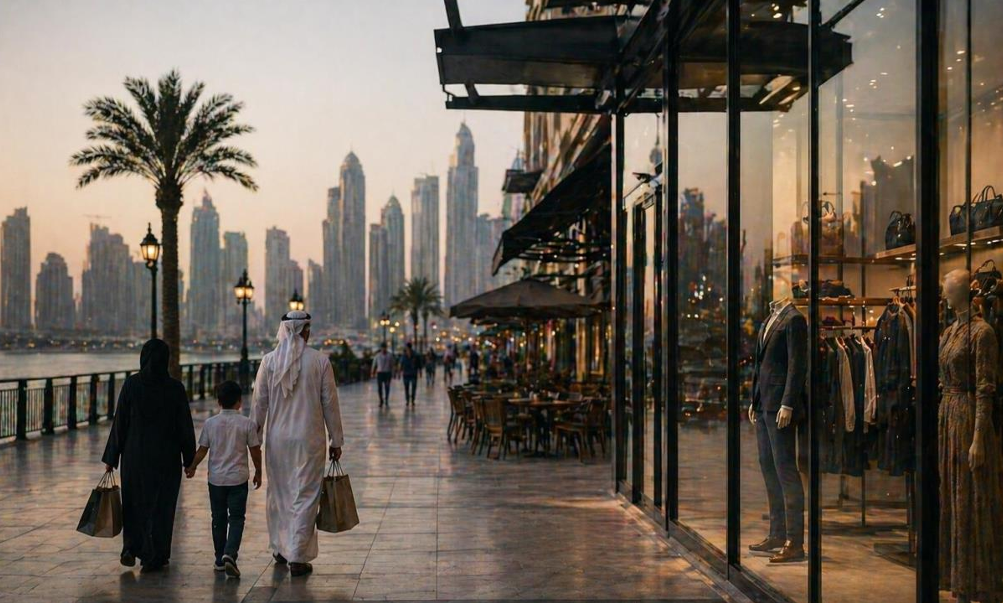
Alongside tourism, retail activity is also experiencing a noticeable slowdown.
Shopping malls, luxury retail outlets, and commercial districts—key drivers of urban economic activity in Gulf cities—are reporting reduced footfall and declining sales.
The downturn is being driven by a combination of factors, including reduced tourist spending, cautious consumer behavior, and rising prices.
Luxury brands, which once thrived in Gulf markets, are now facing declining revenues as both international and domestic demand weakens.
Consumer confidence has also been affected, with households becoming more cautious in their spending amid economic uncertainty.
Analysts suggest that household consumption growth across GCC countries is expected to slow significantly, reflecting the combined impact of inflation and reduced income expectations.
Inflation Pressures Intensify Across GCC
Inflation is emerging as a critical concern across Gulf economic slowdown, further compounding the challenges faced by businesses and consumers.
Rising energy prices, supply chain disruptions, and increased transportation costs are pushing up the cost of goods and services.
Forecasts indicate that inflation rates in countries such as the UAE, Kuwait, and Bahrain are set to rise above earlier expectations.
For instance, inflation in the UAE and Qatar is projected at around 2.6%, while Kuwait may see levels nearing 2.9%, reflecting a broad-based increase in prices.
The inflationary trend is particularly concerning because it directly affects consumer purchasing power and business margins.
Higher costs for essentials, logistics, and imports are feeding into retail prices, creating a cycle of reduced demand and slower economic activity.
Broader Economic Impact and Structural Risks
The slowdown in tourism, retail, and services highlights a deeper structural challenge facing Gulf economies.
While oil prices have surged due to supply disruptions, the benefits are being offset by broader economic instability and reduced activity in non-oil sectors.
Economists note that the current crisis represents the most severe economic stress in the region since the COVID-19 pandemic.
Growth forecasts for several GCC countries have been sharply downgraded, with some economies even expected to contract in 2026.
Moreover, the situation underscores the interconnected nature of Gulf economic slowdown.
Sectors such as tourism, retail, aviation, and logistics are closely linked, meaning that disruptions in one area quickly spill over into others.
This interconnectedness amplifies the overall economic impact and complicates recovery efforts.
Conclusion and Outlook
The ongoing conflict has transformed what began as an energy crisis into a broader economic slowdown affecting multiple sectors across the Gulf region.
The decline in tourism, weakening retail activity, and rising inflation collectively signal a challenging period for economies that have been striving to diversify and modernize.
Looking ahead, the trajectory of recovery will depend largely on geopolitical developments.
A resolution to the conflict could restore confidence, revive travel demand, and stabilize markets.
However, prolonged instability may deepen economic challenges and delay recovery timelines.
Ultimately, the current situation serves as a critical test for Gulf economic slowdown.
Their ability to navigate this crisis—while continuing to pursue diversification and resilience—will shape the region’s economic future in an increasingly uncertain global landscape.