A new financial dimension has emerged in the Gulf crisis, as several Gulf nations initiate discussions with the United States over access to U.S. dollar liquidity through currency dollar swap lines. The development reflects growing concern among regional economies about maintaining financial stability amid escalating geopolitical tensions and disruptions to critical energy and trade routes.
The issue gained prominence following remarks by U.S. Treasury Secretary Scott Bessent, who confirmed that multiple Gulf and Asian allies have sought swap line arrangements to manage economic shocks stemming from the ongoing Middle East conflict. These mechanisms are designed to provide central banks with access to dollars during periods of stress, helping stabilize markets and prevent disorderly financial movements.
At the center of these discussions is the United Arab Emirates, which has explored a potential bilateral swap arrangement with the United States as a precautionary measure. While officials emphasize that the move does not indicate immediate distress, it underscores rising concerns about the broader economic fallout of the crisis, particularly in a region heavily dependent on energy exports and global capital flows.
Strategic Context of Dollar Swap Requests
The request for dollar swap lines must be understood within the broader context of global financial stability mechanisms. Swap lines are agreements between central banks that allow them to exchange currencies, ensuring access to foreign currency liquidity during times of market stress. Historically, such arrangements have been reserved for major economies or during systemic crises, highlighting the seriousness of the current situation.
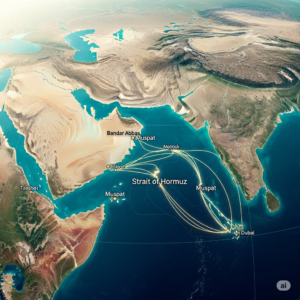
In the present scenario, the Gulf’s vulnerability stems from its exposure to disruptions in oil exports and capital flows. The ongoing conflict has constrained shipping through the Strait of Hormuz, limiting the ability of oil-exporting nations to generate dollar swap lines revenues. This has raised concerns about potential liquidity shortages, even in economies traditionally viewed as financially robust.
Officials have clarified that the discussions are largely precautionary. Emirati authorities, for instance, have indicated that while their economy remains stable, the unpredictability of the conflict necessitates contingency planning. This reflects a broader shift in global economic strategy, where nations are increasingly preparing for worst-case scenarios in an uncertain environment.
Role of the United Arab Emirates in Negotiations
The United Arab Emirates has emerged as a focal point in the ongoing discussions, given its status as a major financial hub in the Gulf. Talks between UAE officials and U.S. authorities have centered on the possibility of establishing a swap line that could provide access to dollar swap lines funding if required.
The proposal was raised by the UAE’s central bank governor during high-level meetings in Washington, where concerns were expressed about the potential economic impact of prolonged conflict. Officials highlighted risks such as declining investor confidence, reduced oil export revenues, and pressure on foreign reserves.
However, UAE representatives have been careful to frame the discussions as precautionary rather than urgent. Ambassador Yousef Al Otaiba emphasized the resilience of the UAE economy, stating that the country does not currently require external financial assistance. This dual messaging reflects a strategic approach—seeking safeguards while maintaining confidence in economic fundamentals.
Economic Pressures Driving the Move
The push for dollar liquidity is closely linked to the broader economic pressures facing the Gulf region. The conflict has disrupted key energy routes, particularly the Strait of Hormuz, through which a significant portion of global oil supply passes. This disruption has reduced export capacity and increased uncertainty in global energy markets.
In addition to trade disruptions, the conflict has imposed direct costs on Gulf economies. Infrastructure damage, increased defense spending, and heightened insurance premiums for shipping have all contributed to financial strain. These factors have combined to create a complex economic environment where maintaining liquidity becomes critical.
Another important consideration is the stability of currency pegs. Many Gulf currencies, including the UAE dirham, are pegged to the U.S. dollar. Ensuring sufficient dollar swap lines reserves is therefore essential to maintaining these pegs and preventing volatility in domestic financial systems. Swap lines provide a mechanism to support these arrangements in times of stress.
Global Financial and Geopolitical Implications
The implications of these developments extend far beyond the Gulf region. Dollar swap lines play a crucial role in maintaining global financial stability, particularly during periods of crisis. By providing liquidity to key economies, they help prevent market disruptions that could have cascading effects across the global financial system.
At the same time, the discussions highlight shifting geopolitical dynamics. The possibility that Gulf nations might explore alternative currencies for trade—such as the Chinese yuan—has raised concerns about the long-term dominance of the U.S. dollar swap lines in global energy markets. This introduces a strategic dimension to what might otherwise be seen as a purely financial arrangement.
The United States, for its part, faces a balancing act. Extending swap lines to Gulf nations could strengthen alliances and stabilize markets, but it also raises questions about precedent and the criteria for such support. The decision will likely be influenced by both economic considerations and broader geopolitical objectives.
Outlook
The move by Gulf nations to seek U.S. dollar support through swap lines represents a significant development in the evolving financial landscape of the region. While the discussions are currently precautionary, they underscore the growing interconnectedness of geopolitics and global finance.
Looking ahead, the trajectory of these negotiations will depend on the course of the Middle East conflict and its economic impact. If tensions persist, the likelihood of formalizing swap line agreements may increase, providing a critical safety net for regional economies. Conversely, a de-escalation could reduce the urgency of such measures.
Ultimately, the situation highlights the importance of preparedness in an uncertain world. As Gulf nations navigate the challenges of geopolitical instability and economic disruption, their efforts to secure financial safeguards reflect a broader trend toward resilience and strategic foresight.