A wave of declines across Gulf Stock Market Decline has underscored the deepening economic impact of the ongoing Iran-related conflict, with investors reacting sharply to rising geopolitical risks and sustained disruption in global energy flows. Markets in Saudi Arabia, the United Arab Emirates, and Qatar all recorded losses, reflecting heightened uncertainty over the trajectory of the crisis and its implications for regional stability.
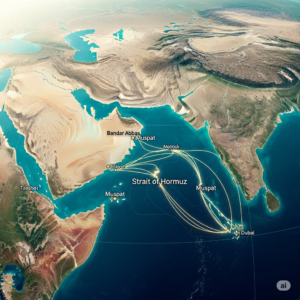
The downturn comes as tensions surrounding the Strait of Hormuz intensify, a critical global chokepoint through which nearly one-fifth of the world’s oil supply passes. Recent developments—including stalled diplomatic negotiations and continued restrictions on shipping—have pushed crude oil prices above $100 per barrel, amplifying concerns about inflation and economic slowdown.
While Gulf economies have historically benefited from high oil prices, the current situation presents a more complex challenge. The combination of disrupted exports, reduced trade flows, and geopolitical instability is weighing heavily on investor sentiment, prompting a cautious approach across regional financial markets.
Market Declines Across Key Gulf Economies
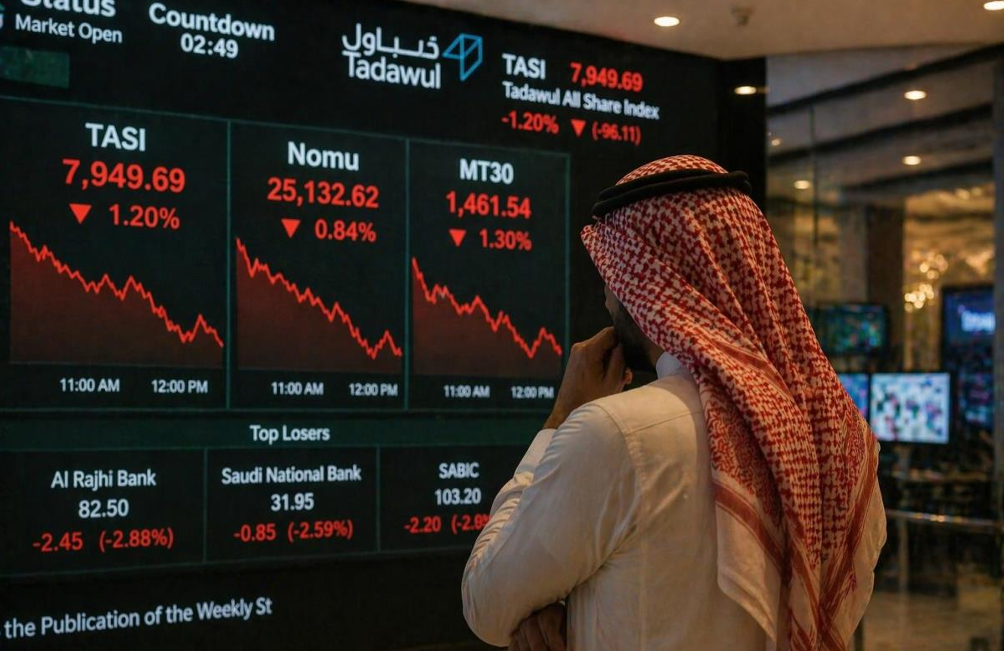
Stock markets across the Gulf Cooperation Council (GCC) region have recorded notable declines, with Saudi Arabia’s benchmark Tadawul index falling by approximately 1.2%, marking an extended losing streak. The drop was driven largely by declines in major banking stocks, including Al Rajhi Bank and Saudi National Bank, both of which experienced significant losses amid investor uncertainty.
In the United Arab Emirates, Abu Dhabi’s main index declined by around 0.4%, reflecting weakness in key financial institutions such as First Abu Dhabi Bank. Despite stronger-than-expected earnings reports from some companies, broader market sentiment remained negative, indicating that geopolitical concerns are outweighing corporate fundamentals.
Qatar’s stock index also edged lower, with modest declines observed in major banking stocks. While the drop was less pronounced compared to other Gulf markets, it nonetheless reflects a region-wide trend of cautious investor behavior. The synchronized movement across these markets highlights the systemic nature of the current economic pressures.
Geopolitical Drivers Behind Market Volatility
The primary driver of the market downturn is the escalating geopolitical tension linked to the Iran conflict and the disruption of maritime activity in the Strait of Hormuz. The seizure of vessels and the near shutdown of shipping routes have significantly increased the perceived risk of investing in the region, leading to capital outflows and reduced trading activity.
Diplomatic efforts between the United States and Iran have stalled, further exacerbating uncertainty. Investors had initially hoped that ceasefire extensions would pave the way for negotiations, but the lack of tangible progress has dampened optimism. This has created a volatile environment where market movements are driven more by geopolitical developments than by economic fundamentals.
The strategic importance of the Strait amplifies the impact of these developments. As a critical artery for global oil and gas shipments, any disruption has immediate repercussions for global markets. The ongoing crisis has therefore placed Gulf economies at the center of a broader geopolitical and economic storm.
Oil Prices and Economic Implications
The surge in oil prices, driven by supply disruptions, has had a mixed impact on Gulf economies. On one hand, higher prices can boost government revenues for oil-exporting nations. On the other hand, the current crisis has limited the ability of these countries to fully capitalize on elevated prices due to constraints on shipping and production.
Brent crude has risen above $100 per barrel, reflecting fears of prolonged supply disruptions. However, the benefits of higher prices are being offset by reduced export volumes and increased logistical challenges. Analysts estimate that a significant portion of Gulf oil output remains offline due to precautionary shutdowns and supply chain disruptions.
The broader economic implications are significant. Higher energy prices contribute to global inflation, which in turn affects demand for exports from Gulf countries. Additionally, increased insurance costs and shipping delays are adding to the financial burden on businesses operating in the region.
Sectoral Impact and Corporate Performance
The impact of the market downturn is not uniform across sectors. Financial institutions, which are closely tied to economic activity and investor confidence, have been among the hardest hit. Banks in Saudi Arabia and the UAE have seen notable declines, reflecting concerns about credit growth and asset quality in a slowing economic environment.
Industrial and commodity-linked sectors are also facing challenges. For example, companies in involved in petrochemicals and fertilizers have experienced sharp declines due to weaker demand and logistical disruptions. These sectors are particularly sensitive to changes in global trade dynamics, making them vulnerable to the ongoing crisis.
Despite these challenges, some companies have reported resilient performance, supported by strong balance sheets and diversified operations. However, these positive developments have not been sufficient to offset the broader negative sentiment, indicating that market trends are currently being driven by macro-level factors rather than individual corporate performance.
Outlook
The recent Gulf Stock Market Decline highlights the profound impact of geopolitical uncertainty on regional economies. As tensions in the Strait of Hormuz continue to disrupt trade and energy flows, investor confidence remains fragile, with markets reacting sharply to each new development.
Looking ahead, the trajectory of Gulf markets will depend largely on the resolution of the underlying geopolitical conflict. A successful diplomatic breakthrough could restore stability and revive investor sentiment, while prolonged tensions may lead to further volatility and economic strain.
In the broader context, the situation underscores the interconnected nature of global markets and the critical role of geopolitical stability in sustaining economic growth. For Gulf nations, navigating this period of uncertainty will require a delicate balance between leveraging their strengths as energy exporters and addressing the vulnerabilities exposed by the current crisis.