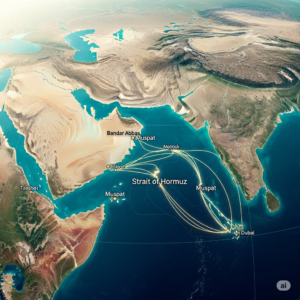
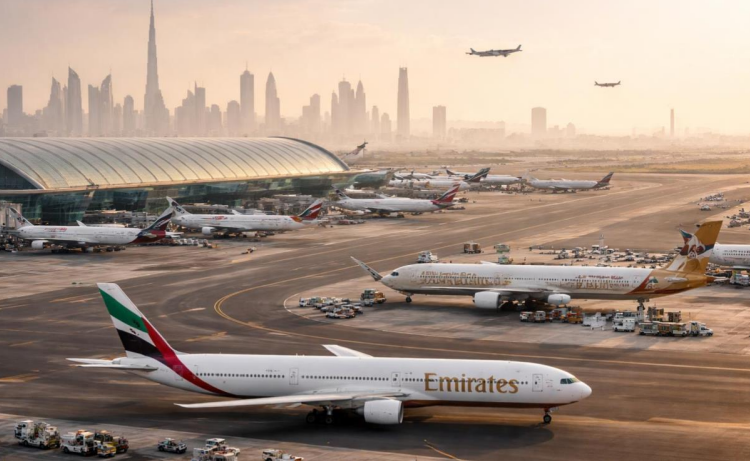
Aviation across the Gulf region is undergoing a fragile and highly controlled recovery as partial Gulf airspace restrictions reopening allows limited flight operations under strict security conditions. Following heightened geopolitical tensions in the Middle East, several Gulf nations—including the United Arab Emirates, Qatar, and Saudi Arabia—have adopted restricted corridor-based air traffic systems to cautiously resume operations. These developments reflect an evolving aviation landscape shaped by security concerns, military activity, and operational uncertainty.
The current system is far from a return to normalcy. Instead, it represents a tightly regulated framework where flights are permitted only through predefined corridors, often requiring prior approvals and real-time coordination with aviation authorities. Airlines are operating reduced schedules, with many routes suspended or rerouted, highlighting the ongoing volatility in the region’s airspace management.
This situation underscores the Gulf’s critical role in global aviation. As one of the world’s busiest transit hubs connecting Asia, Europe, and Africa, disruptions in Gulf airspace restrictions have far-reaching consequences. The present partial reopening marks a cautious step toward recovery, but the path ahead remains uncertain and heavily dependent on geopolitical developments.
Airspace Restrictions and Corridor-Based Operations
The current aviation framework in the Gulf is defined by a shift from open airspace to controlled corridor operations. Authorities in countries like the UAE have implemented systems where aircraft are funneled through specific routes, limiting free movement and ensuring tighter monitoring of air traffic.
In practical terms, this means that flights can only enter and exit through designated points, with strict adherence to assigned routes. Overflights—once a routine aspect of Gulf airspace restrictions—are now heavily restricted or entirely prohibited in certain regions. Countries such as Qatar have limited operations to approved arrivals and departures only, effectively reducing their role as major transit hubs.
This controlled environment is further reinforced by emergency systems such as the Emergency Security Control of Air Traffic (ESCAT), which allows authorities to dynamically manage Gulf airspace restrictions based on evolving security conditions. These measures ensure safety but significantly reduce capacity, creating bottlenecks and increasing operational complexity for airlines.
Airline Operations and Flight Resumption Trends
Airlines across the Gulf have begun gradual resumption of services, though operations remain far below pre-crisis levels. Carriers such as Emirates, Air Arabia, and flydubai have restarted limited flights, focusing on key routes and essential connectivity.
However, the resumption is highly selective. Flights are often operated on an ad-hoc basis rather than fixed schedules, with passengers being notified individually if their flights are confirmed. Airlines like Etihad Airways and Qatar Airways continue to operate significantly reduced networks, reflecting the constraints imposed by restricted Gulf airspace restrictions.
In many cases, priority is given to repatriation, emergency travel, and essential cargo, rather than commercial passenger traffic. This prioritization highlights the humanitarian and logistical considerations shaping aviation decisions in the region, as governments work to manage both security risks and public needs.
Regional Variations in Airspace Status
Airspace conditions vary significantly across the Gulf, creating a fragmented operational environment. While the UAE has partially reopened its airspace under strict controls, other countries present different levels of accessibility. For instance, Iran and Kuwait remain largely closed to commercial traffic, forcing airlines to reroute flights through alternative corridors.
Saudi Arabia and Oman have emerged as critical transit zones, providing relatively stable routes for flights avoiding conflict-affected areas. However, even these regions operate under reduced capacity, with traffic funneled through limited pathways due to military activity and operational constraints.
Meanwhile, countries like Bahrain and Iraq have reopened their Gulf airspace restrictions but require prior approvals and remain subject to sudden changes. This patchwork of policies creates challenges for airlines, which must constantly adapt to shifting conditions while ensuring passenger safety and regulatory compliance.
Global Aviation Impact and Economic Implications
The disruption of Gulf airspace restrictions has exposed the global aviation system’s dependence on the region. Major hubs such as Dubai, Abu Dhabi, and Doha typically handle hundreds of thousands of passengers daily, serving as key connectors between continents.
With restricted operations, airlines are facing longer routes, increased fuel costs, and scheduling complexities. Alternative corridors—such as routes through the Caucasus region—are becoming congested, further complicating global air traffic flows. These challenges are translating into higher operational costs and potential increases in ticket prices for passengers worldwide.
The economic impact extends beyond airlines. Tourism, trade, and logistics sectors across the Gulf are experiencing disruptions, with reduced connectivity affecting business activities and international travel. The situation highlights the interconnected nature of global aviation and the ripple effects of regional instability.
Outlook
The partial reopening of Gulf airspace restrictions under restricted corridors represents a cautious step toward restoring aviation operations in one of the world’s most critical transit regions. While limited flights have resumed, the system remains highly controlled, reflecting ongoing security concerns and geopolitical uncertainties.
Looking ahead, the trajectory of Gulf aviation will depend on the stabilization of regional tensions and the ability of authorities to gradually ease restrictions. A return to full operational capacity will require not only improved security conditions but also coordinated efforts among governments, airlines, and international aviation bodies.
In the interim, the Gulf’s aviation sector is likely to operate in a hybrid state—partially functional yet heavily constrained. This period of adjustment may also accelerate long-term changes in global aviation, including diversification of routes and increased resilience planning. Ultimately, the current developments underscore the delicate balance between security and connectivity in a rapidly changing geopolitical landscape.