
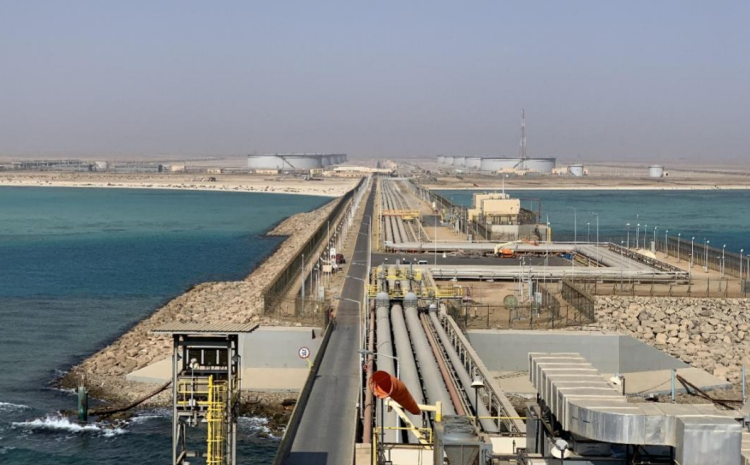
Saudi Arabia has quietly activated its strategic Saudi Arabia East–West pipeline network, redirecting crude oil exports toward the Red Sea port of Yanbu in a calculated move to safeguard supply continuity amid rising geopolitical risks in the Strait of Hormuz. The decision reflects a broader shift in regional energy logistics, as Gulf producers increasingly seek to diversify export routes to mitigate exposure to maritime disruptions. With global markets closely watching developments in the Middle East, Riyadh’s move signals both preparedness and strategic intent.
The Saudi Arabia East–West pipeline, one of the kingdom’s most critical energy assets, allows Saudi Arabia to bypass the Strait of Hormuz entirely—an artery through which nearly a fifth of the world’s oil supply typically flows. By leveraging this infrastructure, the kingdom ensures that exports can continue uninterrupted even in scenarios of partial or full maritime disruption. This operational flexibility has become increasingly important as tensions in the region fluctuate.
Saudi officials have not framed the move as a crisis response, but rather as part of a long-term resilience strategy. However, market analysts interpret the timing as significant, given the heightened security concerns across key Gulf shipping routes. The activation of alternative export pathways underscores Saudi Arabia’s role as a stabilizing force in global energy markets.
Strategic Use of East–West Pipeline Infrastructure
The Saudi Arabia East–West pipeline, stretching approximately 1,200 kilometers across the kingdom, connects oil fields in the Eastern Province to the Red Sea coast. With an estimated capacity of around 5 million barrels per day, the pipeline provides a critical alternative to tanker routes passing through the Strait of Hormuz. Its utilization allows Saudi Arabia to maintain export volumes even under constrained maritime conditions.
The Red Sea terminal at Yanbu plays a central role in this strategy, serving as a key export hub that enables shipments to global markets without reliance on the Gulf’s most sensitive chokepoint. This geographic advantage enhances Saudi Arabia’s ability to respond to disruptions while maintaining consistent supply to major energy consumers.
Geopolitical Risks and Energy Security Considerations
The activation of the pipeline comes against the backdrop of heightened geopolitical tensions in the Middle East, particularly around the Strait of Hormuz. The waterway has long been a focal point of global energy security concerns due to its strategic importance and vulnerability to conflict.
Any disruption in the Strait could have significant implications for global oil prices and supply chains. By proactively utilizing alternative infrastructure, Saudi Arabia is mitigating these risks and reinforcing its position as a reliable energy supplier. This approach reflects a broader trend among energy-producing nations to prioritize resilience and redundancy in their export systems.
Impact on Global Oil Markets
Saudi Arabia’s strategic move is likely to have a stabilizing effect on global oil markets. By ensuring continuity of supply, the kingdom reduces the risk of sudden price spikes that could result from disruptions in key shipping routes. This stability is particularly important in a market already influenced by economic uncertainty and fluctuating demand patterns.
Market participants view the activation of the East–West pipeline as a signal of confidence and preparedness. It demonstrates the kingdom’s ability to adapt to changing conditions while maintaining its leadership role in the global energy sector. The move may also influence other producers to explore similar strategies for diversifying export routes.
Long-Term Strategic Implications
Beyond immediate risk mitigation, the use of the East–West pipeline highlights Saudi Arabia’s long-term vision for energy security and market stability. Investments in infrastructure that enhance flexibility and resilience are becoming increasingly important as the global energy landscape evolves.
The kingdom’s approach aligns with broader efforts to modernize its energy sector and strengthen its position in international markets. By reducing reliance on vulnerable transit points, Saudi Arabia East–West pipeline is not only protecting its own economic interests but also contributing to the stability of global energy supply chains.
Conclusion
Saudi Arabia’s activation of its strategic pipeline network represents a calculated and forward-looking response to geopolitical uncertainty. By leveraging alternative export routes, the kingdom is ensuring the continuity of oil supply while reinforcing its role as a key player in global energy markets.
As geopolitical risks persist and energy dynamics continue to shift, such measures are likely to become more common. Saudi Arabia’s actions serve as a reminder of the importance of infrastructure, planning, and adaptability in maintaining stability in an increasingly complex global environment.