
Saudi Arabia has moved decisively to safeguard its position as the world’s leading oil exporter by activating and maximizing the use of its East–West crude oil pipeline, a strategic inland corridor linking its eastern oil fields to the Red Sea port of Yanbu. This shift comes amid severe disruptions in the Strait of Hormuz, a chokepoint through which nearly a fifth of global oil supplies typically pass. As geopolitical tensions intensify across the Gulf, Riyadh’s ability to reroute crude has become central to stabilizing both its domestic energy operations and global supply chains.
The East–West pipeline, also known as Petroline, has emerged as the kingdom’s most critical strategic asset in times of crisis. With a capacity reaching up to 7 million barrels per day, the infrastructure allows Saudi Arabia to bypass vulnerable maritime routes and maintain export continuity even when the Gulf is effectively blocked.
This development reflects not only an operational adjustment but a broader geopolitical maneuver. By sustaining exports while other Gulf producers struggle with limited alternatives, Saudi Arabia is reinforcing its dominance in global energy markets, even as the region faces unprecedented instability.
Strategic Shift: From Gulf Dependence to Red Sea Routing
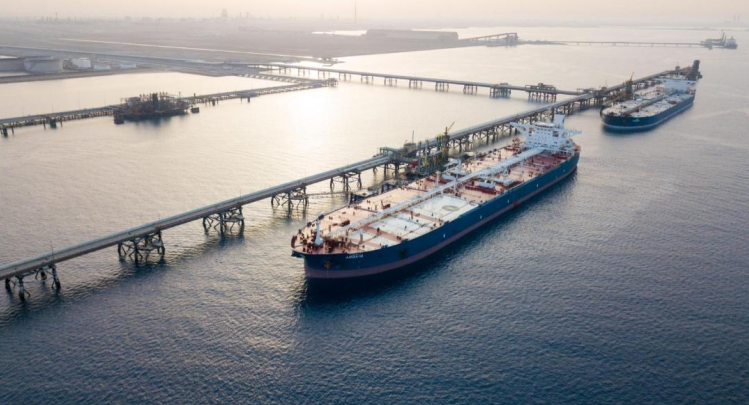
The activation of the East–West pipeline marks a clear shift in Saudi Arabia’s export strategy—from heavy reliance on Gulf shipping lanes to a diversified route network anchored in the Red Sea oil corridor. Oil is transported from major fields in the Eastern Province across the Arabian Peninsula to Yanbu, where it is loaded onto tankers bound for global markets.
This pivot has been accelerated by ongoing disruptions in Hormuz, where security risks, naval tensions, and blockades have significantly reduced shipping capacity. In response, Saudi Aramco has actively rerouted crude shipments to Yanbu to ensure uninterrupted supply, particularly to Asian buyers.
However, while the pipeline provides critical flexibility, it is not a complete substitute for Gulf exports. Analysts note that although large volumes can be diverted, infrastructure limitations at Yanbu mean the Red Sea oil corridor route cannot fully compensate for the massive throughput traditionally handled via Hormuz.
Infrastructure Strength and Operational Capacity
The East–West pipeline’s importance lies in both its scale and its resilience. Originally built during the Iran-Iraq War to mitigate risks associated with maritime conflict, the pipeline spans over 1,200 kilometers and connects Saudi Arabia’s energy heartland to its western coastline.
Today, the system can handle up to 5 million barrels per day under normal conditions, and up to 7 million barrels per day when fully optimized, providing significant logistical flexibility. This capacity allows Saudi Arabia to redirect exports rapidly in response to geopolitical shocks.
Despite its robustness, the infrastructure has not been immune to conflict. Recent attacks linked to regional tensions temporarily disrupted flows and reduced throughput, highlighting the vulnerability of even inland energy assets. However, Saudi authorities have since restored full operational capacity, underscoring the resilience of the system.
Global Energy Market Implications
Saudi Arabia’s rerouting strategy has far-reaching implications for global energy markets. By maintaining export volumes through alternative routes, the kingdom is helping to mitigate supply shocks that could otherwise trigger extreme price volatility.
The shift has also led to a surge in Red Sea oil corridor shipments, with Yanbu emerging as a critical export hub. Shipping data indicates that flows through the pipeline have reached record levels, reflecting the urgency of maintaining supply chains in a disrupted environment.
At the same time, logistical constraints and rising transportation costs—particularly for tankers operating in higher-risk zones—are adding pressure to global oil prices. The inability of alternative routes to fully replace Hormuz capacity means markets remain sensitive to further disruptions, keeping volatility elevated.
Geopolitical Leverage and Regional Dynamics
Saudi Arabia’s ability to sustain exports while bypassing Hormuz has enhanced its geopolitical leverage. In a region where energy infrastructure is increasingly targeted, having a viable alternative route provides Riyadh with both economic stability and strategic advantage.
This advantage is particularly significant when compared to other Gulf producers, many of whom remain heavily dependent on Hormuz for exports. Countries like Iraq, Kuwait, and even the UAE face greater exposure to disruptions, placing Saudi Arabia in a comparatively stronger position.
However, the strategy is not without risks. The Red Sea oil corridor route itself faces potential threats, including instability near the Bab el-Mandeb Strait and the presence of Iran-aligned groups capable of targeting shipping lanes. This underscores the fragile nature of the current energy security framework in the region.
Outlook
Saudi Arabia’s activation of the East–West pipeline represents a critical adaptation to one of the most severe disruptions in global energy logistics in recent years. By rerouting crude to the Red Sea oil corridor, the kingdom has not only preserved its export capacity but also reinforced its role as a stabilizing force in global oil markets.
In the short term, this strategy is likely to continue as long as risks in the Strait of Hormuz persist. The pipeline will remain central to Saudi Arabia’s ability to navigate geopolitical uncertainty and maintain supply commitments.
Looking ahead, the crisis is likely to accelerate long-term investments in alternative export infrastructure across the Gulf. For Saudi Arabia, the current moment highlights both the value of strategic foresight and the necessity of continued diversification in energy logistics—ensuring resilience in an increasingly volatile global landscape.