
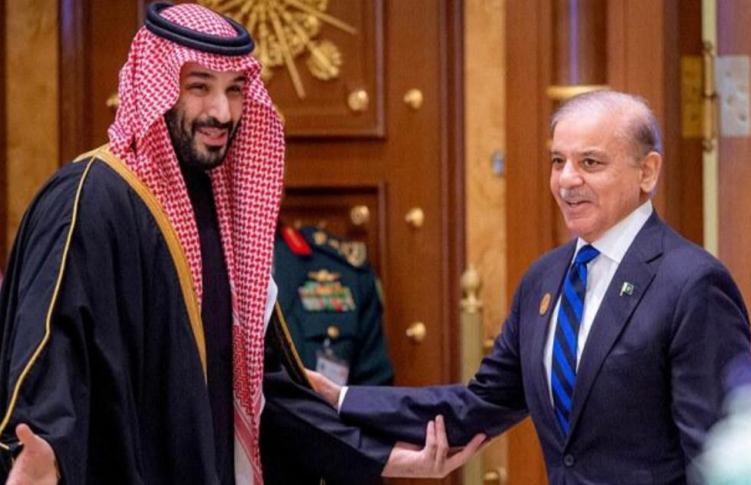
Saudi Arabia has announced a fresh $3 billion financial support package for Pakistan, marking a significant development in regional economic diplomacy and reinforcing long-standing strategic ties between the two nations. The funding comes at a critical moment for Pakistan, which is facing mounting external debt obligations and pressure on its foreign exchange reserves.
The financial assistance is structured as a deposit aimed at stabilising Pakistan’s balance of payments and supporting its macroeconomic framework. The move is particularly timely as Pakistan prepares to repay approximately $3.5 billion to the United Arab Emirates, a liability that represents nearly 18% of its total foreign reserves.
This development underscores the evolving geopolitical and economic landscape in the Gulf and South Asia, where financial Saudi support Pakistan is increasingly intertwined with strategic partnerships, defence cooperation, and regional stability. Saudi Arabia’s intervention reflects both economic pragmatism and geopolitical alignment in a period of heightened global uncertainty.
Financial Structure and Immediate Economic Impact
The newly announced $3 billion package is part of a broader financial framework through which Saudi Arabia has consistently supported Pakistan’s economy during periods of fiscal stress. In addition to this fresh injection, Riyadh has also extended a $5 billion deposit arrangement, providing Pakistan with critical liquidity support.
The immediate objective of this funding is to bolster Pakistan’s foreign exchange reserves, which stood at approximately $16.4 billion as of late March. The upcoming repayment to the UAE posed a significant risk of reserve depletion, potentially undermining Pakistan’s ability to meet its external financing requirements.
By providing this financial cushion, Saudi Arabia has effectively helped Pakistan maintain stability in its external accounts. The move has also had a positive impact on market sentiment, with Pakistan’s international bonds reportedly strengthening following the announcement, reflecting improved investor confidence.
Strategic and Geopolitical Dimensions
Beyond its economic significance, the financial Saudi support Pakistan highlights the deepening strategic relationship between Saudi Arabia and Pakistan. The two countries share a long history of cooperation, which has recently been reinforced by a mutual defence pact that treats an attack on one as an attack on both.
This partnership has gained additional importance in the context of ongoing geopolitical tensions in the Middle East. Pakistan has played a key role as a diplomatic intermediary in efforts to de-escalate the US–Iran conflict, while also supporting Saudi Arabia’s defence infrastructure amid regional threats.
The financial assistance can therefore be seen as part of a broader strategic alignment, where economic Saudi support Pakistan complements defence cooperation and diplomatic coordination. This multidimensional relationship positions Pakistan as a critical partner for Saudi Arabia in both regional security and geopolitical negotiations.
Pakistan’s Economic Challenges and IMF Commitments
Pakistan’s current economic situation remains fragile, with the country operating under a $7 billion International Monetary Fund (IMF) programme aimed at stabilising its economy and rebuilding reserves. Under this programme, Pakistan is required to increase its reserves to over $18 billion by mid-2026.
The $3 billion support from Saudi Arabia plays a crucial role in helping Pakistan meet these targets. Without such external assistance, the country would face significant challenges in managing its debt obligations, maintaining currency stability, and sustaining economic growth.
In addition to bilateral support, Pakistan is exploring alternative financing options, including Eurobonds, commercial loans, and multilateral funding. However, Saudi Arabia’s timely intervention highlights the continued importance of traditional strategic allies in navigating economic crises.
Regional Implications and Financial Diplomacy
The financial support package also reflects broader trends in regional financial diplomacy, where Gulf nations are increasingly leveraging their economic strength to influence regional stability and partnerships. Saudi Arabia’s decision to extend support to Pakistan demonstrates its role as a key financial anchor in the region.
At the same time, the move has implications for other Gulf economies, particularly the UAE, which is directly linked to Pakistan’s debt obligations. The interplay between these relationships highlights the interconnected nature of financial systems within the Gulf and South Asia.
Furthermore, the Saudi support Pakistan comes amid a period of heightened geopolitical tension, including disruptions in energy markets and trade routes. By stabilising Pakistan’s economy, Saudi Arabia is indirectly contributing to broader regional stability, reducing the risk of financial contagion and economic spillovers.
Conclusion
Saudi Arabia’s $3 billion financial support to Pakistan represents more than just an economic transaction; it is a strategic intervention with far-reaching implications for regional stability, economic resilience, and geopolitical alignment. The move reinforces Saudi Arabia’s position as a key financial and strategic partner in South Asia.
In the short term, the funding will help Pakistan navigate immediate financial pressures, particularly its debt obligations and reserve constraints. It also provides breathing space for policymakers to implement structural reforms under the IMF programme.
Looking ahead, the sustainability of Pakistan’s economic recovery will depend on continued external support, domestic policy reforms, and global economic conditions. For Saudi Arabia, the investment strengthens its influence in the region, underscoring the growing role of financial diplomacy in shaping international relations.