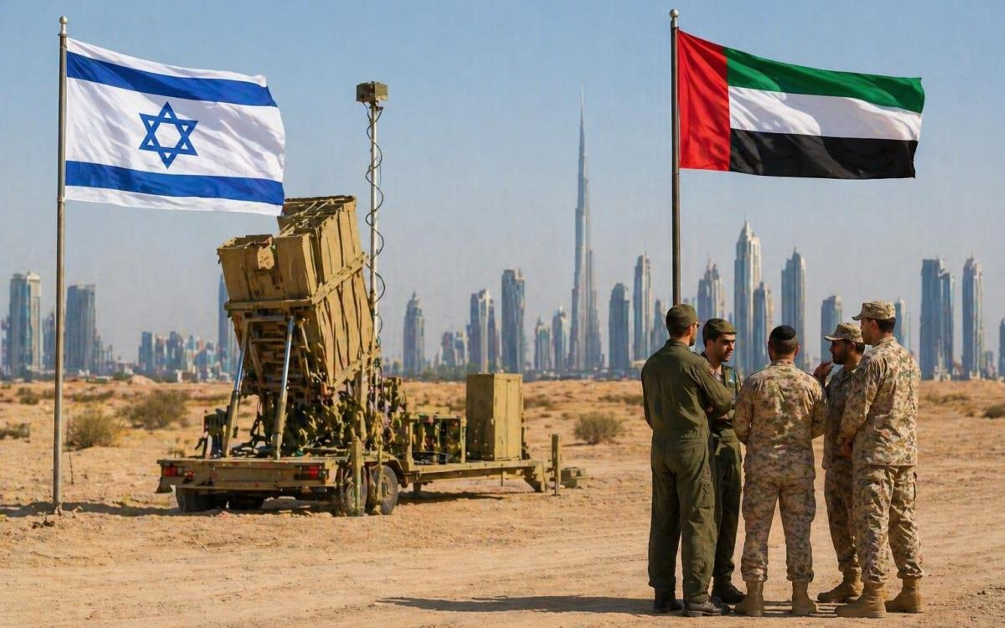
A significant shift in Middle East security dynamics has emerged as Israel reportedly deployed its advanced Israel Iron Dome UAE air defense system and military personnel in the United Arab Emirates during the ongoing Iran-linked conflict.
The move represents a notable deepening of defense cooperation between the two countries and underscores the rapidly evolving geopolitical landscape in the Gulf region.
The deployment comes amid escalating tensions surrounding maritime security and regional stability, particularly in and around the Strait of Hormuz. With increasing concerns over missile threats, drone attacks, and broader military escalation, Gulf nations are reassessing their defense strategies and partnerships. The UAE’s decision to host Israeli defense systems signals a new phase of strategic alignment in response to shared security concerns.
This development is rooted in the broader normalization of relations between Israel and several Arab states, following the Abraham Accords. However, the operational deployment of military systems marks a transition from diplomatic engagement to active security collaboration, reflecting the urgency and seriousness of the current regional crisis.
Details of the Deployment and Strategic Context
The Israel Iron Dome UAE system, developed by Israel, is widely regarded as one of the world’s most effective short-range missile defense systems. It is designed to intercept and destroy incoming rockets and projectiles, providing a critical layer of protection against aerial threats. Its deployment in the UAE indicates a direct response to heightened security risks in the region.
Reports suggest that the deployment includes not only the system itself but also Israeli personnel responsible for its operation and maintenance. This level of involvement highlights the operational nature of the cooperation, going beyond symbolic or advisory roles. The move is seen as a proactive measure to safeguard critical infrastructure and population centers in the UAE.
The timing of the deployment is closely linked to the ongoing Iran conflict, which has intensified concerns about potential attacks on Gulf states. By positioning the Israel Iron Dome UAE and its partners aim to enhance defensive capabilities and deter potential aggression, while also demonstrating the effectiveness of their security partnership.
Evolution of UAE–Israel Defense Relations
The deployment represents a significant milestone in the evolution of UAE–Israel relations. Since the signing of the Abraham Accords in 2020, the two countries have expanded cooperation across various sectors, including trade, technology, and tourism. Defense collaboration, however, has remained a particularly sensitive and strategic area.
In recent years, both nations have increasingly recognized the benefits of closer security ties, particularly in the face of shared concerns over regional threats. Joint exercises, intelligence sharing, and defense technology partnerships have laid the groundwork for deeper collaboration. The Iron Dome deployment builds on this foundation, marking a transition to direct operational cooperation.
This evolution reflects a broader trend in the region, where traditional alliances are being redefined in response to changing geopolitical realities. The UAE’s willingness to host Israeli defense systems signals a pragmatic approach to security, prioritizing effectiveness and strategic alignment over historical divisions.
Regional Reactions and Geopolitical Implications
The deployment has significant implications for the broader Middle East, particularly in terms of regional power dynamics. For Iran, the presence of Israeli military assets in the Gulf represents a direct challenge, potentially escalating tensions and complicating diplomatic efforts.
Other Gulf states are closely monitoring the situation, with some viewing the move as a model for enhanced regional cooperation. The integration of advanced defense systems could encourage further collaboration among countries seeking to strengthen their security frameworks.
At the same time, the development has drawn attention from global powers, including the United States, which maintains a strong military presence in the region. The interplay between U.S., Israeli, and Gulf defense strategies will be a key factor in shaping the future security architecture of the Middle East.
Economic and Energy Security Dimensions
Beyond its military significance, the deployment also has important economic implications. The Gulf region is a critical hub for global energy supply, and ensuring its security is essential for maintaining stability in international markets. Any disruption to infrastructure or shipping routes could have far-reaching consequences.
The presence of advanced defense systems like Iron Dome is expected to enhance confidence among investors and businesses operating in the region. By mitigating security risks, such measures can help stabilize markets and support economic activity, even in times of heightened tension.
However, the cost of maintaining such systems and the potential for further escalation also pose challenges. Balancing security needs with economic considerations will be a key priority for Gulf nations as they navigate the current crisis.
Outlook
The deployment of Israel Iron Dome UAE system in the UAE marks a pivotal moment in the evolution of Middle East security dynamics. It reflects a shift toward deeper, more operational forms of cooperation between nations that share common strategic interests.
Looking ahead, the development raises important questions about the future of regional alliances and the balance of power in the Gulf. While the move strengthens defensive capabilities, it also introduces new complexities that could influence diplomatic and military interactions.
Ultimately, the success of this approach will depend on the ability of regional and global actors to manage tensions and pursue pathways to stability. As the situation continues to evolve, the integration of advanced defense systems and the strengthening of strategic partnerships will play a crucial role in shaping the future of the Middle East.