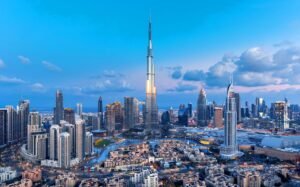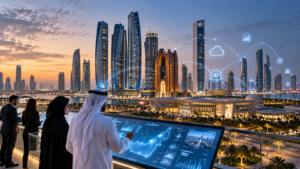

The United Arab Emirates (UAE) has cemented its status as one of the world’s fastest UAE economic growth 2025, marked by a remarkable surge in non-oil trade and a record influx of foreign direct investment (FDI). The country’s economic resilience continues to attract global attention, with Dubai’s outlook remaining robust and projections indicating a 4.5% growth for 2026, driven by dynamic expansion in both the private and public sectors. The non-oil Purchasing Managers’ Index (PMI) has climbed to a nine-month high of 54.8, signaling strong demand, increased hiring, and rising prices fueled by robust orders—a clear indicator of the UAE’s thriving business environment.
Record-Breaking Non-Oil Trade and FDI
One of the most notable achievements for the UAE economic growth 2025 has been the surge in non-oil trade, which increased by 24.5% compared to the previous year. This growth highlights the country’s successful diversification strategy, reducing reliance on oil revenues and strengthening sectors such as logistics, technology, manufacturing, and services. The increase in non-oil trade has been supported by strategic initiatives to enhance trade infrastructure, streamline regulatory processes, and attract international businesses to set up operations in the UAE.
Foreign direct investment (FDI) into the UAE economic growth 2025 reached a staggering Dh167 billion in 2025, reflecting the country’s appeal as a global investment destination. The inflow of FDI has been driven by several factors, including political stability, business-friendly regulations, world-class infrastructure, and a strategic geographic location that connects major global markets. Investors are particularly drawn to the UAE’s free zones, which offer 100% foreign ownership, tax incentives, and streamlined business setup processes.
Dubai’s Economic Resilience and Growth Projections
Dubai, the commercial and financial hub of the UAE economic growth 2025, continues to lead the country’s economic growth. The emirate’s economic outlook remains resilient, with projections indicating a 4.5% growth rate for 2026. This growth is expected to be fueled by expansion in key sectors such as tourism, real estate, technology, and financial services. The Dubai government has implemented several initiatives to support business growth, including investment in infrastructure, innovation hubs, and digital transformation projects.
The private sector is playing a crucial role in driving Dubai’s economic expansion, with companies investing in new technologies, expanding their operations, and creating employment opportunities. The public sector is also contributing significantly, with government-led projects in infrastructure, healthcare, education, and smart city development. These initiatives are creating a favorable environment for businesses to thrive and attract further investment.
Non-Oil PMI: A Barometer of Economic Health
The non-oil Purchasing Managers’ Index (PMI) is a key indicator of economic health, providing insights into the performance of the non-oil sector. In UAE economic growth 2025, the UAE’s non-oil PMI reached a nine-month high of 54.8, reflecting strong demand, increased hiring, and rising prices due to robust orders. The PMI is based on a survey of purchasing managers in the non-oil sector, covering areas such as production, new orders, employment, supplier deliveries, and inventories.
The high PMI reading indicates that businesses in the non-oil sector are experiencing increased activity, with higher levels of production and new orders. This has led to increased hiring, as companies seek to meet the growing demand for goods and services. The rise in prices is also a sign of strong demand, as businesses pass on higher costs to consumers due to increased input costs and supply chain pressures.
Key Drivers of Economic Growth
Several factors are driving the UAE’s economic growth in 2025. The government’s focus on economic diversification has been instrumental in reducing reliance on oil revenues and promoting the growth of non-oil sectors. The UAE economic growth 2025 has invested heavily in infrastructure, innovation, and digital transformation, creating a favorable environment for businesses to thrive.
The country’s strategic location, world-class infrastructure, and business-friendly regulations have made it a preferred destination for international investors. The UAE’s free zones offer 100% foreign ownership, tax incentives, and streamlined business setup processes, attracting businesses from around the world. The government has also implemented several initiatives to support entrepreneurship, innovation, and digital transformation, further enhancing the country’s appeal as a global business hub.
Impact on Employment and Business Environment
The surge in non-oil trade and FDI has had a positive impact on employment and the business environment in the UAE. The increase in business activity has led to higher levels of hiring, with companies seeking skilled workers to meet the growing demand for goods and services. The rise in employment has contributed to higher consumer spending, further boosting economic growth.
The UAE’s business environment is also benefiting from the government’s focus on innovation and digital transformation. Companies are investing in new technologies, expanding their operations, and creating new business models to stay competitive. The government’s support for entrepreneurship and innovation is creating opportunities for startups and small businesses to thrive, further enhancing the country’s economic resilience.
Future Outlook and Challenges
The UAE’s economic outlook for 2026 remains positive, with projections indicating continued growth in key sectors such as tourism, real estate, technology, and financial services. The government’s focus on economic diversification, innovation, and digital transformation is expected to drive further expansion and attract more investment.
However, the UAE economic growth 2025 also faces challenges, including global economic uncertainties, geopolitical tensions, and supply chain disruptions. The government is closely monitoring these risks and implementing measures to mitigate their impact on the economy. The focus on economic diversification, innovation, and digital transformation is expected to enhance the country’s resilience and ability to navigate future challenges.
Conclusion
In conclusion, the UAE’s record-breaking non-oil trade, record FDI inflows, and robust UAE economic growth 2025 highlight the country’s success in diversifying its economy and attracting global investment. Dubai’s economic resilience and growth projections for 2026, driven by expansion in both the private and public sectors, underscore the UAE’s position as one of the world’s fastest-growing economies.