
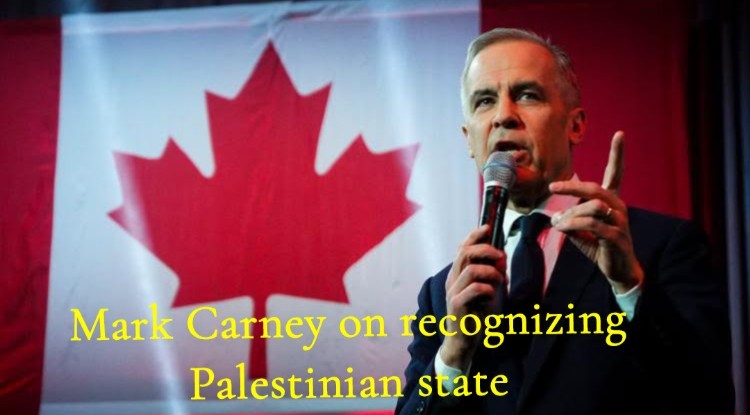
Ottawa, July 31 – In a significant development in Western foreign policy, Canadian Prime Minister Mark Carney has announced that Canada to Recognize Palestine will formally recognise the State of Palestine this September, becoming the third G7 country—after the United Kingdom and France—to make such a commitment in recent days.
Carney emphasized that this move would be conditional upon democratic reforms within the Palestinian Authority, notably including national elections to be held next year without the participation of Hamas. He underscored that Canada’s decision aligns with growing concerns over Israeli settlement expansion, worsening humanitarian conditions in Gaza, and the impact of the October 7, 2023, Hamas-led attacks on Israel.
Speaking at a press conference, Carney declared that the official recognition would take place during the upcoming United Nations General Assembly. He stressed that the recognition must be accompanied by strong assurances from the Palestinian Authority regarding governance reforms and a commitment to demilitarisation.
“This approach of endless waiting for a negotiated two-state solution is no longer tenable,” Carney said, referring to Canada’s long-standing position supporting a peace process between Israel and the Palestinians. “The prospect of a Palestinian state is being eroded before our eyes.”
Criticism Surrounds Canada to Recognize Palestine Move
The Israeli Ministry of Foreign Affairs sharply rejected the Canadian government’s announcement, labelling it “a reward for Hamas.”
Similarly, domestic criticism came from Canada’s Conservative Party, which issued a statement condemning the timing of the move.
“Recognising a Palestinian state in the aftermath of the October 7 terrorist atrocities sends the wrong message to the world,” the opposition party said.
US President Donald Trump, meanwhile, reacted negatively to the news, suggesting it will make a possible trade deal between the US and Canada to Recognize Palestine very hard.
On Thursday, Trump posted on his Truth Social network:
“Wow! Canada to Recognize Palestine has just announced that it is backing statehood for Palestine. That will make it very hard for us to make a Trade Deal with them.”
Diplomatic Context
The announcement comes as Carney faces mounting diplomatic pressure to respond to evolving positions on Palestinian statehood by Canada’s closest allies. The UK recently stated it would proceed with recognition of Palestine in September unless Israel agrees to a ceasefire and fulfills other conditions. France announced a comparable initiative just one week prior, signaling a coordinated policy shift among major Western powers.
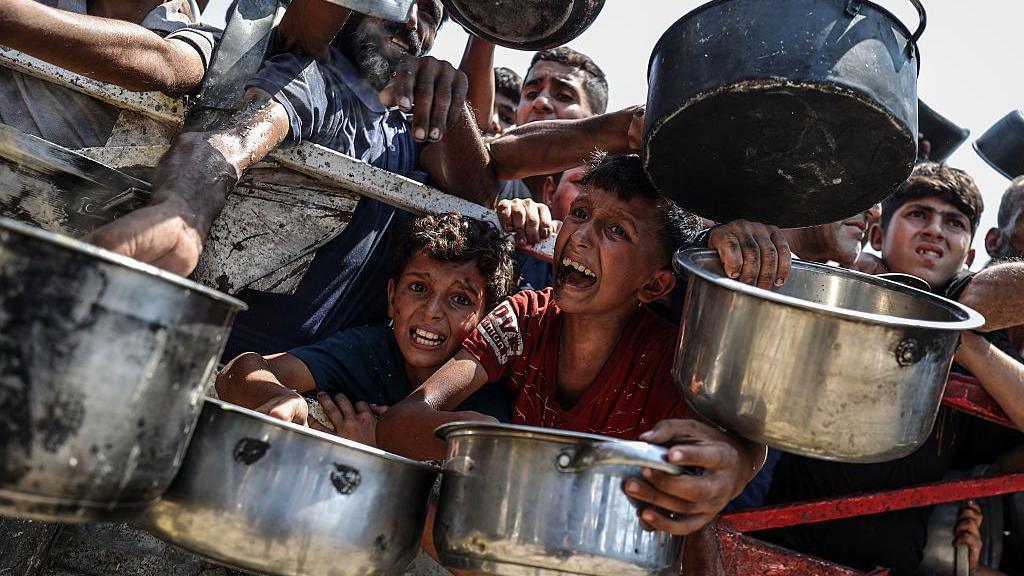
Canada, a close partner of both the US and European nations, has been walking a diplomatic tightrope amid the deepening crisis in Gaza. Carney noted the continuing displacement of civilians, indiscriminate bombardment, and deteriorating conditions that have provoked global condemnation.
In his briefing, Carney revealed he had spoken to Palestinian Authority President Mahmoud Abbas just hours before the announcement to personally inform him of Canada’s intentions and the conditions attached. The Canadian leader made it clear that recognition would not be symbolic but would involve active political engagement, conditioned on a Palestinian commitment to democratic principles and demilitarisation.
While Canada to Recognize Palestine has historically backed a two-state solution, Carney said recent developments have rendered passive support insufficient.
He stated “We must act decisively if there is to be any hope of salvaging the two-state framework.”
Support
The announcement was welcomed with cautious optimism among some Palestinians, despite limited access to news and social media in Gaza. Imad Abu Shawish, a journalist based in Gaza, posted on Facebook:
“Another slap to Israel – this time from Canada after France and the UK. Every recognition brings us a step closer to our dream of an independent state.”
Support for Carney’s move also came from within Canada’s diplomatic corps. Earlier this week, nearly 200 former Canadian ambassadors and diplomats signed an open letter urging the government to recognise a Palestinian state.
The letter condemned the ongoing crisis in Gaza.
“Canada’s principles,” the letter stated, “are being abandoned daily with the massive displacement, indiscriminate bombardment and starvation of Palestinian civilians in Gaza and the violent attacks by extremist settlers in the West Bank.”
When asked by reporters whether his decision was influenced by the positions of France and the UK or whether he had consulted with US President Trump, Carney was firm in asserting Canada’s independence in foreign policy decisions.
“Canada makes its own foreign policy decisions,” he stated.
Should both the UK and France proceed with their planned recognitions in September, the United States—long viewed as Israel’s staunchest ally—would become the only permanent member of the UN Security Council not to formally recognise a Palestinian state.
As the date for the UN General Assembly approaches, attention will now turn to how Israel, the United States, and the broader international community respond to this growing push for Palestinian statehood recognition.