
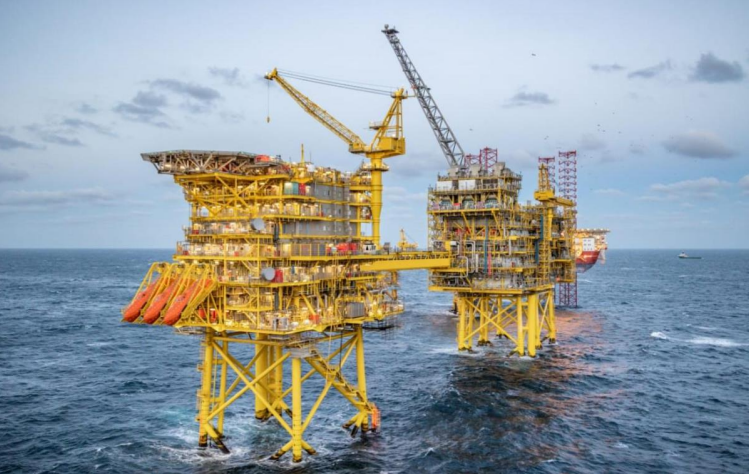
French energy giant TotalEnergies has confirmed a significant decline in its global oil and gas production following disruptions to operations in the Middle East, including offshore facilities in the United Arab Emirates (UAE). According to company statements and industry reports, TotalEnergies Production Drop’ overall production has fallen by around 15%, reflecting the growing impact of the regional conflict on energy infrastructure and supply chains across the Gulf.
The production decline highlights how geopolitical tensions in the region have begun to directly affect global energy companies operating in key hydrocarbon-producing areas. The Middle East remains one of the world’s most critical energy hubs, accounting for a substantial share of global oil and natural gas production. Disruptions in this region therefore have far-reaching consequences for international energy markets, corporate output levels and global supply stability.
TotalEnergies Production Drop confirmed that offshore oil production in the UAE has been halted, marking one of the first official acknowledgements from a major international oil company that the ongoing conflict has caused operational outages in Gulf energy infrastructure. The company noted that these shutdowns have contributed to the sharp reduction in its upstream production during the current reporting period.
Regional Conflict Disrupts Energy Infrastructure
The decline in TotalEnergies Production Drop is closely linked to the broader escalation of geopolitical tensions in the Middle East, which has disrupted energy transportation routes, offshore operations and oil field activities. The conflict has affected several countries across the Gulf region, including the UAE, Qatar and Iraq, where energy companies operate major upstream projects and export facilities.
Energy analysts note that the region plays a critical role in global oil supply, particularly through the Strait of Hormuz, a narrow maritime passage through which a significant portion of the world’s crude oil exports are transported. Any disruption to operations in nearby offshore fields or shipping routes can quickly ripple across global energy markets, influencing production levels and commodity prices.
In recent weeks, heightened security risks and military activity have forced companies to temporarily suspend operations in certain offshore fields and facilities. These precautionary shutdowns are intended to protect workers, infrastructure and equipment from potential damage during periods of heightened instability. However, they also result in immediate declines in production output for energy companies operating in the region.
TotalEnergies’ Middle East Exposure
TotalEnergies maintains a substantial presence across the Middle East energy sector, with major projects and partnerships in countries such as the United Arab Emirates, Qatar, Iraq and Saudi Arabia. Analysts estimate that approximately 29% of the company’s global production is linked to the Middle East, making the region one of its most strategically important operational areas.
In the UAE specifically, TotalEnergies participates in several offshore oil concessions and joint ventures alongside national energy companies. These projects contribute significantly to the country’s hydrocarbon production capacity and are considered essential components of the global energy supply chain.
The suspension of offshore operations in the UAE therefore represents a notable disruption not only for TotalEnergies Production Drop but also for the broader energy ecosystem. The shutdown affects production volumes, transportation schedules and export logistics, which can influence global oil supply levels and market stability.
Oil Prices Rise Amid Supply Shock
Despite the decline in production volumes, TotalEnergies Production Drop has indicated that the financial impact of the disruptions may be partially offset by rising global oil prices. The regional conflict has triggered a surge in crude prices, with market volatility driven by concerns about supply shortages and disruptions to key export routes.
Energy markets have responded quickly to the emerging supply shock. Oil benchmarks such as Brent crude have experienced significant price fluctuations as traders assess the potential impact of prolonged disruptions in the Gulf. Increases in oil prices can help offset losses from reduced production, as companies earn higher revenue per barrel of oil sold.
Industry observers note that geopolitical tensions frequently produce such market dynamics. While operational disruptions reduce production output, the resulting supply concerns often drive price increases that partially compensate producers for lower volumes. Nevertheless, sustained disruptions could eventually place significant pressure on global energy markets and corporate profitability.
Broader Global Energy Market Implications
The disruptions affecting TotalEnergies Production Drop are part of a much wider shock to global energy supply. According to international energy analysts, the ongoing crisis has already resulted in one of the largest oil supply disruptions in recent history, with significant production cuts across several Gulf countries.
Estimates suggest that global oil supply could decline by millions of barrels per day, as production facilities reduce output and shipping routes face restrictions due to security concerns. Such disruptions can influence energy prices worldwide, affecting industries ranging from transportation and manufacturing to power generation and aviation.
Governments and international organizations have begun considering emergency measures to stabilize global energy markets. These include the potential release of strategic petroleum reserves and the redirection of oil exports through alternative ports and pipelines to bypass disrupted maritime routes.
Conclusion
TotalEnergies Production Drop confirmation of a 15% drop in global oil and gas production highlights the growing economic consequences of geopolitical instability in the Middle East. The shutdown of offshore operations in the UAE demonstrates how quickly regional conflicts can affect global energy infrastructure and corporate output levels.
While higher oil prices may temporarily cushion the financial impact for energy producers, continued disruptions could lead to prolonged volatility in global markets. As governments, energy companies and international organizations monitor the evolving situation, the stability of Middle Eastern energy production will remain a critical factor shaping the future of the global oil and gas industry.