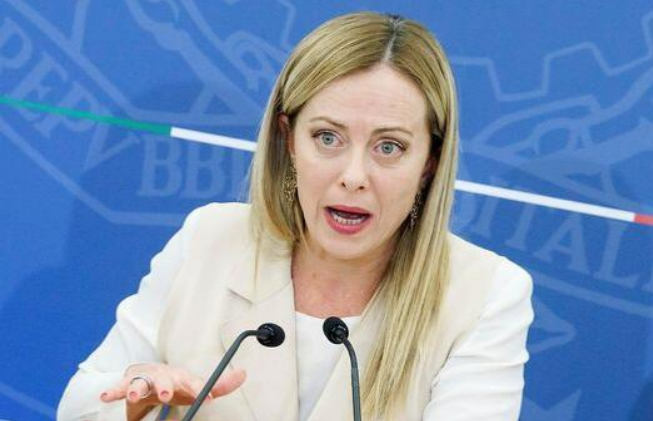
Italy has announced plans to provide Italy air defence assistance to Gulf countries facing heightened security risks following Iranian missile and drone strikes across the region. Italian Prime Minister Giorgia Meloni confirmed that Rome intends to join European partners in supporting Gulf states with defensive military capabilities as tensions expand after U.S. and Israeli attacks on Iranian targets triggered retaliatory strikes.
Meloni stated that Italy air defence, alongside European allies such as the United Kingdom, France and Germany, is preparing to deliver air-defence systems and related technology aimed purely at defensive protection. The Italian government emphasized that the initiative is designed to shield regional partners from missile and drone threats rather than escalate the conflict.
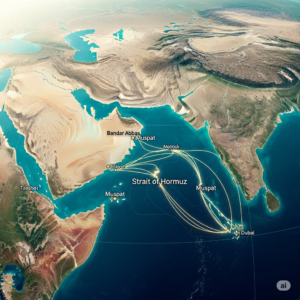
The decision reflects growing concern in Europe about the stability of the Gulf, a region that remains central to global energy supplies and international trade routes. Italian officials noted that protecting Gulf infrastructure is also critical for safeguarding European energy interests and maintaining stability in global markets.
Protection of Italian Citizens and Troops in the Gulf
A major factor behind the move is the presence of a large Italian community and military personnel stationed across the Gulf region. According to Meloni, tens of thousands of Italian citizens live and work in Gulf countries, while roughly 2,000 Italian soldiers are deployed across regional missions.
“We are clearly talking about defence, air defence,” Meloni said during an interview with RTL 102.5 radio, explaining that the measure is necessary not only to support allied nations but also to ensure the safety of Italians abroad.
Italy’s Foreign Minister Antonio Tajani also warned that instability in the Gulf could directly affect Italian national security and economic interests. Italian diplomatic missions have reportedly been coordinating with Gulf governments as regional tensions continue to affect aviation routes, shipping lanes and energy supply chains.
SAMP/T Missile Shield at the Centre of Defence Package
At the core of the proposed defence assistance is the SAMP/T air-defence system, one of Europe’s most advanced ground-based missile defence platforms. Developed by the Eurosam consortium, a joint venture between defence firms MBDA and Thales Group, the system is capable of intercepting ballistic missiles, cruise missiles, aircraft and drones.
The system uses Aster-30 interceptor missiles, which can strike incoming threats at distances of up to roughly 120 kilometres while operating at high altitude. Mounted on mobile launch platforms equipped with advanced radar systems, the SAMP/T battery can rapidly deploy to protect cities, military installations and strategic infrastructure.
Often described as Europe’s equivalent to the U.S. Patriot missile system, the SAMP/T is already used by several NATO countries and has been deployed in other international missions. Italian defence officials confirmed that one battery could potentially be deployed to the Gulf, although the final decision and destination country have not yet been announced.
Anti-Drone Systems to Counter Emerging Threats
In addition to missile defence systems, Italy air defence is also considering supplying anti-drone defence technologies to Gulf partners. Modern conflicts increasingly rely on inexpensive unmanned aerial vehicles, making counter-drone systems an essential layer of national defence.
These systems typically combine radar, radio-frequency sensors and electro-optical tracking technology to detect and identify hostile drones before they reach sensitive targets. Once detected, drones can be neutralised through electronic jamming, GPS interference, interceptor missiles or directed-energy technologies.
Anti-drone platforms can be deployed rapidly to protect airports, oil facilities, ports and military bases, all critical assets across the Gulf. Analysts note that such systems may be delivered more quickly than complex missile batteries while technical evaluations for larger defence deployments continue.
European Security Response Expands Beyond the Gulf
Italy air defence planned assistance forms part of a broader European response to rising Middle East tensions. Several European countries have begun reinforcing regional defence infrastructure as the conflict threatens maritime routes and military installations.
British, French and Greek forces have also announced plans to deploy air-defence assets to the island of Cyprus following drone strikes on the Royal Air Force base at Akrotiri. These deployments aim to protect European interests and prevent further escalation of attacks on military or civilian infrastructure.
Italian Defence Minister Guido Crosetto said requests for air-defence support had been formally received from Gulf governments concerned about the evolving conflict. However, he cautioned that such systems are limited in number and already heavily deployed in Europe and Ukraine, requiring careful evaluation before additional transfers can be approved.