
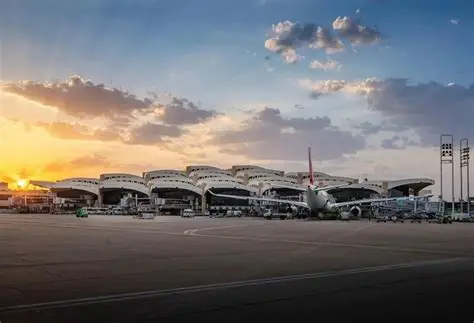
RIYADH, October 11, 2026: A deadly attack on King Khalid International Airport in Riyadh, Saudi Arabia, has killed at least 12 people and injured 309 others, triggering a major security response and raising concerns about the widening regional conflict. The attack took place on Saturday, October 10, according to Saudi Arabia’s General Authority of Civil Aviation (GACA), which confirmed the casualties and damage to airport property. The incident has disrupted air travel and intensified concerns about the safety of civilian infrastructure across the Gulf region. The Saudi-led coalition has blamed Yemen’s Houthi movement for the attack, while international observers have warned that further escalation could undermine regional stability. Source: Saudi Gazette; Al Jazeera.
Riyadh Airport Attack Leaves 12 Dead and Hundreds Injured
The attack on Riyadh’s King Khalid International Airport has become one of the most serious recent security incidents affecting Saudi Arabia. According to GACA, 12 people were killed and 309 others were injured in Saturday’s strike. Several of the injured were reported to be in critical condition, and hospitals were providing medical treatment to those affected.
The casualties included four Saudi nationals, two Bangladeshi nationals and one citizen each from the United States, Egypt, Jordan, Syria, Palestine and Sudan. The international composition of the victims highlights the airport’s role as a major gateway for travellers from different countries and communities.
Saudi aviation authorities confirmed that the incident caused damage to airport property, with assessments underway to determine the full extent of the destruction. Emergency respondent and medical teams were involved in the immediate response, while authorities focused on treating the injured and assessing the risks to airport personnel and passengers.
The incident has also raised questions about the protection of major transport facilities during periods of heightened military activity. Airports accommodate large numbers of civilians, airline employees and international visitors, making any attack on these facilities particularly dangerous.
Saudi-Led Coalition Blames Yemen’s Houthis
The Saudi-led coalition has attributed the deadly strike to Yemen’s Houthi movement, also known as Ansar Allah. The group has been involved in a prolonged conflict with Yemen’s internationally recognised government and has increasingly become a focus of regional security concerns.
The coalition condemned the attack and described it as a serious violation of civilian safety and international law. Saudi Arabia has indicated that it intends to respond to the threat, although the scale and timing of any further military action remain important developments to watch.
The Houthis, meanwhile, renewed warnings to airlines, airport employees and travellers against using Saudi airports and airspace. The group stated that Saudi aviation facilities could be targeted amid the continuing hostilities, while excluding the holy cities of Mecca and Medina from its warning.
The exchange of threats has heightened concerns among airlines, foreign governments and aviation authorities. Continued attacks or warnings involving civilian airports could complicate travel planning and increase pressure on regional governments to strengthen air-deference systems.
The responsibility for individual strikes, the details of the weapons used and the full circumstances surrounding the incident remain matters that authorities and independent reporting must establish carefully.
Riyadh Airport Closure Disrupts Flights and Passenger Travel
The attack has caused significant disruption to operations at King Khalid International Airport, one of Saudi Arabia’s principal aviation hubs. Airport operations remained suspended following the deadly strike, leaving passengers and airlines facing uncertainty over scheduled departures, arrivals and connecting services.
Flight cancellations and diversions can have consequences well beyond the airport directly affected. Passengers travelling between Asia, Europe, Africa and the Middle East may experience missed connections, extended waiting times and unexpected changes to their travel arrangements.
Airlines operating in the region must also assess whether scheduled services can continue safely, taking into account official security advisories, airspace restrictions and airport operating conditions. Such decisions can change rapidly when military activity or the threat of further attacks increases.
Travellers with upcoming flights to or through Riyadh should check directly with their airlines and confirm the latest departure information before travelling to the airport. They should also follow instructions issued by Saudi authorities and their respective embassies.
The closure highlights the importance of contingency planning in international aviation. Airlines and airport operators may need to coordinate alternative routes, communicate revised schedules and arrange assistance for stranded passengers while security assessments continue.
Second Strike Reported at Riyadh Airport on Sunday
The security situation became more concerning on Sunday, October 11, when another projectile reportedly struck the airport complex. According to Reuters, the Saudi-led coalition said an unidentified projectile hit Terminal 4, causing a fire. The incident occurred a day after the deadly attack that killed 12 people and injured more than 300.
The latest reported strike indicates that the threat to the airport had not necessarily ended following the initial attack. Authorities face the challenge of determining whether further projectiles could reach the facility and whether existing security measures are sufficient to protect passengers, staff and airport infrastructure.
The second incident also raises concerns about the potential for repeated disruptions to one of the Kingdom’s most important transport hubs. Even when an attack causes no additional confirmed casualties, damage to terminals or safety systems can delay the restoration of normal operations.
The continuing incidents have placed greater emphasis on air-deference readiness, emergency response procedures and coordination among civilian aviation authorities and military agencies.
For travellers and airline operators, the priority remains obtaining accurate, up-to-date information rather than relying on unverified social media posts or unofficial reports. Source: Reuters.
Saudi Arabia Faces Growing Security Challenges
Saudi Arabia occupies a strategically important position in the Gulf, with extensive economic, energy, commercial and transport links to international markets. Riyadh, as the Kingdom’s capital, is a major centre for government, business and diplomacy.
An attack on its principal international airport therefore has implications beyond passenger travel. It raises questions about the security of public infrastructure, the continuity of commercial operations and the ability of authorities to maintain normal economic activity during a regional crisis.
The Kingdom has invested heavily in transport infrastructure and international connectivity as part of its wider economic diversification strategy. Reliable air services are important for tourism, business travel, investment, international conferences and the movement of visitors.
Prolonged airport closures could affect companies with employees travelling through the capital, organisations hosting international meetings and visitors planning trips to Saudi Arabia. The extent of the economic impact will depend on how long disruptions continue and whether other airports can accommodate affected passengers.
The attack also demonstrates how regional conflict can directly affect civilian facilities far from the immediate front lines. The threat of missiles or other projectiles can force governments to review security arrangements even when commercial aviation is not directly involved in military operations.
Regional Conflict Raises Fears of Further Escalation
The Riyadh airport attack comes amid renewed fighting involving Yemen’s Houthis and forces aligned with Yemen’s internationally recognised government. The collapse of the relatively stable period that followed a United Nations-backed truce has contributed to growing fears of a broader confrontation.
Saudi Arabia has long been involved in the Yemen conflict, supporting the internationally recognised government against the Houthis. The renewed fighting has increased the risk of cross-border attacks and further retaliatory action.
The latest airport incident adds a significant civilian dimension to the conflict. Attacks on airports can affect passengers from numerous nationalities, disrupt international transport links and prompt governments to reassess their involvement in regional security.
The conflict also has implications for maritime security and trade routes near the Red Sea and the Bab ale-mandab Strait, an important passage connecting the Red Sea with the Gulf of Aden. Any sustained deterioration in security around these routes could affect shipping schedules, insurance costs and supply chains.
However, the wider consequences will depend on the actions taken by the parties involved and whether diplomatic efforts can prevent further attacks. A prolonged cycle of strikes and retaliation could make de-escalation more difficult and increase the risks facing civilians across the region.
United States Considers Its Response as International Concern Grows
The attack has attracted international attention because of its potential implications for Saudi security and the wider regional conflict. US President Donald Trump said Washington was considering the possibility of joining Saudi military operations against the Houthis, but no definitive decision on direct involvement had been announced in the reporting available on October 11.
The prospect of deeper US involvement could significantly affect the direction of the conflict. American participation might increase military pressure on the Houthis, while also creating additional risks of retaliation against regional infrastructure and international interests.
Washington’s position will be closely watched by governments across the Gulf and beyond. The United States has longstanding security partnerships in the region and has previously provided varying forms of military assistance and support to partners confronting Houthi threats.
At the same time, a wider military campaign could complicate efforts to contain the conflict and protect civilians. International governments must weigh security concerns against the humanitarian consequences of additional fighting.
The United Nations has also expressed concern over the attack. UN officials have warned that strikes affecting civilian infrastructure threaten regional security and complicate efforts to pursue a peaceful settlement in Yemen. The international response is likely to focus on civilian protection, restraint and the need to prevent further escalation.
Humanitarian Concerns Extend Beyond the Airport
The immediate humanitarian priority is providing medical treatment to those injured and supporting the families of people killed in the attack. With 309 people reported injured, the incident places substantial demands on emergency services and hospitals.
The presence of foreign nationals among the victims also creates additional responsibilities for diplomatic missions and consular officials. Governments may need to help families obtain information, assist affected citizens and coordinate with Saudi authorities.
Repeated attacks on civilian infrastructure can produce longer-term consequences even after the immediate emergency ends. Fear of further strikes can disrupt daily routines, affect workers’ ability to travel and create uncertainty for families and businesses.
The wider Yemen conflict has already contributed to extensive humanitarian suffering over many years. Renewed fighting risks worsening conditions for civilians, particularly where violence disrupts access to food, medical services, transport and essential supplies.
Preventing further civilian casualties will require effective emergency preparedness, reliable information-sharing and measures to reduce the risk of additional attacks. International humanitarian law also places obligations on parties to armed conflicts to protect civilians and civilian objects.
Implications for Saudi Arabia’s Aviation and Tourism Sectors
The Riyadh airport attack could have implications for Saudi Arabia’s aviation and tourism industries if security concerns persist. The Kingdom has been expanding its international tourism profile and investing in transport infrastructure to attract business visitors, holidaymakers and international events.
Air connectivity is central to those objectives. Major airports support hotel bookings, retail activity, conference attendance and connections between regional and international markets. Significant disruptions can therefore affect a wide range of businesses, not just airlines.
Airlines may need to revise flight schedules, adjust aircraft deployment and provide assistance to passengers whose journeys have been interrupted. Travel companies could also face higher administrative costs and an increase in cancellations or rescheduling requests.
The financial impact will depend on the duration of the closure, the number of flights affected and the speed with which airport operations can resume. It is too early to determine the full economic cost of the incident.
Aviation authorities will need to balance the restoration of services with passenger safety. Reopening decisions generally depend on security assessments, infrastructure inspections and confirmation that necessary operational safeguards are in place.
For international travellers, the situation reinforces the importance of flexible travel arrangements, comprehensive travel insurance and monitoring official travel advice when visiting destinations affected by regional instability.
What Travellers Need to Know
Passengers travelling to Saudi Arabia should monitor official announcements from King Khalid International Airport, their airlines and relevant government agencies. Flight schedules may change at short notice, particularly while the airport remains subject to security restrictions.
Travellers should avoid heading to the airport without first confirming that their flights are operating. Those whose journeys have been cancelled should contact their airlines regarding rebooking, refunds, accommodation or alternative routes.
Foreign nationals already in Saudi Arabia should follow instructions from local authorities and check updates issued by their embassies. They should avoid relying on unverified reports about airport access, security incidents or the availability of alternative transport.
Passengers connecting through other airports in the region should also confirm their onward arrangements, as disruptions at a major hub can affect wider airline networks.
Airlines and airport operators will need to provide clear information to reduce confusion and ensure passengers understand the options available to them. The situation remains subject to change as authorities assess the threat and determine when services can safely resume.
What Happens Next?
The next phase will depend on the findings of security assessments, the condition of the airport’s infrastructure and decisions by Saudi authorities regarding the threat of further attacks. Officials will also need to determine the extent of the damage and continue supporting victims and their families.
Saudi Arabia’s response to the attack could shape the next stage of its confrontation with the Houthis. Any military retaliation may influence security conditions across Yemen and the Gulf, while diplomatic efforts could help reduce the likelihood of further strikes.
International governments will be monitoring developments closely because of the potential consequences for regional stability, civilian aviation and commercial transport. The involvement of additional military forces, if announced, would represent a further development in an already volatile situation.
For now, the immediate priorities are protecting civilians, treating the injured, establishing the facts surrounding the attacks and restoring safe air travel when conditions permit. The reported second strike on Sunday underlines the need for continued caution.
The Riyadh airport attack is a stark reminder that regional conflicts can have far-reaching consequences for civilian life and international connectivity. As Saudi authorities respond to the incident, the duration of airport disruptions and the risk of further attacks will remain central concerns for travellers, businesses and governments across the Gulf.
To read more such news kindly visit: Gulftimes