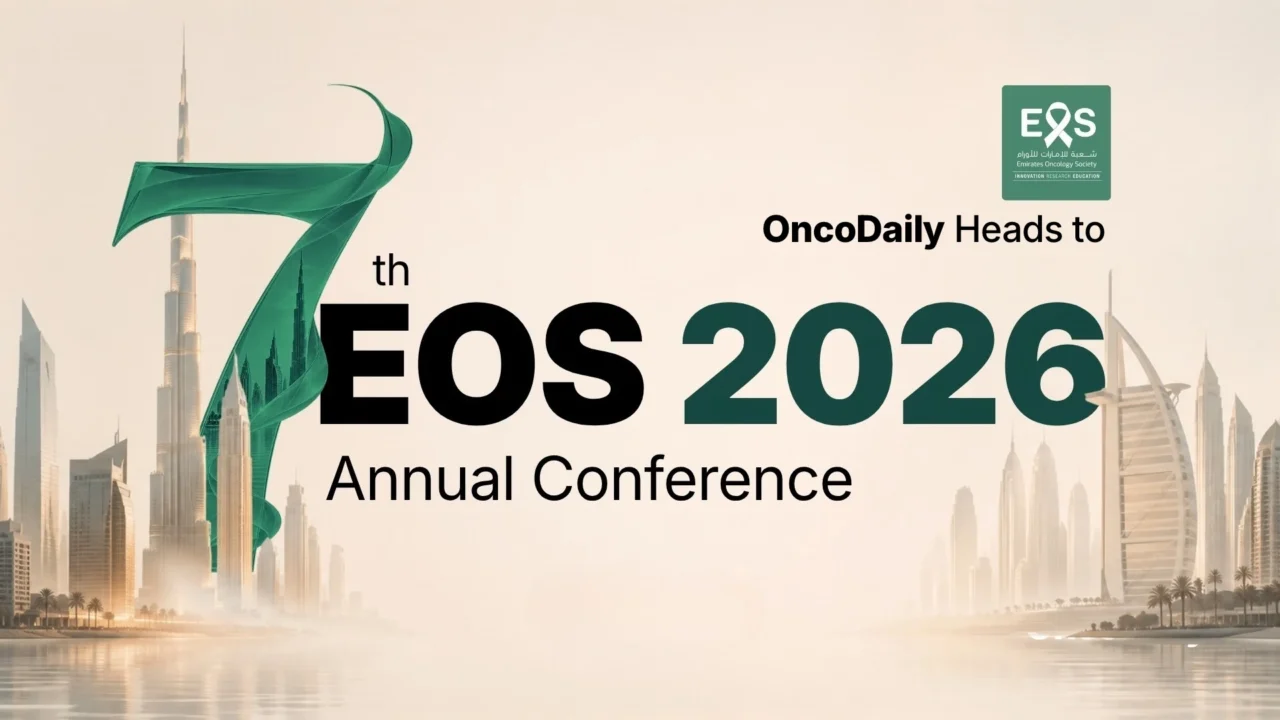
DUBAI: The seventh Emirates Oncology Society Annual Conference (EOS 2026) opened in Dubai, bringing together more than 800 doctors, oncology specialists and researchers from 20 countries for two days of discussions focused on the latest developments in cancer diagnosis, treatment and patient care.
The conference, organised by the Emirates Oncology Society, a member of the Emirates Medical Association, is providing a platform for medical professionals from the UAE, the wider region and international healthcare community to exchange expertise and examine emerging approaches in oncology.
The two-day event, held on October 3 and 4, features 60 speakers from the UAE and other countries, with a scientific programme comprising seven main sessions, more than 40 specialised lectures and discussions, and five workshops. The programme covers a broad spectrum of oncology disciplines, reflecting the increasingly multidisciplinary nature of modern cancer care.
The conference comes at a time when advances in cancer treatment are rapidly changing clinical practice. Targeted therapies, immunotherapy, precision medicine, molecular testing and artificial intelligence are increasingly influencing how cancer is diagnosed, monitored and treated.
Focus on translating research into patient care
Prof. Humaid Al Shamsi, President of the Emirates Oncology Society and Chair of the conference, said the annual meeting continues to serve as a scientific platform for local, regional and international oncology professionals.
The seventh edition places particular emphasis on translating scientific evidence into clinical practice and strengthening collaboration across medical disciplines, with the ultimate objective of improving the quality of cancer care and treatment outcomes.
Artificial intelligence is also receiving attention at the conference, particularly its potential role in analysing medical data and supporting physicians in making more precise treatment decisions tailored to individual patients.
The growing use of technology in healthcare has become an important area of discussion within oncology as clinicians and researchers seek ways to manage increasingly complex volumes of patient and molecular data.
Rather than treating cancer through a single standardised approach, precision oncology seeks to understand the biological and genetic characteristics of an individual tumour. This can help physicians determine which treatment strategies are most appropriate for particular patients.
The conference programme reflects this shift towards more personalised approaches, with experts examining how advances in molecular medicine, targeted treatments and immunotherapy can be incorporated into everyday clinical practice.
Breast cancer takes centre stage
One of the major areas of discussion during the opening day was breast cancer, with specialists examining developments in the management of both early-stage and advanced disease.
Sessions addressed new approaches to targeted treatment and antibody-drug conjugates, as well as strategies for selecting patients and determining the sequence of different therapies.
Experts also reviewed treatment approaches for different biological subtypes of breast cancer, including hormone receptor-positive, HER2-positive and triple-negative disease.
The discussions extended beyond systemic therapies to include developments in breast cancer surgery and approaches to managing axillary lymph nodes.
The emphasis on different breast cancer subtypes highlights the increasingly personalised nature of cancer treatment. Patients with apparently similar diagnoses may have significantly different tumour characteristics, requiring different treatment pathways.
The conference is therefore providing an opportunity for specialists from different areas of oncology to discuss how new evidence can be incorporated into treatment decisions and multidisciplinary care.
Innovation and the future of oncology
Innovation in oncology is another central theme of EOS 2026.
A dedicated innovation session featured presentations on circulating blood biomarkers in breast cancer and the role of KRAS in oncology. The programme also examined the relationship between social media and oncology, reflecting the growing importance of digital communication in healthcare.
Another discussion focused on the integration of cancer screening and early detection with wider healthcare systems.
Early diagnosis remains a critical component of cancer control. Advances in treatment can improve outcomes for patients, but identifying cancer at an earlier stage can also influence the range of treatment options available and the prospects for successful intervention.
The conference therefore places scientific advances alongside broader questions concerning screening, healthcare integration and access to appropriate treatment.
The discussions are particularly relevant to healthcare systems across the Gulf, where countries are investing in modern medical infrastructure, specialist services, screening programmes and advanced treatment capabilities.
Advances in genitourinary cancers
Genitourinary cancers also featured prominently in the conference programme, with specialists discussing kidney, bladder and prostate cancers.
Sessions examined developments in modern therapies and the challenges associated with treating bladder cancer. Experts also discussed the role of PARP inhibitors and homologous recombination repair mutations in precision medicine.
These developments illustrate the increasing importance of understanding the molecular characteristics of individual cancers.
For patients with certain genetic or molecular alterations, identifying those changes can help clinicians determine whether particular targeted treatments may be appropriate.
The conference also featured discussions on treatment algorithms for bladder cancer, prostate cancer and renal cell carcinoma.
The exchange of experience between local and international experts is intended to help bridge the gap between research findings and clinical implementation, allowing healthcare professionals to assess how emerging evidence can be applied in real-world medical settings.
Immunotherapy and targeted treatment
Immunotherapy and targeted therapies are among the areas receiving significant attention during the conference.
Cancer treatment has undergone substantial changes over the past decade, with traditional chemotherapy increasingly complemented or, in certain circumstances, replaced by therapies designed to target specific molecular pathways or activate the body’s immune response against cancer cells.
Immunotherapy has become an important component of treatment for several advanced cancers. However, determining which patients are most likely to benefit remains a major area of research and clinical discussion.
EOS 2026 is examining these developments alongside precision medicine, with experts considering how tumour biology can influence treatment selection.
The conference programme also includes a specialised session on hepatocellular carcinoma, the most common primary liver cancer. Discussions cover disease management, the use of dual immunotherapy and approaches to selecting an appropriate first-line immunotherapy regimen.
A panel discussion brings together medical oncologists and other specialists to examine treatment strategies and the evolving evidence surrounding liver cancer care.
Workshops provide practical clinical discussions
Alongside the main scientific sessions, EOS 2026 includes workshops and parallel discussions designed to provide more specialised opportunities for healthcare professionals.
Among the workshops are sessions addressing hormonal therapy for advanced hormone receptor-positive, HER2-negative breast cancer and developments in the treatment of ovarian cancer.
Such sessions provide opportunities to move beyond broad discussions of scientific developments and focus on clinical decision-making and treatment strategies.
The multidisciplinary structure of the conference also reflects the reality of modern cancer care. Cancer patients may require input from medical oncologists, surgeons, radiation specialists, pathologists, radiologists, nurses, palliative-care professionals and other healthcare workers.
Bringing these disciplines together can support more coordinated approaches to diagnosis and treatment.
The Emirates Oncology Society has increasingly positioned its annual conference as a forum where regional professionals can engage with international oncology developments while discussing their relevance to clinical practice in the UAE and the wider region.
Artificial intelligence gains greater attention
Artificial intelligence is emerging as another important theme in the future of cancer care.
At EOS 2026, discussions have highlighted the potential of AI in analysing data and supporting physicians in making more precise medical decisions.
The use of AI in oncology is particularly relevant because cancer care generates large quantities of information, including imaging, pathology reports, genetic profiles, treatment histories and patient outcomes.
Advanced analytical tools may assist healthcare professionals in identifying patterns within complex datasets and supporting more personalised approaches to treatment.
However, the conference’s emphasis remains on using technological developments to support clinical decision-making rather than replacing the role of medical professionals.
The integration of technology with medical expertise is likely to remain an important area of discussion as healthcare systems across the region continue to adopt digital tools.
Strengthening regional and international collaboration
The participation of more than 800 experts from 20 countries underlines the international dimension of the conference.
For the UAE, hosting such a gathering also reinforces Dubai’s role as a destination for major healthcare and scientific events.
The exchange of knowledge between local physicians and international specialists can contribute to professional development while helping regional healthcare professionals stay informed about rapidly changing standards and treatment approaches.
The conference’s broad programme also reflects the interconnected nature of oncology research. Developments in one area, such as molecular diagnostics, can influence treatment decisions across multiple cancer types.
Similarly, progress in immunotherapy, targeted medicine and biomarkers can have applications across different tumour groups.
By bringing specialists together across disciplines, the conference aims to encourage collaboration and accelerate the translation of scientific developments into patient care.
Looking beyond individual treatments
While much of the attention at oncology conferences naturally centres on new medicines and technologies, the wider goal remains improving outcomes for patients.
Modern cancer care increasingly involves a combination of early detection, accurate diagnosis, molecular profiling, appropriate treatment selection, monitoring and supportive care.
The conference’s discussions on screening, treatment sequencing, precision medicine and multidisciplinary collaboration therefore form part of a wider conversation about how cancer care systems can become more effective and patient-centred.
For patients, advances in cancer medicine are ultimately meaningful when they lead to earlier diagnosis, better treatment options, fewer unnecessary side effects and improved quality of life.
This patient-centred objective is particularly important as cancer care becomes more sophisticated and treatment decisions become increasingly personalised.
Dubai strengthens its healthcare profile
The hosting of EOS 2026 adds to Dubai’s growing profile as a regional centre for medical conferences, healthcare innovation and professional exchange.
The city has increasingly attracted international medical events covering a wide range of specialities, creating opportunities for healthcare professionals, researchers, institutions and industry stakeholders to interact.
The Emirates Oncology Society conference contributes to this ecosystem by bringing together specialists focused on one of the most complex areas of modern medicine.
The participation of experts from 20 countries also provides an avenue for the UAE’s oncology community to engage with international research and clinical practices while sharing regional experience.
Conference concludes with focus on the future of cancer care
The seventh Emirates Oncology Society Annual Conference concluded in Dubai after two days of scientific sessions, workshops and specialised discussions.
At the conclusion, recommendations focused on expanding the use of artificial intelligence to help predict cancer treatment outcomes, advancing immunotherapy for patients with advanced-stage cancers and accelerating personalised cancer medicine through genetic and molecular profiling.
The recommendations underline the direction in which oncology is moving: towards increasingly data-driven, personalised and multidisciplinary approaches to cancer treatment.
As cancer research continues to advance, healthcare professionals face the challenge of ensuring that scientific discoveries can be translated into accessible and effective clinical care.
For the UAE and the wider Gulf region, platforms such as the Emirates Oncology Society Annual Conference provide an important space for that conversation.
The gathering in Dubai has brought together physicians, specialists and researchers at a time of rapid change in oncology, highlighting the importance of collaboration between medical disciplines and countries.
With advances in precision medicine, immunotherapy, targeted therapies and artificial intelligence continuing to reshape the field, the conference has reinforced the need for healthcare professionals to remain closely connected to emerging evidence and international developments.
Ultimately, the discussions at EOS 2026 point towards a future in which cancer treatment is increasingly tailored to individual patients, supported by advanced technology and informed by collaboration across specialties.
For patients and healthcare systems alike, the objective remains clear: earlier detection, more precise treatment, improved outcomes and better quality of life for people living with cancer.