
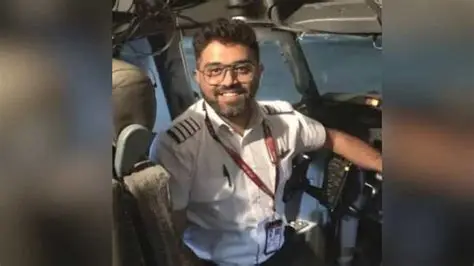
An Indian Flydubai captain has received widespread recognition after helping prevent a potentially catastrophic incident aboard a flight traveling from Dubai to Tel Aviv. Captain Smit Machchhar was seriously injured during a cockpit attack on Flydubai Flight FZ1073, but despite his injuries, he managed to take actions that allowed passengers and crew members to intervene and helped ensure the aircraft could be brought under control.
UAE Presidential Adviser Anwar Gargash has praised Machchhar for his courage and professionalism during the incident. Gargash described the episode as a serious terrorist act and said the Indian pilot demonstrated courage and responsibility while confronting a situation that could have resulted in a major catastrophe.
The incident, which took place on September 30, has since triggered investigations involving authorities in the UAE and Saudi Arabia. Officials are examining what happened inside the cockpit, the circumstances surrounding the attack and whether it involved prior planning or a terrorist purpose.
What Happened on Flydubai Flight FZ1073?
Flydubai Flight FZ1073 was traveling from Dubai to Tel Aviv when a serious confrontation occurred inside the aircraft’s cockpit. According to initial findings released by Saudi authorities, the co-pilot assaulted Captain Smit Machchhar during the flight, resulting in injuries to both pilots.
The situation quickly became critical as the aircraft experienced a dramatic loss of altitude. Reports based on flight-tracking information said the Boeing 737 descended by approximately 14,000 feet in less than 30 seconds during the cockpit incident.
The flight was subsequently diverted and landed safely at Tabuk Airport in Saudi Arabia. The response of the captain, other crew members and passengers became a crucial part of the emergency response.
The aircraft was carrying 174 people, according to Reuters. Machchhar later explained that, despite being injured, he understood that the aircraft was descending and that he needed to act. He managed to open the cockpit door, allowing people outside the cockpit to intervene.
Captain Smit Machchhar’s Actions During the Emergency
The Indian captain’s actions have become the central focus of international attention following the incident.
Machchhar was seriously injured during the confrontation but remained focused on the safety of the people aboard the aircraft. According to his account to Indian Prime Minister Narendra Modi during a video call from hospital, he realised that the aircraft was descending and worked to open the cockpit door.
Once the door was opened, passengers and crew members were able to enter and help restrain the attacker. Two other pilots who were traveling on the aircraft also helped with the emergency response, according to reports. This allowed the aircraft to be stabilised and diverted to Tabuk.
The captain later told Modi that he could not allow other people aboard the aircraft to die. His account has added further detail to the sequence of events and highlighted the difficult decisions made during the emergency.
UAE Adviser Anwar Gargash Praises Indian Pilot
UAE Presidential Adviser Anwar Gargash publicly recognised Machchhar’s actions following the incident.
Gargash said the Indian Flydubai pilot deserved the highest praise for confronting what he described as a serious terrorist act and a potential catastrophe. He highlighted the captain’s courage and sense of responsibility during the emergency.
The comments came as UAE authorities continued their investigation into the incident. The recognition from a senior UAE official has brought additional attention to Machchhar’s role in helping prevent a much more serious outcome.
The incident has also attracted attention from officials in India and other countries. Indian Prime Minister Narendra Modi spoke with Machchhar while he was receiving medical treatment and praised his courage during the emergency.
Pilot Receives Medical Treatment in Abu Dhabi
Following the emergency landing in Saudi Arabia, Machchhar was transferred to the UAE for further medical treatment.
Reports said he underwent treatment for injuries sustained during the cockpit confrontation and was in stable condition. India’s Ambassador to the UAE also visited the pilot and said he was recovering and maintaining high morale.
The pilot’s condition has been closely followed in India and the UAE as the investigation into the incident continues.
His recovery has also become an important part of the story, with officials and members of the public expressing support following the events aboard Flight FZ1073.
UAE Launches Special Investigation
The UAE Attorney General has ordered a specialised investigation into the incident.
Authorities are examining the circumstances surrounding the confrontation and whether the incident involved terrorist activity, a terrorist purpose, prior planning or direction. The investigation is being conducted in coordination with relevant UAE authorities, including the General Civil Aviation Authority.
Authorities have also urged the public and media to avoid spreading unverified information while investigators establish the facts.
This caution is particularly relevant because several details surrounding the incident were initially reported differently by various sources. The identities and backgrounds of those involved, as well as the possible motive behind the attack, have been the subject of competing claims.
The investigation is therefore expected to play an important role in establishing the verified sequence of events.
Saudi Arabia’s Role in the Incident
Saudi Arabia also played a key role after the aircraft was diverted to Tabuk.
The Saudi Interior Ministry said its initial findings indicated that the pilot had been assaulted by his co-pilot and that both pilots sustained injuries. After their conditions improved, the pilots were transferred towards Abu Dhabi with assistance from a UAE security team.
The safe landing in Tabuk provided authorities with an opportunity to secure the aircraft, assist the injured and begin gathering information about what had happened during the flight.
The UAE later expressed appreciation for Saudi authorities’ cooperation and handling of the incident.
Questions Surrounding the Co-Pilot and Possible Motive
One of the central questions in the investigation concerns the motive behind the cockpit attack.
Some Israeli officials have described the incident as terrorism and made claims regarding the co-pilot’s background and alleged radicalisation. However, several of those details have not been independently confirmed by all authorities involved.
The UAE investigation is specifically examining whether the incident involved terrorist activity or purpose and whether there was any prior planning or direction. Until the investigation establishes the facts, claims about motive should be treated carefully.
This distinction is important because the incident initially generated a number of conflicting reports. Authorities have therefore urged people to rely on verified information rather than speculation.
How Passengers and Crew Helped Prevent a Disaster
Although Captain Machchhar’s actions have received significant attention, the response involved several people aboard the aircraft.
After the cockpit door was opened, passengers and crew members were able to intervene. Reports said the attacker was restrained, while additional pilots aboard the aircraft helped with the flight operations.
The cooperation between the injured captain, passengers, cabin crew and other pilots proved significant in the moments following the cockpit confrontation.
The aircraft was eventually diverted to Tabuk rather than continuing to its original destination.
The incident therefore demonstrated how multiple layers of response can become important when an unexpected emergency develops in the cockpit.
Incident Raises Questions About Aviation Security
The Flydubai incident has also renewed discussion about aviation security and the risks posed by threats originating from within an aircraft’s own operating crew.
Commercial aviation has extensive security measures designed to protect passengers, crew and aircraft. Cockpit access controls, crew procedures, background checks, emergency training and communication between cockpit and cabin crew are all important elements of aviation safety.
However, incidents involving a member of the flight crew can present a particularly complex challenge because pilots have direct access to the aircraft’s controls.
The circumstances surrounding Flight FZ1073 could therefore be examined not only from the perspective of the individual attack but also in terms of existing aviation security and emergency-response procedures.
Any changes resulting from the investigation would ultimately depend on the findings of aviation and security authorities.
Flydubai Flight Diverted Safely to Saudi Arabia
The aircraft was originally traveling between Dubai and Tel Aviv but did not complete its planned journey.
Following the cockpit emergency, the flight was diverted to Tabuk Airport in Saudi Arabia, where it landed safely. Reports indicate that the aircraft’s descent during the incident had created a highly dangerous situation before control was restored.
The successful landing allowed emergency personnel to assist those who had been injured and enabled authorities to begin their investigation.
The event has since become one of the most closely watched aviation incidents in the region.
Captain Machchhar’s Recovery Becomes a Focus
As authorities continue investigating the incident, attention has also turned towards Captain Machchhar’s recovery.
The pilot has received support from officials in both India and the UAE. His conversation with Prime Minister Modi provided the public with an account of his experience and offered an update on his condition.
Machchhar’s account also highlighted the human dimension of the incident. Despite being seriously injured, he remained focused on the aircraft and the people aboard it.
His actions have subsequently been recognised by officials, including Anwar Gargash, who publicly praised the Indian pilot for his response to the emergency.
UAE and Saudi Authorities Continue Cooperation
The incident has involved close cooperation between authorities in the UAE and Saudi Arabia.
Saudi Arabia handled the aircraft after its diversion to Tabuk, while UAE authorities have taken responsibility for the wider investigation. The UAE Attorney General has assigned a specialist team to examine the circumstances surrounding the incident and determine whether it involved terrorist activity or prior planning.
Such cooperation is particularly significant because the incident occurred during an international flight and involved an aircraft registered and operated in the UAE.
The UAE Ministry of Foreign Affairs has also noted that crimes committed aboard aircraft registered in the country fall under UAE jurisdiction, regardless of where an incident occurs.
What Happens Next?
The investigation is expected to provide more information about the sequence of events inside the cockpit, the actions of those involved and the possible motive behind the attack.
Investigators will also need to establish whether the incident was an isolated act or whether there was any broader planning or direction involved.
Until those findings are released, authorities have urged caution regarding unverified claims.
The investigation could also have implications for discussions about aviation security, particularly regarding cockpit security, crew screening, emergency response procedures and coordination between airlines and authorities.
A Moment of Courage Amid a Dangerous Flight Emergency
The Flydubai cockpit attack has placed Captain Smit Machchhar at the centre of international attention after his actions helped avert what could have been a far more serious aviation disaster.
The captain was injured during the confrontation but managed to respond to the aircraft’s dangerous descent and open the cockpit door, enabling passengers and crew to intervene. The aircraft was subsequently diverted safely to Tabuk, while Machchhar was taken for medical treatment.
UAE Presidential Adviser Anwar Gargash has publicly praised the Indian pilot, describing his response as an example of courage and responsibility during an extremely dangerous situation.
As Captain Machchhar continues his recovery, authorities in the UAE and Saudi Arabia are working to establish the complete facts surrounding the incident. The final findings will be important in determining the motive behind the cockpit attack and whether additional aviation-security measures may be required.
For now, the incident has highlighted the importance of quick decision-making, cooperation between crew and passengers and effective emergency procedures when an unexpected crisis unfolds at altitude.
To read more such news kindly visit: GulfTimes