Breakthrough Victory at Royal Porthcawl Japan’s Miyu Yamashita British Open Win captured by her maiden major title on Sunday, holding off a determined challenge from...
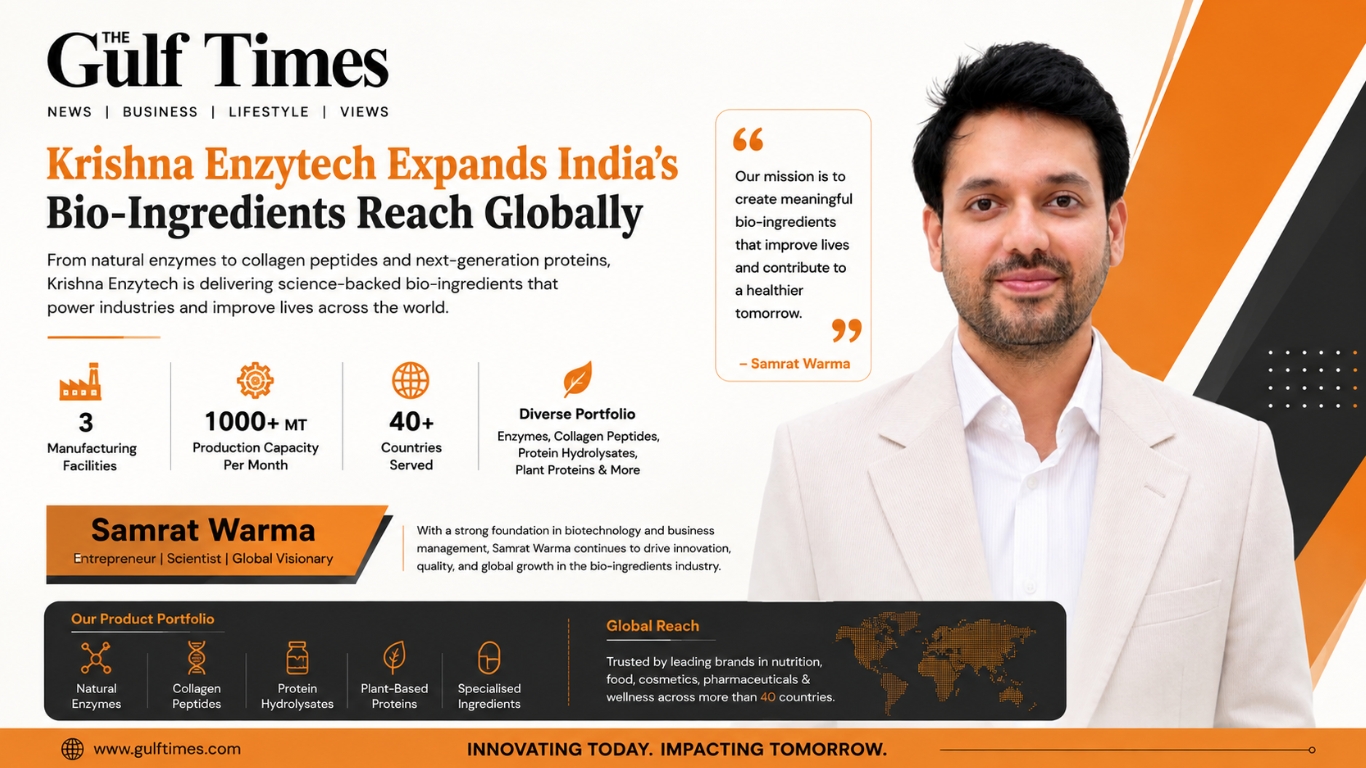
Long before collagen peptides became a growing category in the global health and wellness industry, Samrat Warma was already closely connected to the science behind...
Ketan Dave is a hospitality consultant and business leader with experience across McDonald’s, McCafe Asia, ITC and Mr. Idli. Explore his journey in hospitality, restaurant...
Long before collagen peptides became a growing category in the global health and wellness industry, Samrat Warma was already closely connected to the science behind...
The recent ceasefire between the United States and Iran, while temporarily halting active hostilities, has triggered a deeper strategic concern across Gulf nations: the perception that Iran has emerged from the conflict with enhanced geopolitical Iran Strategic Leverage. Despite sustaining economic and infrastructural damage, Tehran has retained its core military capabilities, regional influence, and most …
A Moment That Changed Everything For many founders, businesses begin with spreadsheets and projections. For Sumit Grewal, it began with a quiet parenting moment. One evening, while putting his child to bed, he noticed faint marks left on the skin by the day’s clothing. It was subtle, but it didn’t sit right. He ran his …
In a significant development for the global trading and fintech community, iFX EXPO is preparing to unveil The Trading Festival Dubai from February 10 to 12, 2026, marking one of the largest and most ambitious expansions in the event’s history. Positioned at the intersection of institutional trading, retail finance, fintech innovation and digital assets, the …
For most of modern history, video has been power. Not the kind you plug into a socket — the kind that makes people listen. The kind that sells, teaches, inspires, and moves markets. Yet for decades, that power came with a price tag so heavy that only well-funded brands and big studios could afford to …