
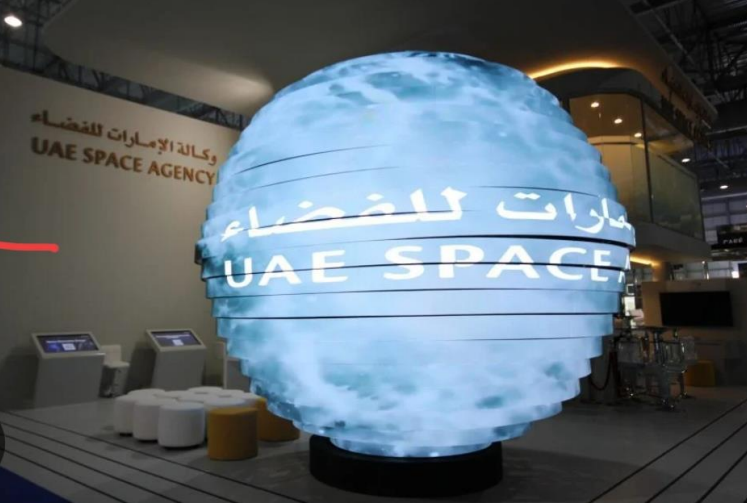
The UAE Space Agency announced a significant expansion of its collaborative frameworks with Middle Eastern partners, outlining new plans to strengthen regional cooperation in space exploration, satellite development, and scientific research platforms. Senior officials emphasised that the initiative marks one of the most ambitious phases in the UAE space cooperation diplomacy, designed to accelerate innovation and enhance the region’s collective capabilities in advanced space science.
The move comes at a time when global space investments are projected to cross USD 1 trillion by 2035, placing renewed focus on cross-border partnerships and shared research ecosystems. The UAE’s latest initiative builds on its growing portfolio of missions and cooperative agreements, including Mars exploration, lunar development studies, and Earth-observation programmes, positioning the country as a regional leader in the space sector.
Strengthening Strategic Space Alliances
UAE space cooperation officials confirmed that discussions with regional counterparts began earlier this year with the goal of creating unified frameworks for satellite systems, shared observational data, and joint mission planning. The objective is to pool technological strengths and research capabilities to reduce duplication of effort and expand regional access to high-quality space resources.
Early-stage dialogues, according to internal briefings, have included scientific working groups from Gulf states, parts of North Africa, and select Levant partners. These discussions aim to integrate space-based climate analysis, disaster-management applications, and high-resolution imaging capabilities into regional development plans. Analysts note that such collaborations could reduce dependency on external space agencies and commercial providers for essential scientific data.
The UAE space cooperation leadership has consistently highlighted the strategic value of regional cooperation in accelerating space readiness. Officials indicated that the country is committed to sharing infrastructure, training expertise, and mission planning tools with partner nations to facilitate sustainable and long-term scientific advancement.
Joint Satellite Development and Data-Sharing Plans
One of the proposed pillars of cooperation focuses on co-developing next-generation Earth-observation satellites designed to enhance regional monitoring capacity. The UAE space cooperation existing satellite infrastructure, including advanced remote-sensing platforms, is expected to serve as the foundation for shared missions that can support environmental analysis, maritime surveillance, and agricultural planning.
Researchers within the UAE space cooperation Agency have stated that shared data repositories could significantly improve climate forecasting and resource-management models across the Middle East. By linking national research centres to a unified regional platform, partner countries would gain real-time access to scientific datasets covering air quality, water systems, coastline activity, and atmospheric trends.
Officials also highlighted the importance of secure data protocols, noting that new cooperation frameworks will incorporate advanced cybersecurity and access-control mechanisms. These systems aim to ensure that sensitive scientific information and mission telemetry remain protected while facilitating scientific exchange.
Expanding the Regional Science and Technology Ecosystem
The UAE’s vision includes building an ecosystem that brings together universities, research institutions, private-sector innovators, and space-technology developers. The plan emphasises the creation of joint research programmes focused on lunar robotics, satellite assembly technologies, advanced propulsion systems, and materials science. Several Gulf universities have expressed interest in collaborating on student training, laboratory equipment sharing, and early-stage mission design.
Officials also discussed creating regional internship pipelines to train young engineers and researchers through hands-on experience at national laboratories and mission-control centres. By fostering regional talent mobility, the initiative aims to strengthen workforce capacity and cultivate long-term scientific talent across the Middle East.
Economic analysts suggest that this coordinated approach could help the region secure a stronger position in global space-tech value chains. They project that cooperative satellite manufacturing and Earth-science research platforms could generate billions in new scientific and commercial opportunities over the next decade.
Policy Commitments and Next Steps
The UAE space cooperation confirmed that formal policy frameworks will be drafted by mid-2026, with intergovernmental consultations expected to accelerate during the next two quarters. Several memoranda of understanding are likely to be signed at the upcoming regional space forums hosted in Abu Dhabi and Riyadh, outlining operational guidelines, funding pathways, and shared research responsibilities.
Officials signalled that early-stage joint programmes may begin rollout by late 2026, potentially including shared satellite calibration missions, coordinated training programmes, and the establishment of regional centres for climate and atmospheric research. These initiatives will be supported by existing infrastructure such as the UAE’s mission-control facilities and national satellite development laboratories.
Regional diplomats have responded positively to the UAE’s announcement, viewing it as a step toward enhancing scientific cooperation, improving climate monitoring capacity, and strengthening geopolitical alignment across the Middle East. Analysts expect the initiative to reduce regional fragmentation and create a more cohesive scientific community capable of addressing shared environmental and technological challenges.
Conclusion
The UAE’s plan to expand space cooperation across the Middle East represents a strategically significant moment for the region. With an emphasis on shared missions, satellite development, and coordinated research platforms, the initiative stands to accelerate scientific progress and deepen cross-border partnerships.
As policy frameworks move toward implementation, the programme is expected to deliver tangible benefits in climate analysis, data-driven development, and regional scientific capacity-building. The UAE space cooperation leadership in steering this initiative underscores its growing influence in global space affairs and its commitment to fostering a collaborative, innovation-driven future for the Middle East.