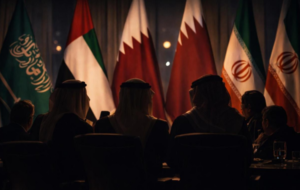
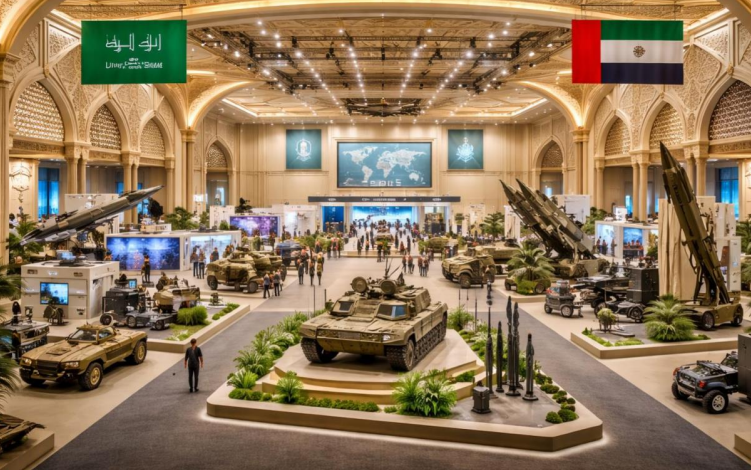
The upcoming edition of the World Defense Show in Riyadh, scheduled to run from February 8 to 12, faced an unexpected disruption today as several major companies from the United Arab Emirates abruptly withdrew their participation. The decision, confirmed by individuals familiar with the matter, underscores rising political and commercial strain between the UAE–Saudi Defence Tensions at a time when the Gulf region is navigating shifting strategic alliances and widening economic competition.
Sources associated with the exhibition’s organising committee indicated that the withdrawal was communicated shortly before the final delegate confirmations were due. The move is viewed as a significant setback because Emirati defence suppliers have historically been among the most visible partners at the event, contributing to joint demonstrations, advanced technology showcases and bilateral defence consultations. Their absence is expected to alter the dynamic of the industry dialogues that typically take place during the large-scale defence gathering.
Regional Context and Emerging Cross-Sector Strains
The decision by UAE companies to pull out is being closely examined against the backdrop of evolving regional relationships within the Gulf Cooperation Council. While both Saudi Arabia and the UAE–Saudi Defence Tensions remain aligned on core strategic issues, recent divergences in economic direction particularly on industrial policy, energy market positioning and geopolitical strategy have surfaced more prominently in diplomatic and commercial interactions.
Officials and analysts note that the two countries have been pursuing increasingly distinct national strategies in security, advanced technologies and defence industrialisation. This divergence is reflected in growing competition to attract global investment, secure technology partnerships and expand sovereign manufacturing capabilities. The defence sector, where national prestige and strategic autonomy are tightly interlinked, has become one of the areas where these tensions are more visible.
Industry watchers emphasised that although neither government has issued a public statement directly addressing the withdrawal, the underlying signals point to deeper recalibrations in Gulf regional alignment. The timing of the withdrawal has also drawn attention, given the rising geopolitical shifts across the Middle East. Diplomatic engagements, realignments with major powers and differing approaches to regional security challenges all influence the way defence partnerships are structured. The absence of key UAE exhibitors at a Saudi-led event during this period suggests a moment of recalibration that extends beyond routine commercial decisions.
Impact on Defence Sector Cooperation and Regional Business Climate
The World Defense Show, since its establishment, has served as a critical venue for defence ministries, global contractors and regional suppliers to negotiate deals, form partnerships and present new technologies. UAE–Saudi Defence Tensions firms have historically participated with substantial exhibits showcasing advancements in aerospace, autonomous systems, precision weaponry and integrated defence technology. Their withdrawal this year threatens to dent both the commercial scale and the symbolic representation of Gulf defence cooperation.
Saudi Arabia has been undertaking a broader national initiative to localise 50 percent of its defence procurement by 2030, and its partnerships with UAE–Saudi Defence Tensions firms have been an integral part of this strategy. The withdrawal creates uncertainty around ongoing and future collaborations, prompting speculation on whether defence procurement and technology co-development agreements between both nations could face delays or further strain.
Business representatives in the region noted that cross-border commercial cooperation between Saudi and Emirati firms estimated at nearly $30 billion annually could experience ripple effects if political disagreements continue to influence sectoral decisions. Analysts emphasised that any signals of fragmentation in GCC economic coordination could affect investor sentiment in areas ranging from advanced manufacturing to logistics and high-technology industries.
Saudi Arabia’s Strategic Response and Event Preparations
Saudi organisers have continued preparations for the defence exhibition, which is expected to host hundreds of international exhibitors and military delegations. Officials have highlighted the event’s capacity to attract global defence companies and maintain its position as a major platform for showcasing emerging military technologies. However, the withdrawal by UAE–Saudi Defence Tensions firms constitutes a significant diplomatic signal that Saudi administrators cannot overlook.
Industry insiders say the Saudi government is likely to reinforce messaging around the event’s resilience and global relevance, ensuring that the exhibition maintains its international stature. Additional outreach is expected toward defence partners in Europe, East Asia and North America to fill exhibit gaps and strengthen the event’s global positioning. Observers indicated that Riyadh will be keen to demonstrate continuity in its defence diversification plans despite regional frictions.
The strategic implications extend beyond the exhibition itself. Saudi Arabia is currently implementing widespread defence industrial transformation under its Vision 2030 programme, and the UAE’s absence from one of the region’s most prominent events may complicate certain areas of cross-border technology recognition, joint ventures and cooperative manufacturing frameworks. Nonetheless, defence analysts caution that both nations remain deeply interconnected across trade and security, and long-term separation in the sector is unlikely.
Future Diplomatic and Economic Outlook for Gulf Cooperation
Diplomats across the region have described the development as a “notable but manageable” strain within broader Gulf dynamics. While it highlights unresolved tensions, it does not represent a breakdown of relations. Both Saudi Arabia and the UAE–Saudi Defence Tensions continue to collaborate across multiple economic and political domains, and foreign policy experts argue that recalibration is part of a broader strategic realignment rather than outright confrontation.
However, the defence sector’s strategic sensitivity means even symbolic decisions carry weight. The UAE–Saudi Defence Tensions move could prompt quiet diplomatic exchanges aimed at clarifying positions and stabilising bilateral cooperation. Gulf analysts predict that upcoming regional meetings and economic forums could serve as opportunities for both sides to reaffirm long-term commitments to collective security and economic stability.
Economic observers also point out that the Gulf region, amid ongoing global shifts in energy markets and geopolitical uncertainties, cannot afford sustained strategic divergence. Shared interests in trade corridors, investment flows, defence procurement stability and energy diversification will likely compel both countries to manage tensions through diplomatic channels rather than allow long-term commercial disruptions.
Conclusion
The withdrawal of UAE companies from the World Defense Show underscores a phase of sensitivity in UAE–Saudi Defence Tensions relations, revealing underlying strategic and economic tensions that extend beyond a single event. While the move reflects deeper policy divergences emerging across the Gulf, it also highlights the importance of diplomatic management to prevent temporary disagreements from reshaping long-standing partnerships.
As the defence show proceeds in Riyadh without one of its most prominent regional participants, attention now shifts to how both governments navigate the implications. The decisions made in the coming months will likely influence not only defence cooperation but also broader regional economic stability, signalling whether the two Gulf powers can realign their strategies in the face of global and regional uncertainties.