
The United Arab Emirates and South Korea signed a comprehensive UAE–Korea clean energy pact today in Abu Dhabi, marking one of the most significant bilateral energy agreements of the year. Senior ministers from both countries confirmed that the framework will expand joint work across hydrogen development, nuclear energy collaboration, and advanced clean-technology research beginning in March 2026.
Announced following a high-level ministerial meeting attended by delegations from Abu Dhabi’s energy leadership and Seoul’s Ministry of Trade, Industry and Energy, the agreement aligns with the UAE’s long-term clean-energy vision and Korea’s ambition to strengthen its global role in hydrogen and advanced reactor technology. Officials described the pact as a “strategic milestone” in the two nations’ economic and technological partnership, building on years of cooperation anchored by the Barakah Nuclear Power Plant, which was constructed with Korean participation.
Strategic Energy Diplomacy Anchored in Long-Term Planning
The agreement reflects a growing strategic alignment between the UAE–Korea clean energy pact in the field of sustainable energy transition. Ministers emphasised that the pact was developed over several months of consultations and includes an expanded set of working groups focused on energy security, industrial innovation and emissions reduction.
According to officials, the first review session of the new cooperation plan is scheduled to take place in Seoul in late April 2026, with follow-up sessions in Abu Dhabi later in the year. Both countries stated that the framework is intended to accelerate deployment of hydrogen projects, broaden technical collaboration in nuclear plant maintenance, and support commercial opportunities for companies on both sides.
Policy analysts noted that the UAE has increasingly positioned itself as a global leader in energy diversification, with the nation having invested heavily in clean-energy infrastructure and announcing national hydrogen production targets aligned with its 2030 and 2050 sustainability agendas. South Korea, in turn, has prioritised international cooperation to secure stable energy partnerships and expand its role in global cleantech supply chains.
Hydrogen, Nuclear Technology and Advanced Research
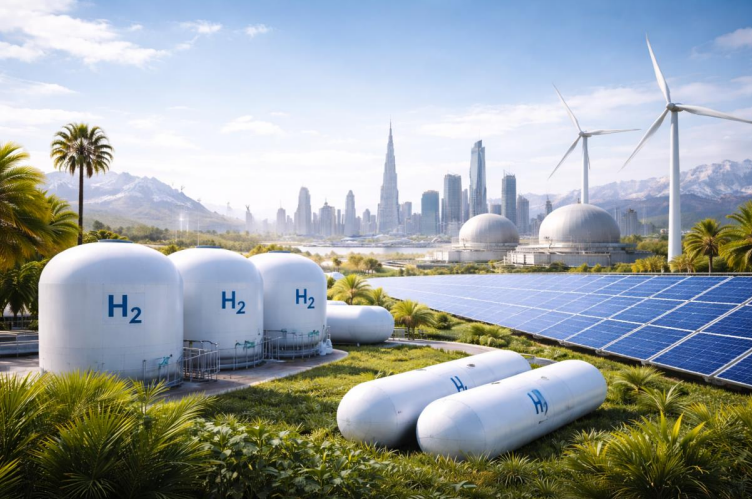
Central to the agreement is an expanded programme of collaboration on green and blue hydrogen, including feasibility studies for cross-border supply chains, shared research platforms and pilot project development. Officials stated that the pact includes provisions for evaluating hydrogen-export infrastructure and facilitating joint work on electrolyser technology, fuel-cell deployments and industrial utilisation.
The pact also strengthens nuclear-sector cooperation rooted in Korea’s role in constructing the Barakah Nuclear Power Plant, a flagship component of the UAE’s long-term energy security strategy. Under the new framework, Korean energy firms will collaborate with UAE operators on reactor maintenance, digital systems upgrades and next-generation nuclear research. Technical teams from both nations will begin detailed assessments in early March.
Additionally, both governments announced enhanced cooperation on carbon-capture technologies, grid-efficiency systems and clean-manufacturing innovation. Several joint research centres are expected to be announced later this year, with additional support from academic institutions in both countries.
Economic and Industrial Implications
Economists described the pact as a catalyst for expanded trade and industrial investment between the UAE and South Korea. Officials noted that bilateral trade exceeded USD 5 billion in 2025, and the new framework could pave the way for a significant increase in energy-related investment flows through 2026 and 2027.
The initiative is also expected to stimulate growth in the UAE’s industrial, hydrogen and advanced-technology sectors, supporting economic diversification and job creation goals under the UAE’s national development strategies. South Korean officials emphasised that the pact provides Korean companies with long-term commercial pathways in fast-growing Middle Eastern clean-energy markets.
Industry leaders from both nations highlighted that the cooperation could help develop regional hydrogen hubs, improve nuclear-sector service capabilities and reinforce supply-chain resilience for advanced clean-technology components. With energy security emerging as a global priority, the economic dimension of this partnership is viewed as strategically significant for both governments.
Statements from Leadership and Regional Reaction
Senior UAE officials at today’s signing ceremony described the agreement as a “forward-looking partnership built on mutual trust, shared objectives and long-term strategic planning.” They stressed that the pact supports the UAE’s broader commitment to accelerating clean-energy adoption while maintaining strong international partnerships.
South Korean representatives noted that the agreement marks “a new phase of cooperation,” expanding the scope of collaboration beyond infrastructure delivery and into high-value research, long-term energy planning and technological exchange. Analysts stated that the deal underscores South Korea’s intent to take on a leadership role in the global hydrogen economy while strengthening bilateral engagement with the Gulf region.
Regional energy observers across the Gulf have described the pact as an influential development, with potential spillover effects on cooperative clean-energy frameworks involving Saudi Arabia, Qatar and Oman. The UAE’s increasingly prominent role in international hydrogen initiatives is expected to encourage further regional collaboration on energy diversification.
Conclusion
The new UAE–Korea clean energy pact represents a major step forward in bilateral energy diplomacy, strengthening collaboration across hydrogen development, nuclear technology and advanced research. As both nations prepare for the launch of joint working groups in March, the agreement is expected to shape long-term investment, industrial growth and sustainability outcomes.
With both governments emphasising long-term partnership and technological innovation, the pact is set to play a pivotal role in supporting the UAE’s transition to a diversified energy future while bolstering South Korea’s strategic access to global clean-energy markets. The coming months will focus on implementation, technical coordination and the rollout of initiatives that will define the next phase of cooperation.