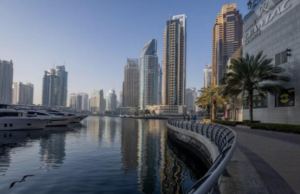
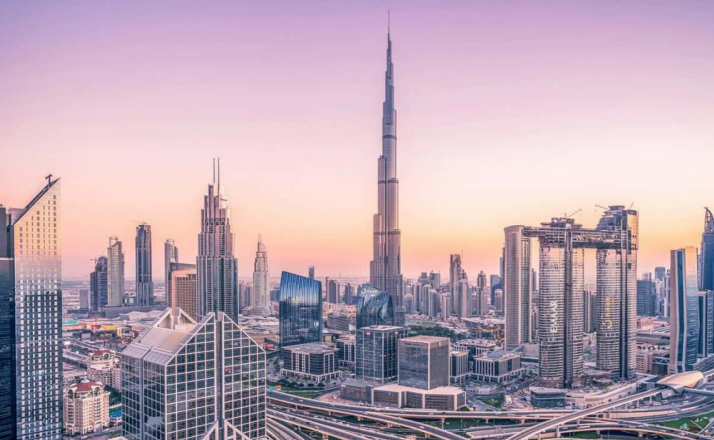
The United Arab Emirates has achieved one of its strongest global mobility milestones yet, climbing into the top tier of worldwide residence destinations in the newly released 2026 Global Residence Program Index compiled by Henley & Partners. The latest rankings show the UAE Global Residency Ranking registering the largest upward movement among all evaluated countries, reflecting the nation’s expanding economic attractiveness, lifestyle advantages and long-term residency reforms.
Henley & Partners, a leading global advisory firm on investment migration, noted that the UAE’s performance was driven by sustained foreign investment inflows, simplified residency pathways, competitive tax structures and its rising profile as a stable global business hub. Analysts describe the shift as a landmark recognition of the UAE’s policy evolution over the past decade, particularly its strategic push to position itself as a centrepiece of international mobility and expatriate-led economic development.
Global Index Confirms UAE’s Dramatic Rise
The 2026 index ranked the UAE among the world’s most desirable destinations for long-term residence, an achievement signalling global confidence in its regulatory framework and economic outlook. Country scores were based on factors such as tax advantages, visa accessibility, quality of life, investor incentives and geopolitical stability. The UAE recorded the highest points increase of all 30 assessed jurisdictions.
Henley & Partners’ research team highlighted the UAE’s significant enhancements across multiple parameters, including safety ratings, financial openness, infrastructure quality and global connectivity. The Emirates’ continued investment in digital governance and investor-friendly policies also played a substantial role, enabling the country to outperform traditionally dominant destinations such as Switzerland, Singapore and Portugal in key competitiveness categories.
According to the report, global demand for UAE Global Residency Ranking has grown by more than 150% in the past five years, with applicants coming from Europe, South Asia, North America and the wider Middle East. This aligns with Dubai and Abu Dhabi’s positioning as international hubs for finance, logistics, technology and knowledge-based industries.
Residency Reforms Strengthen UAE’s Global Appeal
The UAE Global Residency Ranking rapid ascent is closely tied to its modernised residency framework, which includes the Golden Visa, Green Visa and flexible long-term entry permits for investors, professionals and entrepreneurs. These reforms, launched progressively since 2019, have widened eligibility and reduced administrative complexity, creating an accessible and predictable residency route that appeals to global talent.
Government officials emphasise that the country’s residency pathways are designed to support sustainable development and sectoral diversification. Dr. Thani Al Zeyoudi, Minister of State for Foreign Trade, noted that the UAE’s residency model “creates a stable environment for global innovators, investors and families seeking long-term opportunity in the region.” Business councils have also reported rising applications from technology startups, digital nomads and senior executives relocating from Europe and East Asia.
Real estate developers and financial institutions confirm that residency-linked investment has seen parallel growth. Property purchases under Golden Visa provisions, for instance, have contributed significantly to Dubai’s high-end housing market and Abu Dhabi’s premium investment districts, reinforcing the economic ripple effect of residency reforms.
Economic Magnetism Boosts International Confidence
Beyond policy changes, the UAE’s economic performance is a key driver of its jump in the global ranking. The country posted one of the strongest non-oil GDP growth rates in the region, fuelled by tourism, logistics, advanced technology and financial services. International Monetary Fund assessments forecast continued expansion through 2026, supporting the country’s long-term attractiveness to global residents.
Foreign direct investment (FDI) inflows reached over USD 23 billion last year, placing the UAE among the world’s top 20 recipients. Multinationals in renewable energy, AI, biotech, aerospace and fintech have expanded their presence in the Emirates, drawn by regulatory clarity and world-class infrastructure. These dynamics contribute directly to the residence index score, which evaluates a country’s economic resilience in relation to mobility desirability.
The UAE Global Residency Ranking strategic location between major global markets adds another layer of appeal. With more than 200 international air routes and long-term expansion plans for ports and free zones, the country functions as an operational base for companies targeting Asia, Europe and Africa. This multipolar connectivity has become a decisive factor for global families and business professionals evaluating residency destinations.
Quality-of-Life Metrics Reinforce the Nation’s Standing
Quality of life remains a defining component of global residency rankings, and the UAE scored strongly across safety, healthcare, education and amenities. Cities like Dubai and Abu Dhabi are consistently rated among the safest urban centres worldwide, with advanced healthcare systems and rapidly expanding international school networks.
The lifestyle factor also plays a significant role. The UAE’s cosmopolitan environment, tax-free salaries, year-round tourism infrastructure and strong cultural diversity have attracted a younger, more mobile expatriate demographic. Surveys by private consultancies show that foreign residents increasingly consider the country not just a career stopover but a long-term home base.
Climate adaptation, sustainability and environmental innovation have also bolstered the nation’s reputation. Initiatives such as the UAE Net Zero 2050 Strategy, COP28 leadership and major investments in green mobility reinforce a forward-looking image that appeals to global residents seeking progressive and stable societies.
Future Outlook
Investment-migration analysts predict that the UAE will continue to rise in global indices if current policy momentum is maintained. The combination of long-term residency access, economic diversification, tech-sector expansion and globally competitive tax structures provides a strong foundation for sustained inflow of skilled residents.
Henley & Partners commented that the UAE Global Residency Ranking has effectively “redefined its global identity from an oil-dependent economy to a future-oriented business and lifestyle destination,” adding that its trajectory is unmatched among emerging markets. The firm anticipates significantly higher residency demand over the next three years, particularly from regions experiencing economic or political uncertainty.
For the UAE, reaching the top tier of global residency rankings is viewed not merely as an accolade, but as validation of a national strategy that blends openness, security and economic ambition. Analysts describe this achievement as a turning point in the country’s global positioning, one that will shape its demographic and economic landscape well into the next decade.