A fragile ceasefire framework between the United States and Iran is rapidly unraveling following a series of large-scale Israeli airstrikes in Lebanon that have resulted in over 250 deaths and hundreds of injuries, marking one of the deadliest escalations in the region in recent months. The strikes, concentrated across Beirut, southern Lebanon, and the Bekaa Valley, were carried out within hours of the ceasefire announcement, immediately raising questions about the scope and enforceability of the agreement.
The Israeli government has maintained that its military campaign against Hezbollah is separate from the US–Iran ceasefire arrangement, asserting that Lebanon was never included in the truce. This interpretation has been strongly contested by Iran and regional actors, who argue that any meaningful Middle East ceasefire crisis must encompass all fronts of the conflict, including Hezbollah’s involvement.
As tensions escalate, the situation has evolved beyond a bilateral Middle East ceasefire crisis into a multi-front regional crisis. The continuation of hostilities in Lebanon has not only undermined diplomatic progress but also heightened fears of a broader conflict involving multiple state and non-state actors across the Middle East ceasefire crisis.
Scale and Impact of the Israeli Airstrikes
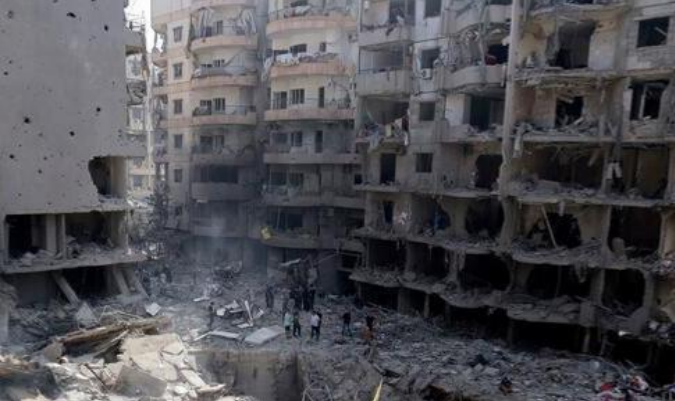
The intensity and scale of the Israeli air campaign have drawn widespread international attention. Reports indicate that more than 100 targets were struck in a rapid sequence of coordinated attacks, many of which were located in densely populated urban areas. The strikes represent the most extensive Israeli military action in Lebanon since the beginning of the current conflict cycle.
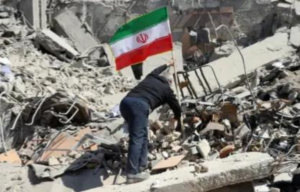
Civilian casualties have been particularly severe, with Lebanese authorities reporting over 250 fatalities and more than 1,000 injuries, alongside extensive damage to infrastructure, including hospitals, residential buildings, and emergency services. The humanitarian impact has been compounded by the displacement of large populations, adding pressure to an already strained Lebanese economy and healthcare system.
International organizations, including the United Nations, have condemned the attacks, describing the casualty figures as “appalling” and calling for investigations into potential violations of international humanitarian law. The scale of destruction has intensified global concern about the consequences of continued escalation.
Ceasefire Dispute and Diverging Interpretations
At the core of the current crisis lies a fundamental disagreement over the scope of the US–Iran ceasefire. While the agreement was intended to pause direct hostilities between the two countries, its applicability to regional proxies such as Hezbollah remains contested.
Israel has explicitly stated that its operations in Lebanon are independent of the Middle East ceasefire crisis, emphasizing its objective to dismantle Hezbollah’s military capabilities. This position has effectively created a parallel conflict dynamic, where ceasefire conditions apply selectively rather than universally.
Conversely, Iran and its allies have argued that excluding Lebanon from the ceasefire undermines its legitimacy and sustainability. Iranian officials have accused the United States of failing to enforce the agreement, warning that continued attacks could render the ceasefire meaningless and trigger broader retaliation.
Iranian Response and Risk of Wider Escalation
Iran’s response to the Israeli strikes has been swift and increasingly assertive. Senior officials have issued warnings of potential retaliation, emphasizing that continued attacks on Lebanon will not go unanswered. The Iranian Revolutionary Guard Corps has also signaled readiness to escalate if the situation deteriorates further.
In addition to direct threats, Iran has leveraged its regional alliances to increase pressure on Israel. Hezbollah, which had initially paused its attacks following the ceasefire announcement, has resumed rocket fire into northern Israel, marking a significant escalation in hostilities.
These developments highlight the interconnected nature of the conflict, where actions in one theater rapidly influence dynamics across the region. The risk of escalation is further amplified by the involvement of multiple actors with competing strategic objectives, making containment increasingly difficult.
Regional and Global Implications
The breakdown of ceasefire conditions in Lebanon has far-reaching implications for regional stability and global security. The Middle East ceasefire crisis, already characterized by complex geopolitical tensions, is now facing the prospect of a prolonged multi-front conflict that could involve additional countries and actors.
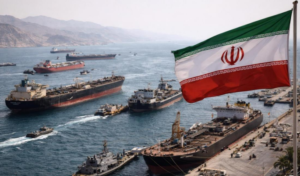
From an economic perspective, the escalation has heightened concerns about energy security and global markets. The region’s strategic importance, particularly in relation to oil supply routes such as the Strait of Hormuz, means that instability could have significant ripple effects on global economies.
Diplomatically, the situation has exposed limitations in current conflict-resolution mechanisms. The inability to achieve a comprehensive ceasefire underscores the challenges of managing conflicts involving both state actors and non-state proxies. It also raises questions about the effectiveness of international mediation efforts.
Outlook
The escalation in Lebanon represents a critical turning point in the broader Middle East conflict, transforming what was initially a bilateral Middle East ceasefire crisis into a complex regional crisis. The continuation of hostilities has not only undermined diplomatic progress but also intensified the risk of a wider war.
In the immediate term, efforts are likely to focus on clarifying the scope of the ceasefire and preventing further escalation. However, without a comprehensive agreement that addresses all fronts of the conflict, the prospects for lasting stability remain uncertain.
Looking ahead, the situation underscores the urgent need for coordinated international action and inclusive diplomatic frameworks. As the region navigates this period of heightened tension, the balance between escalation and de-escalation will play a निर्णant role in shaping the future of Middle Eastern geopolitics.