A series of Gulf Explosions struck multiple Gulf capitals including Dubai, Manama, Kuwait City and Doha as regional conflict widened following retaliatory exchanges between Iran, the United States and Israel. Missiles and drones launched from Iranian territory or affiliated militias triggered widespread alerts, temporary airspace restrictions and emergency responses across the region. Initial assessments suggest that sites linked to U.S. military logistics and allied interests were among the intended targets, though debris also hit civilian zones and commercial infrastructure.
Authorities across the Gulf Explosions have urged residents to remain calm while security agencies investigate the trajectory and origin of the aerial threats. The escalation has heightened fears of a broader destabilisation of one of the world’s most critical geopolitical and economic regions, raising concerns for energy markets, aviation networks and investor sentiment.
Coordinated Aerial Attacks Strike Multiple Gulf Cities
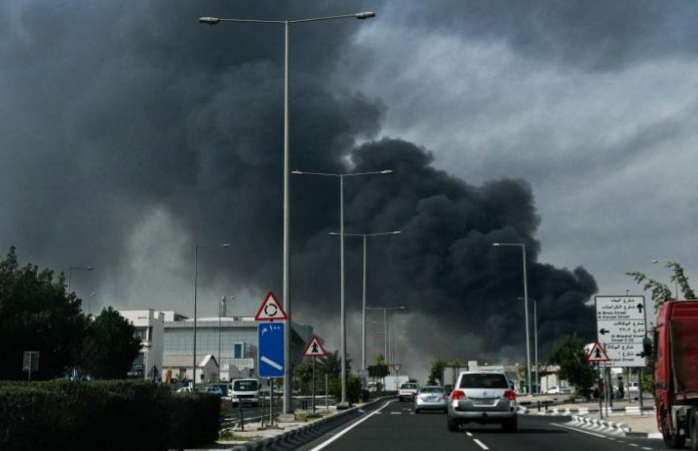
Explosions were first reported over Dubai, where eyewitnesses described loud sonic bursts and smoke plumes near major commercial districts. Though most objects were intercepted by regional air defence systems, falling debris damaged parts of Dubai International Airport’s auxiliary service zone, prompting temporary rerouting of several inbound flights. Emergency crews cordoned off the impact sites to prevent further civilian exposure.
In Bahrain, residents in Manama heard multiple blasts as defensive systems neutralised suspected drones. Preliminary statements from Bahrain’s Interior Ministry confirmed “foreign-origin aerial objects” but clarified that no fatalities had occurred. Authorities stressed that response teams remained on high alert as cross-border monitoring intensified.
Meanwhile, Kuwait temporarily suspended flight operations at Kuwait International Airport after radar detected unidentified projectiles. While no direct hit was recorded, officials cited security protocol as the reason for the brief halt. The incident renewed fears of Kuwait’s vulnerability amid escalating regional tensions.
Regional Airspace Disruptions Affect Aviation and Trade
The sudden bursts of aerial activity forced several airlines to initiate precautionary diversions, with carriers operating between Europe, the Middle East and Asia opting for modified flight paths. Aviation trackers documented clusters of rerouted aircraft avoiding parts of the Gulf Explosions air corridor, which is typically among the busiest in global commercial aviation.
Gulf authorities also placed temporary restrictions on low-altitude airspace to support defence operations, impacting cargo operations and slowing down freight traffic through hubs such as Dubai, Doha and Manama. Logistics specialists warn that continued airspace volatility could impede supply chains, particularly in sectors dependent on rapid cross-border movement, such as e-commerce and perishables.
Ports and seaports especially Jebel Ali, Khalifa Port and Mina Salman have heightened their security protocols, preparing contingency plans should the conflict intensify into maritime zones.
These hubs are vital to global trade, making any sustained disruption a potential threat to international commerce.
Iran’s Show of Force Escalates Strategic Risk in the Gulf
Analysts say the attacks appear to be part of Iran’s broader retaliatory posture after U.S.-Israel strikes on selected Iranian targets earlier this week. Tehran’s strategy, they argue, is to signal strength without engaging in full-scale conflict. However, by sending drones and missiles toward Gulf Explosions territories known for hosting Western military facilities, Iran risks provoking unified countermeasures across the region.
Intelligence reports indicate that some projectiles may have originated from militia groups aligned with Iran rather than Iran’s own missile command. This ambiguity, experts say, forms part of Iran’s asymmetric warfare strategy — maintaining plausible deniability while exerting pressure on U.S. partners in the Gulf Explosions.
Regional diplomats warn that the situation could escalate if a single strike causes significant casualties or hits critical infrastructure, which would force a stronger coordinated response from Gulf governments.
Financial Markets and Investor Confidence Take a Hit
Gulf stock markets reacted sharply to the news, with Saudi Arabia’s Tadawul index falling over 2%, while the Dubai Financial Market (DFM) and Qatar Stock Exchange (QSE) also reported broad-based declines across transport, tourism and financial sectors. Boursa Kuwait suspended trading entirely for several hours citing “extraordinary market conditions.”
Investors fear prolonged instability could undermine foreign direct investment flows into the region, particularly in sectors such as real estate, tourism and fintech. Analysts note that while the Gulf’s economic fundamentals remain strong, market volatility is expected to persist until regional tensions ease.
Oil markets, meanwhile, saw upside pressure, with Brent crude briefly rising above $87 per barrel as traders priced in potential supply disruptions. While energy analysts expect short-term volatility, they believe OPEC’s strategic reserves and Gulf Explosions production buffers will mitigate major shocks.
Gulf Governments Respond With Coordinated Security Measures
Governments across the Gulf Explosions have activated emergency coordination channels to monitor ongoing aerial threats. UAE, Bahrain, Qatar and Kuwait issued joint statements condemning the attacks and confirming enhanced regional security cooperation. Counter-drone teams, missile defence systems and satellite monitoring networks have been placed on elevated readiness.
In the UAE, the National Emergency Crisis and Disasters Authority (NCEMA) reaffirmed that all critical infrastructure including energy facilities, financial centres and defence installations is operating under heightened security protections. Bahrain’s Royal Guard and Kuwait’s Air Defence Forces have deployed additional assets near sensitive urban zones.
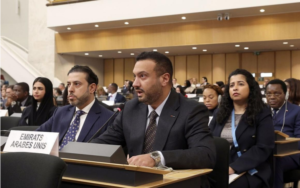
Diplomatically, several Gulf states are engaging with the UN Security Council and major international partners to prevent further escalation and reinforce maritime and aerial protection mechanisms in the region.
Conclusion
The explosions across multiple Gulf capitals mark one of the most significant security incidents the region has witnessed in recent years. While defences largely prevented mass casualties or catastrophic damage, the psychological and economic impact has been substantial. As regional powers navigate a widening conflict triggered by Iran–US–Israel tensions, Gulf governments face renewed urgency to safeguard critical infrastructure, stabilise markets and prevent broader destabilisation.
If tensions continue to escalate, the Gulf could become an increasingly central theatre in the geopolitical struggle, with global implications for energy security, trade routes and international diplomacy.