In a significant boost to the UAE’s industrial decarbonisation agenda, Emirates NBD has announced a new structured green financing facility for Arabian Gulf Steel Industries (AGSI), enabling the company to expand its low-carbon steel production capacity. AGSI Green Finance, headquartered in Abu Dhabi’s industrial cluster, is recognised for operating one of the world’s lowest-emission, carbon-neutral steel plants, with proprietary processes designed to minimise energy intensity and eliminate fossil-fuel dependency in core stages of manufacturing.
The banking group’s financing package aligns with its broader commitment to channel capital toward environmentally sustainable projects under the UAE’s Net Zero 2050 Strategy, particularly in heavy industries where clean-energy innovation remains critical. Senior bank officials described the facility as “a strategic investment into the future of climate-responsible manufacturing,” while AGSI leadership said the funding arrives at a moment when global demand for green steel is accelerating faster than supply pipelines can meet.
UAE’s Green Industrial Policy Gains Momentum
The UAE has identified green industrial transformation as a strategic economic pillar, with steel—one of the world’s highest-emission sectors—being a priority for clean-technology investment. AGSI Green Finance facility expansion contributes directly to the national industrial strategy “Operation 300bn,” which aims to elevate advanced manufacturing’s share of GDP through sustainable production methods. Policymakers have repeatedly emphasised that global competitiveness increasingly depends on low-carbon credentials, especially as Europe and Asia prepare for stricter environmental border-adjustment mechanisms.
Emirates NBD’s involvement reflects the financial sector’s growing alignment with these national ambitions. The bank has already earmarked billions in sustainable financing commitments across energy, transport and infrastructure. According to internal estimates, the AGSI Green Finance alone could contribute to reductions of over 200,000 tonnes of CO₂ annually once the upgraded lines become fully operational. The parallel expansion of ESG-linked lending across the UAE signals a maturing financial ecosystem that supports climate-smart industrialisation at scale.
AGSI’s Technology Edge Strengthens UAE’s Manufacturing Competitiveness
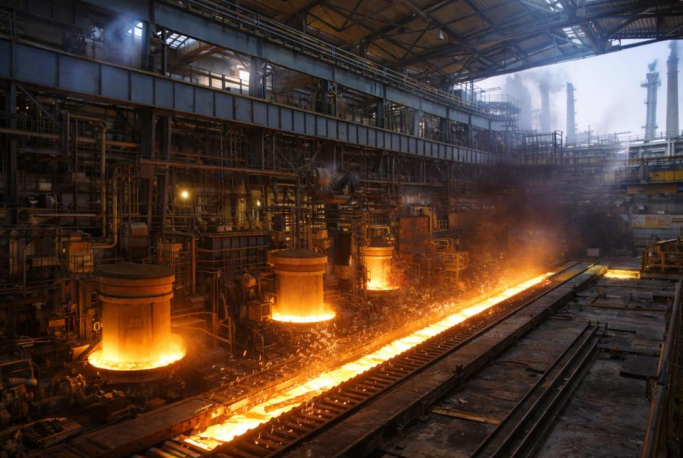
Arabian Gulf Steel Industries has earned international recognition for its use of electric arc furnace (EAF) technology, advanced furnace-heat recycling and renewable-energy integration, which collectively allow the company to produce structural steel with a fraction of conventional emissions. Company executives note that AGSI’s upgraded production lines will be equipped with AI-enabled monitoring systems to optimise heat cycles, reduce energy leakage and increase material recovery rates.
The upcoming expansion is expected to raise output capacity by approximately 350,000–400,000 tonnes per year, positioning the UAE as one of the Middle East’s dominant suppliers of sustainable steel for construction, transport and energy sectors. Industry analysts say this will significantly strengthen the country’s carbon-competitive export advantage at a time when global buyers increasingly prefer verifiable green manufacturing. With sustainability certifications becoming prerequisites for major infrastructure and energy projects, AGSI Green Finance ability to produce validated low-carbon materials places the UAE ahead of several regional peers.
Rising Global Demand for Green Steel Creates Opportunity for UAE Exports
The global green steel market is projected to grow from $2 billion today to nearly $40 billion by 2035, driven by climate mandates across Europe, green procurement policies in the United States and emissions-linked requirements in emerging Asian economies. Emirates NBD’s financing positions the UAE to capture a share of this rapidly expanding value chain. Officials say that AGSI’s production aligns with environmental classifications recognised by major international buyers, including public procurement agencies in the EU.
Trade specialists point out that green-steel producers capable of demonstrating carbon-neutral processes are likely to see exponential demand growth once global Carbon Border Adjustment Mechanisms (CBAM) fully activate over the next two to three years. For Gulf industrial producers traditionally reliant on carbon-intensive methods, AGSI’s model offers a blueprint for competitive advantage. The UAE’s early entry into this segment, supported by strong banking partnerships, could redefine its role in the future of global industrial supply chains.
Financing Model Aligns With Regional ESG Lending Trends
Emirates NBD’s facility uses a sustainability-linked financing structure, with loan terms tied to AGSI’s environmental performance metrics such as energy efficiency, emission reduction and use of recycled inputs. Banking analysts say these frameworks are becoming standard as Gulf financial institutions increasingly integrate ESG criteria into corporate lending portfolios. The shift is partly driven by the UAE Central Bank’s roadmap for sustainable finance, which encourages transparency and climate-aligned risk management across all banking operations.
The facility also reflects a broader market restructuring in the GCC, where investors and sovereign funds are prioritising energy-efficient heavy industries to reduce regional fossil-fuel dependence. In recent years, green financing in the UAE has grown at over 30% CAGR, with banks channelling capital into clean energy, sustainable transport, and advanced manufacturing. Emirates NBD’s partnership with AGSI serves as a high-visibility example of how private financing can accelerate industrial transitions without compromising economic growth.
Broader Economic Impact and Strategic Implications
Economists expect the AGSI expansion to stimulate broader industrial activity in the UAE’s metal-processing and construction sectors, generating skilled jobs in engineering, logistics and automation. Over time, the project could enhance domestic supply chains, reducing the UAE’s reliance on imported low-carbon steel and enabling higher-value exports to Europe and Asia. The ripple effects also align with the UAE’s ambition to become a regional hub for green materials and climate-technology innovation.
Strategically, the move underscores the UAE’s intent to position itself as a frontrunner in sustainable industrial leadership—one that combines technological advancement with environmental responsibility. As global markets tighten emissions expectations, the UAE’s proactive investment in green manufacturing strengthens its credibility as a forward-looking, innovation-driven economy. The AGSI Green Finance–Emirates NBD partnership, officials argue, is emblematic of a national model where industry and finance jointly accelerate the country’s transformation into a clean-energy-powered industrial power.