
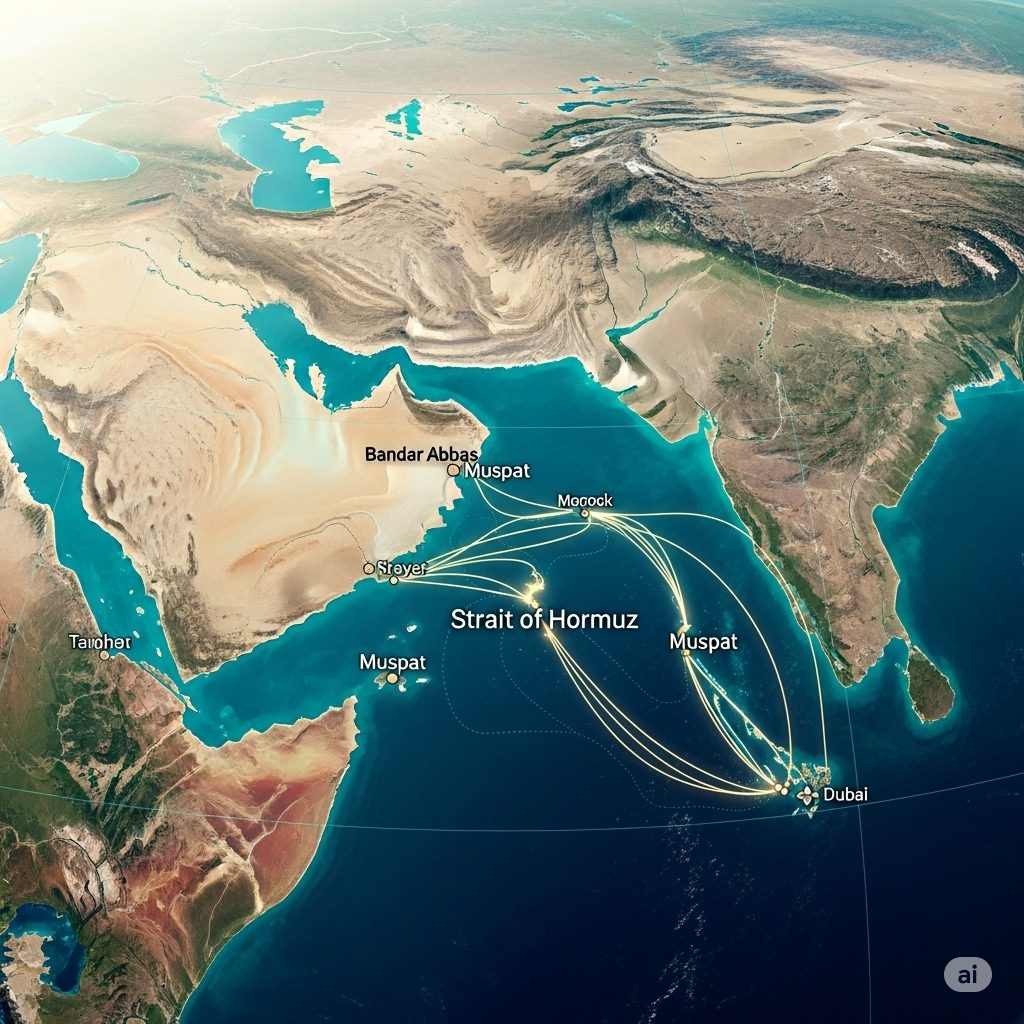
The Strait of Hormuz has become one of the most critical pressure points in the global economy, highlighting the vulnerability of international trade to geopolitical conflict. As tensions in the Middle East disrupt shipping and energy transportation, governments, businesses and logistics companies are being forced to reconsider their dependence on traditional maritime routes. For the United Arab Emirates (UAE), the crisis is not only a security challenge but also a major test of its long-term strategy to diversify trade corridors, strengthen port infrastructure and maintain its position as a global commercial hub.
The ongoing disruption has renewed attention on the importance of alternative shipping routes and resilient supply chains. The UAE has spent years investing in ports, logistics networks, pipelines and transport infrastructure designed to reduce dependence on a single maritime passage. With the Hormuz crisis putting these investments under pressure, the country’s ability to keep goods and energy moving has become an important issue for regional and international markets.
Why the Strait of Hormuz Matters to Global Trade
The Strait of Hormuz connects the Persian Gulf with the Gulf of Oman and the wider Arabian Sea. It serves as a crucial passage for oil, liquefied natural gas (LNG) and other commodities moving from Gulf producers to international markets. Before the current conflict, approximately one-fifth of global oil and liquefied natural gas trade passed through the waterway, making it one of the world’s most strategically important maritime chokepoints.
Any disruption to shipping through the strait can have consequences far beyond the Middle East. Asian economies that rely heavily on energy imports, European industrial markets and businesses dependent on international freight networks can all face higher costs when vessels are delayed or forced to use alternative routes. The impact can extend to fuel prices, electricity generation, manufacturing, aviation, agriculture and consumer goods.
The latest escalation has demonstrated how quickly a regional security crisis can become a global economic concern. On October 14, 2026, Reuters reported that attacks and threats against commercial shipping around the Strait of Hormuz had intensified, with risks extending into nearby waters. Such developments have increased uncertainty for shipowners, insurers, energy companies and international traders. https://www.reuters.com/world/middle-east/iran-shifting-tactics-step-up-attacks-shipping-before-us-vote-officials-say-2026-10-14/
Rising Shipping Costs and Supply Chain Uncertainty
One of the immediate consequences of the Hormuz crisis is the growing cost and complexity of transporting goods. When vessels face security threats, shipping companies may delay departures, suspend particular routes or seek alternative ports and transportation arrangements. These decisions can increase journey times, fuel consumption, insurance premiums and freight charges.
For businesses, the uncertainty can be just as damaging as the additional expense. Importers may struggle to predict delivery schedules, manufacturers may face shortages of essential materials, and exporters may find it harder to fulfil contracts on time. Companies operating with limited inventories are particularly vulnerable because even a short delay can interrupt production or distribution.
Energy markets are especially sensitive to developments around Hormuz. Disruptions to oil and gas movements can affect international prices and increase costs for industries that depend on reliable energy supplies. Higher transportation expenses may also feed into the prices of food, industrial equipment, construction materials and other imported products.
The crisis is therefore encouraging businesses to reconsider supply chain planning. Instead of relying entirely on the fastest or cheapest route under normal conditions, companies are increasingly required to assess security risks, maintain alternative suppliers and develop contingency plans for unexpected disruptions.
The UAE’s Strategy: Building Alternatives Beyond Hormuz
For the UAE, reducing exposure to maritime chokepoints has become an important strategic priority. The country has long relied on its geographical position, modern ports, aviation networks and logistics infrastructure to connect markets across Asia, Europe, Africa and the Middle East. The current crisis is testing how effectively these advantages can be used when conventional shipping routes become difficult or dangerous.
In September 2026, UAE officials outlined efforts to develop alternative routes for energy exports and trade, including expanded port capacity along the country’s eastern coast, pipelines, railways and alternative logistics corridors. The objective is to maintain economic activity even when geopolitical tensions threaten established transportation networks.
A central element of this approach is the development of infrastructure that provides access to the Gulf of Oman and the Arabian Sea without requiring every shipment to follow the same route through the Strait of Hormuz. By improving connections between production centres, storage facilities, ports and inland transportation systems, the UAE aims to create a more flexible trade network.
This strategy does not mean that the Strait of Hormuz has become irrelevant. The waterway remains commercially significant, and alternative routes cannot immediately replace its capacity. Instead, the UAE is seeking to reduce the risks associated with excessive dependence on a single passage while strengthening its ability to respond to emergencies.
The country’s approach reflects a wider economic principle: resilience depends not only on building efficient infrastructure but also on ensuring that alternative options remain available when normal operations are disrupted.
To read more such news kindly visit: Gulftimes