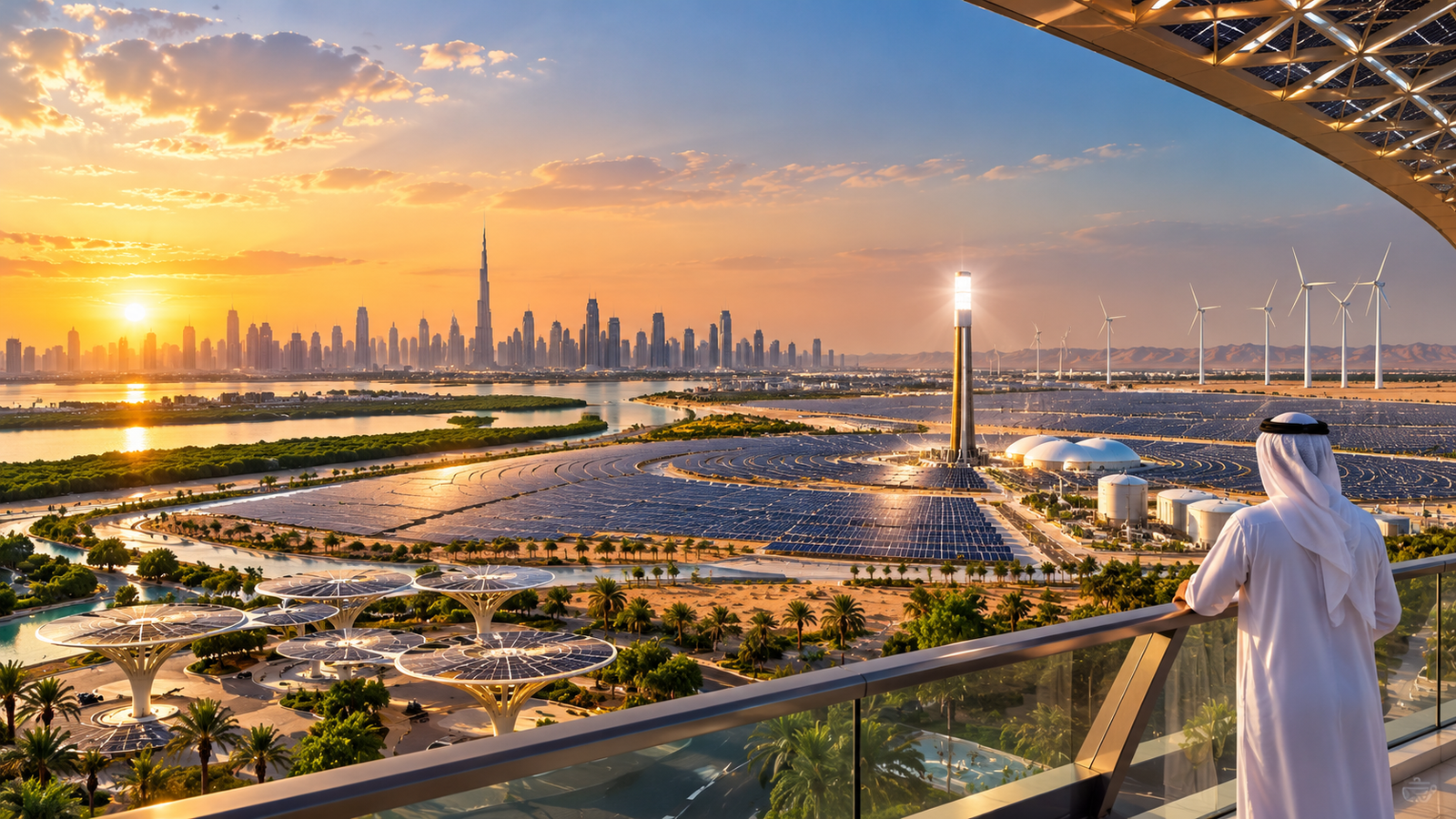
As the UAE advances its artificial intelligence ambitions, the demand for data centres, electricity and cooling is raising important questions about sustainability. Exploring the relationship between AI, water and energy reveals why resource-efficient digital growth matters for the country’s future.
The Hidden Cost of AI: Why Water and Energy Matter to the UAE’s Digital Future
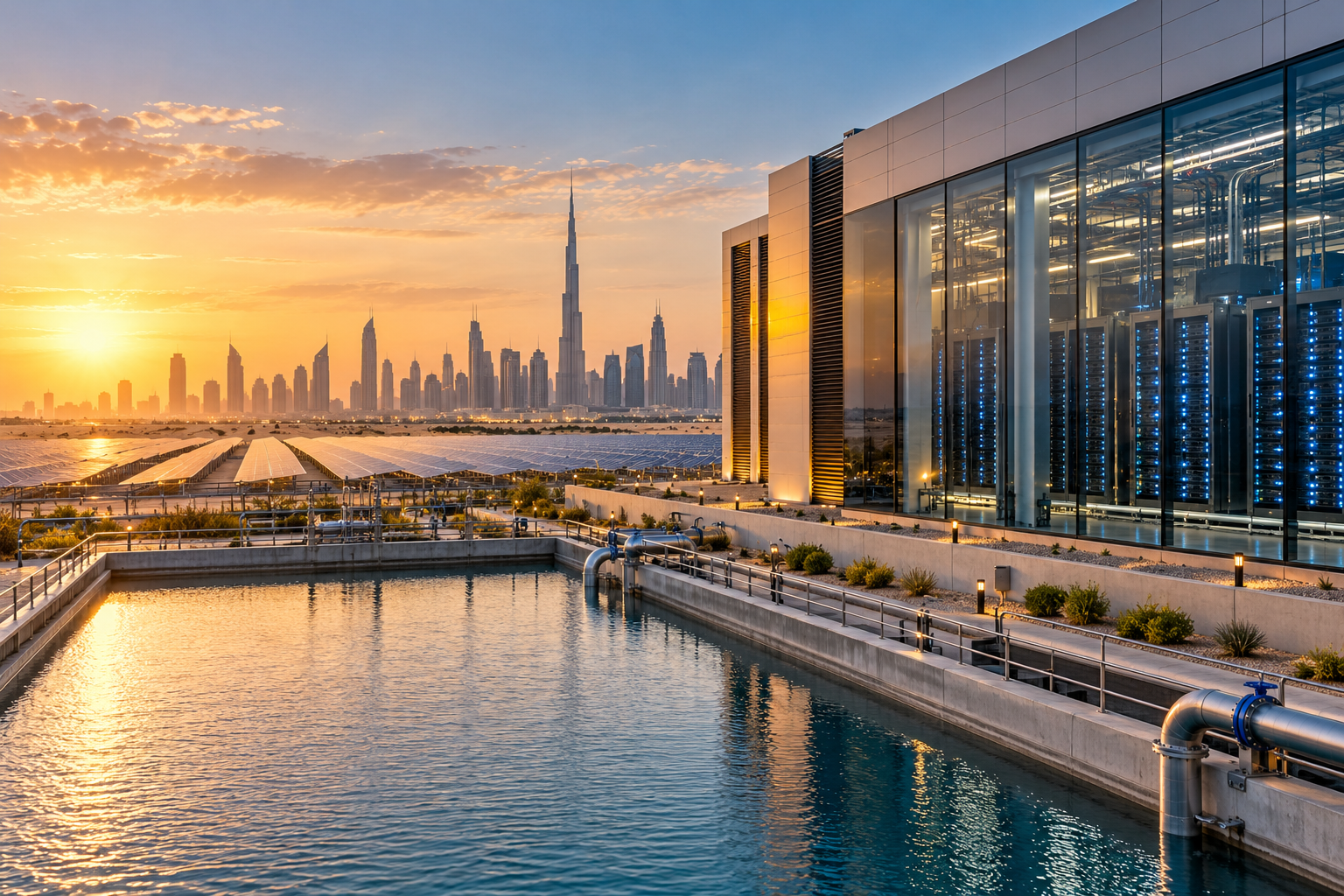
Artificial intelligence is becoming an increasingly important part of the United Arab Emirates’ digital transformation. From smart government services to business automation and advanced computing, AI is creating new opportunities for economic growth and innovation. However, behind every AI-powered service lies a physical infrastructure that requires electricity, computing power and, in many cases, cooling systems that can consume water.
As the UAE strengthens its position as a global technology hub, an important question is emerging: how can the country expand its artificial intelligence capabilities while managing water resources, energy demand and long-term sustainability?
The issue has gained fresh attention following the UAE’s publication of Crosscurrents: Navigating the AI–Water–Energy Nexus on 7 October 2026. The report examines the connections between artificial intelligence, water consumption and energy production, highlighting the need to consider these resources together when planning the digital infrastructure of the future.
Why AI Infrastructure Requires Water and Energy
Artificial intelligence may operate through digital platforms, but the systems that support it depend on physical infrastructure. AI models require powerful computer processors, extensive data storage and data centres capable of handling large volumes of information.
These facilities consume electricity to operate servers and networking equipment. They also generate heat, making cooling systems essential for maintaining performance and preventing equipment from overheating.
Depending on the cooling technology and facility design, water may be used directly in cooling systems. Water can also be consumed indirectly through electricity generation and the manufacturing of semiconductors used in AI hardware.
This means the environmental footprint of artificial intelligence extends beyond the data centre itself. It includes the wider supply chain and the energy systems that keep digital services running.
As AI adoption grows, understanding these connections becomes increasingly important for countries investing in large-scale digital infrastructure.
Why Water Efficiency Matters in the UAE
Water security is a significant consideration for the UAE because of its arid climate, limited natural freshwater resources and dependence on engineered water-supply systems, including desalination.
Desalination allows seawater to be converted into usable freshwater, helping meet the needs of households, businesses and industries. However, producing and distributing water also requires infrastructure and energy.
This creates a close relationship between water and energy management. If demand for digital infrastructure increases, planners must consider how electricity supplies, cooling requirements and water resources interact.
The challenge is not simply to reduce water consumption in individual facilities. It is to ensure that new infrastructure is planned in a way that supports reliable water supplies, efficient energy use and sustainable economic development.
For the UAE, this presents an opportunity to make resource efficiency an important part of its continued digital expansion.
The UAE’s Latest Report Highlights a New Approach
The UAE’s October 2026 report, Crosscurrents: Navigating the AI–Water–Energy Nexus, calls for a more integrated approach to managing the resources required by artificial intelligence.
According to the UAE Ministry of Foreign Affairs, the report examines water use across the AI value chain, including semiconductor manufacturing, electricity generation and data-centre cooling. It also highlights opportunities to use renewable energy, lower-water energy systems and improved resource management to reduce pressure on water supplies.
One of its central messages is that water considerations should be included in decisions about AI infrastructure from the beginning, rather than being addressed only after facilities are built.
This approach could encourage closer cooperation between technology companies, energy providers, water authorities and policymakers. By considering these systems together, planners can make better-informed decisions about where infrastructure should be developed and how it should operate.
The report also comes ahead of the 2026 United Nations Water Conference, which will be co-hosted by the UAE and Senegal in Abu Dhabi from 8 to 10 December 2026.
The conference provides an important opportunity to discuss how technological innovation can support water security while ensuring that growing digital demands are managed responsibly.
How Artificial Intelligence Can Help Save Water and Energy
Although AI infrastructure creates new resource demands, the technology can also help improve the efficiency of existing water and energy systems.
One promising application is intelligent leak detection. AI-powered monitoring systems can analyse information from sensors and water networks to identify unusual patterns that may indicate leaks. Earlier detection can help utilities reduce water losses and respond to problems more quickly.
AI can also support demand forecasting. By analysing historical consumption, weather conditions and other relevant information, predictive systems can help water and electricity providers anticipate periods of high demand and plan resources accordingly.
In buildings and industrial facilities, AI can analyse operating conditions and adjust equipment to improve energy efficiency. Similar applications can help optimise cooling systems, potentially reducing unnecessary electricity consumption.
Abu Dhabi has already demonstrated the potential of this approach through AD.WE, an AI-powered energy and water management platform developed by the Abu Dhabi Department of Energy in partnership with Presight. The platform is designed to improve monitoring and resource optimisation across utility networks.
These examples demonstrate an important distinction: AI should not be evaluated only by the resources it consumes. Its potential to reduce waste, improve infrastructure performance and strengthen resource management should also be considered.
The overall benefit, however, depends on how systems are designed, implemented and measured. Efficiency improvements in one area do not automatically eliminate the environmental impact of expanding computing infrastructure.
Renewable Energy and Smarter Data Centres
Energy efficiency is another important part of making AI infrastructure more sustainable.
Data-centre operators can explore several approaches, including improving server utilisation, optimising cooling systems, selecting efficient hardware and using electricity from lower-carbon sources. Renewable energy can help reduce emissions associated with electricity consumption, although its actual impact depends on availability, storage, grid conditions and when power is required.
Cooling technology also matters. Different facilities have different requirements depending on their location, workload, design and operating conditions. Comparing options based on energy consumption, water use, reliability and overall environmental impact can help operators make better decisions.
In February 2026, the UAE Ministry of Energy and Infrastructure, Khazna Data Centers and Agility announced a pilot to implement Phaidra AI technology to improve energy efficiency across data centres and district cooling operations in the UAE.
Such initiatives illustrate how AI can be applied to the infrastructure that supports digital services, rather than being used only for consumer applications or business automation.
The next step is to assess these solutions through measurable outcomes, including electricity use, cooling efficiency, water consumption and operational reliability.
What Businesses and Policymakers Need to Consider
As AI investment continues, responsible infrastructure planning will require cooperation between government authorities, technology providers, utility companies and researchers.
First, organisations need a clearer understanding of their resource consumption. Measuring direct water use, indirect water requirements and electricity demand can help decision-makers identify opportunities for improvement.
Second, data-centre planning should account for local conditions. Water availability, power infrastructure, cooling requirements and environmental risks differ by location. A solution that works well in one region may not be appropriate in another.
Third, efficiency should be considered from the design stage. Selecting appropriate cooling systems, improving energy performance and evaluating lower-water energy sources can help prevent avoidable resource pressures.
Finally, transparent reporting can help businesses and policymakers assess whether efficiency initiatives are delivering real improvements. Consistent measurement also makes it easier to compare technologies and identify practices that can be adopted more widely.
These steps can help ensure that the benefits of digital innovation are supported by infrastructure capable of meeting future demands.
Balancing Digital Growth With Resource Security
The UAE’s AI ambitions and its commitment to water security do not have to be competing priorities. With effective planning, technological innovation can support economic growth while helping improve the management of essential resources.
However, achieving this balance requires recognising that AI is not entirely virtual. Its development depends on electricity, water, hardware, buildings and supply chains. Understanding these connections is essential to making informed decisions about the future of digital infrastructure.
The UAE’s latest report brings this relationship into sharper focus at a time when governments worldwide are considering how to expand AI while addressing environmental challenges.
As the country prepares to co-host the 2026 United Nations Water Conference, the relationship between AI, water and energy is likely to remain an important topic for policymakers, technology companies and sustainability experts.
Ultimately, the future of artificial intelligence will depend not only on how powerful digital systems become, but also on how efficiently and responsibly they are built and operated. For the UAE, integrating water security and energy efficiency into digital infrastructure planning could help support a more resilient and sustainable technology sector.
To explore more news, insights and developments from the United Arab Emirates, visit The Gulf Time

Subscribe to Our Newsletter
Keep in touch with our news & offers