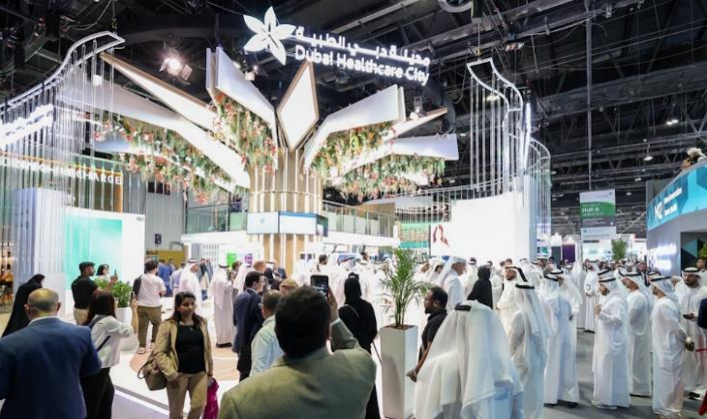
The World Health Exhibition 2026 Dubai, convening government delegations, global manufacturers, health-tech start-ups and international agencies around a focused agenda of trade, capacity building and resilient health systems. Organisers said the event aims to catalyse export opportunities for regional producers, accelerate adoption of digital health tools and showcase scalable solutions that address pressing challenges such as supply-chain fragility, pandemic preparedness and non-communicable disease care. With an exhibition floor featuring hundreds of stands and a conference programme running in parallel, the event positioned itself as both a marketplace and a policy forum for the region and beyond.
Host authorities framed the exhibition as part of a broader strategy to make the city a logistics and health-services hub that links manufacturers in South and Southeast Asia with Gulf and African markets. Officials highlighted the role of the event in facilitating business-to-business contacts, enabling public-private partnerships and speeding adoption of international quality standards among regional suppliers. Delegates underscored that the show was timed to help World Health Exhibition 2026 Dubai ministries and buyers finalise procurement plans for the year ahead and to give smaller manufacturers a direct route into hospital and distributor networks across the region.
Objectives: trade, resilience and technology adoption
The exhibition’s organisers set out three interlocking objectives: expand market access for medical manufacturers, strengthen regional supply-chain resilience and accelerate adoption of digital and diagnostic technologies. The first objective focused on connecting manufacturers with large purchasers, hospitals, national procurement agencies and international buyers — to convert commercial interest into signed contracts and memoranda of understanding. The second objective emphasised diversified sourcing and regional stockpiles to reduce future dependence on single-origin suppliers during crises.
The third objective turned attention to technology: organisers said the event would highlight scalable digital-health solutions such as telemedicine platforms, interoperable electronic health records, and AI-assisted diagnostics that can be rapidly deployed in low-resource settings. Exhibitors and conference speakers repeatedly linked technology adoption to improved service delivery and cost efficiency, arguing that faster procurement cycles coupled with targeted training programmes could materially raise standards of care across partner countries.
Launch ceremony and high-level commitments
The opening day featured a formal launch ceremony attended by ministers, senior World Health Exhibition 2026 Dubai officials and heads of major regional trade organisations, who used the platform to announce cooperative initiatives and procurement intentions. Speakers emphasised practical outcomes: several delegations pledged pilot projects for digital triage systems, while procurement agencies announced accelerated tender timelines to source emergency medical kits and essential diagnostics for 2026.
During the launch, international agencies and regional partners outlined immediate support measures aimed at small and medium medical manufacturers. These included technical-assistance windows to help firms meet international certification requirements and matched funding for rapid capacity upgrades. Organisers said the combined effect of these pledges would be to shorten the time between product demonstration on the show floor and actual deployment in hospitals.
Major events and ideas showcased on the exhibition floor
The exhibition showcased a wide range of themes across dedicated pavilions: diagnostic innovation, primary-care technologies, cold-chain and logistics solutions, and clinical consumables. Demonstrations of next-generation point-of-care tests drew large crowds, particularly panels showing rapid multiplex assays capable of distinguishing multiple respiratory pathogens at bedside, a development organisers argued would be transformative for seasonal surge management.
A prominent technology corridor displayed integrated systems linking ambulance dispatch, hospital bed-management and regional coordination dashboards; these systems illustrated how real-time data flows can reduce ambulance turnaround times and improve patient routing in dense urban environments. In parallel, several manufacturers exhibited modular, rapidly deployable isolation units and compact oxygen generation kits tailored for emergency scale-up in remote locations, reflecting lessons learned from recent public-health emergencies.
International participation and partnership announcements
The fair’s organisers reported participation from a broad cross-section of countries and institutions, with national pavilions representing major regional suppliers and diaspora manufacturers seeking market entry. Private-sector delegations included both global medical-device incumbents and venture-backed start-ups showing early-stage AI diagnostics and cloud-native hospital information systems. Organisers said this mix of established suppliers and agile innovators was intentional: it allows buyers to compare mature product lines with cutting-edge prototypes in one venue.
Several formal partnership announcements underscored the event’s collaborative ambitions. Regional World Health Exhibition 2026 Dubai ministries committed to pilot shared procurement mechanisms for essential medicines, and a consortium of logistics companies agreed to test a cross-border cold-chain corridor linking manufacturing hubs to Gulf distribution centres. International agencies participating in the conference signalled technical support for capacity-building programmes that will help small manufacturers meet regulatory and quality benchmarks required for cross-border trade.
Outcomes, procurement signals and the road ahead
By the end of the opening day, organisers reported dozens of in-hall procurement meetings and the signing of initial letters of intent between suppliers and hospital groups. Buyers said the event had shortened decision cycles by allowing hands-on demonstrations and immediate access to technical teams. Officials noted that many procurement offices would use the next 60 days to validate offers and finalise contracts announced informally on the floor.
Organisers and participating agencies stressed that the exhibition’s longer-term success will depend on follow-through: rapid certification support, transparent commercial terms and effective logistics execution. They said post-event working groups will track agreed pilots and measure deployment timelines, ensuring that exhibitor innovations move beyond demonstration to sustained use in health systems across the region.
Conclusion
The World Health Exhibition 2026 Dubai in the city has positioned itself as a practical, results-oriented platform that blends commerce with public-health objectives; its organisers framed the event as an accelerator for trade, technological adoption and regional resilience. With targeted procurement pledges, concrete partnership announcements and a clear focus on scalable solutions, the exhibition sought to turn exhibitor demonstrations into real-world deployments that can strengthen World Health Exhibition 2026 Dubai systems across neighbouring markets.
If implemented effectively, the procurement agreements, pilot projects and capacity-building commitments announced at the exhibition could materially improve access to diagnostics, enhance emergency readiness and provide a renewed market pathway for regional medical manufacturers delivering both health and economic benefits in equal measure.