A landmark $700 million infrastructure initiative is set to reshape digital connectivity across the Middle East, as an Iraqi-UAE consortium announced plans to develop the WorldLink Data Cable network.
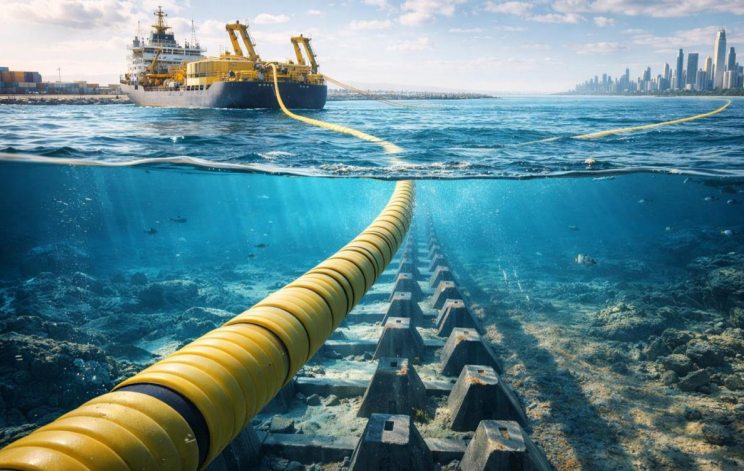
The project, combining subsea and terrestrial fiber-optic systems, will connect the United Arab Emirates to Turkey via Iraq, creating a high-capacity digital corridor linking the Gulf to Europe and beyond.
Officials described the initiative as a transformative step in positioning the region as a global data and artificial intelligence (AI) hub.
The consortium, comprising technology and infrastructure investors from both Iraq and the UAE, confirmed that the network will traverse key transit routes across Iraqi territory before integrating into established European connectivity nodes in Turkey.
The project’s estimated investment of $700 million underscores the scale of ambition behind the initiative. Construction planning is expected to commence later this year, with phased deployment designed to ensure long-term scalability and resilience.
According to project representatives, WorldLink Data Cable is envisioned as more than a telecommunications upgrade. It is positioned as foundational infrastructure for AI data centres, cloud computing networks and next-generation enterprise systems.
With global demand for high-speed, low-latency connectivity accelerating, the project aims to serve hyperscale computing requirements while enhancing digital sovereignty within the region.
Strengthening AI Infrastructure and Data Sovereignty
Artificial intelligence applications require vast computational capacity and seamless data transfer.
Gulf economies, particularly the UAE, have articulated strategic goals to become global leaders in AI research and deployment.
The WorldLink Data Cable initiative aligns directly with these ambitions by expanding bandwidth capacity and reducing data transmission bottlenecks between Asia, the Middle East and Europe.
Project officials stated that the new corridor will support hyperscale data centres in the Gulf, enabling faster data exchange for AI model training and real-time analytics.
By creating alternative routing pathways, the network is also expected to enhance redundancy and resilience in regional data infrastructure.
Analysts note that diversified cable routes are essential for mitigating risks associated with outages or geopolitical disruptions.
A senior representative involved in the planning phase remarked that the initiative is “designed to future-proof digital connectivity for AI-driven economies.”
The statement reflects growing recognition that digital infrastructure is as strategically significant as physical trade routes.
Nations competing in the AI economy increasingly depend on secure and efficient cross-border data flows.
The project also strengthens Iraq’s digital profile.
Historically viewed primarily through an energy and reconstruction lens, Iraq’s inclusion as a transit and connectivity hub signals its evolving role in regional digital transformation.
Economic Diversification and Regional Integration
For the United Arab Emirates, the WorldLink Data Cable reinforces its broader economic diversification strategy.
Over the past decade, the UAE has invested heavily in digital economy initiatives, AI research programmes and cloud infrastructure.
By anchoring a new high-capacity corridor, the country aims to consolidate its status as a regional data gateway.
The partnership also holds economic implications for Iraq.
As a transit country in the network, Iraq stands to benefit from infrastructure investment, job creation and enhanced digital connectivity for domestic enterprises.
Improved connectivity can stimulate growth in technology startups, fintech platforms and e-commerce ventures within the Iraqi market.
Economic analysts argue that digital infrastructure projects often yield multiplier effects, catalysing innovation ecosystems around data centres and cloud service providers.
The WorldLink Data Cable corridor could attract further private-sector investment into regional AI labs, cybersecurity firms and enterprise software developers.
By connecting the Gulf directly to Turkey, the project integrates Middle Eastern and European digital markets more closely.
Turkey’s established connectivity networks provide onward links into the European Union, enabling faster and more reliable data exchange across continents.
Geopolitical and Strategic Dimensions
Beyond economic gains, the $700 million cable project carries geopolitical significance.
Digital connectivity has become a strategic priority for nations seeking autonomy and influence in the information age.
Infrastructure that underpins AI and cloud services is increasingly viewed as a critical national asset.
By collaborating on a cross-border initiative of this scale, Iraq and the UAE signal a shared commitment to regional integration and technological modernisation.
Observers note that such partnerships contribute to stabilising regional relationships through economic interdependence.
The corridor also complements broader international efforts to diversify global data routes.
In recent years, governments and private investors have prioritised creating multiple pathways for digital traffic to reduce reliance on single transit chokepoints.
The WorldLink project adds a new layer of redundancy, enhancing overall resilience of international networks.
Officials associated with the initiative emphasised that the cable will adhere to international cybersecurity standards and regulatory frameworks.
Ensuring data security and operational transparency is considered vital for attracting multinational cloud providers and enterprise clients.
Looking Ahead
As planning transitions toward execution, attention will focus on regulatory approvals, environmental assessments and coordination among cross-border authorities.
Large-scale subsea and terrestrial cable projects typically require meticulous engineering, particularly when spanning varied geographic terrain.
Industry experts predict that once operational, WorldLink could significantly reduce latency between the Gulf and European markets, benefiting financial institutions, logistics companies and AI developers alike.
Enhanced connectivity may also encourage multinational corporations to expand regional headquarters and data operations within the Gulf.
The announcement of the $700 million initiative reflects a broader global trend: nations investing heavily in digital backbones to secure competitive advantage in the AI era.
For Iraq and the UAE, the partnership represents both a technological leap and a statement of strategic intent.
In an increasingly data-driven world, fiber-optic cables form the invisible arteries of economic and technological power.
The WorldLink corridor, once realised, is poised to strengthen the Middle East’s integration into the global digital ecosystem while reinforcing ambitions to lead in artificial intelligence innovation.
As digital economies expand and AI adoption accelerates, infrastructure projects such as this one will shape not only connectivity but also the trajectory of regional development.
The Iraqi-UAE consortium’s announcement marks a significant chapter in the evolving story of Gulf digital transformation where cables beneath land and sea may well determine the future contours of economic growth and technological leadership.