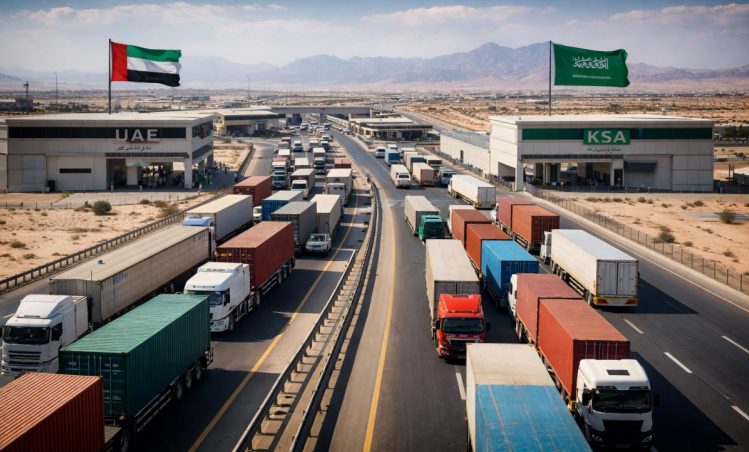
In a significant move reflecting both economic pragmatism and strategic foresight, the United Arab Emirates and Saudi Arabia have launched a new logistics corridor connecting Sharjah and Dammam, designed to ensure continuity in cargo movement amid escalating regional instability.
The initiative emerges at a critical moment when traditional maritime routes across the Gulf are facing disruption due to heightened geopolitical tensions, prompting regional economies to seek alternative pathways for sustaining UAE Saudi Trade Corridor
flows.
The corridor represents more than a logistical arrangement; it embodies a structural shift in how Gulf nations are adapting to an increasingly uncertain global and regional environment. By integrating sea, land, and air transport networks, the initiative aims to reduce dependency on vulnerable maritime chokepoints while enhancing the efficiency and reliability of supply chains. In doing so, it underscores the growing importance of resilience in modern UAE Saudi Trade Corridor infrastructure.
At a broader level, the launch of this corridor highlights the Gulf’s evolving economic strategy, where cooperation and connectivity are being prioritised alongside traditional energy exports. As regional economies diversify and global supply chains become more complex, initiatives such as this corridor are likely to play a central role in shaping the future of UAE Saudi Trade Corridor across the Middle East and beyond.
Strategic Context: Trade Under Pressure
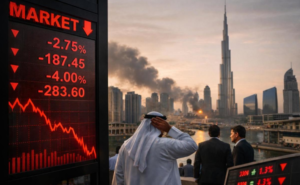
The establishment of the UAE–Saudi corridor must be understood against the backdrop of increasing disruptions in Gulf maritime routes. Key shipping lanes, particularly those passing through the Strait of Hormuz, have come under heightened risk due to escalating tensions, leading to delays, rerouting of vessels, and rising insurance premiums. These developments have created significant challenges for exporters and logistics operators across the region.
In response, Gulf economies have begun to reassess their dependence on traditional trade routes, recognising the need for alternative channels that can ensure continuity in times of crisis. The new corridor provides a critical buffer against such disruptions, enabling goods to bypass high-risk areas and reach their destinations through more secure and controlled pathways.
This strategic recalibration reflects a broader global trend toward supply chain diversification, where resilience and flexibility are becoming as important as cost efficiency. For the Gulf, a region deeply integrated into global UAE Saudi Trade Corridor networks, the ability to maintain uninterrupted cargo flows is essential not only for economic stability but also for sustaining its role as a global logistics hub.
Operational Framework and Multi-Modal Integration
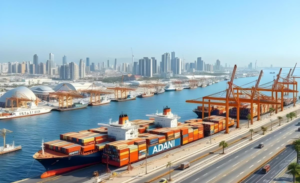
The UAE–Saudi corridor is built on a multi-modal logistics framework that combines maritime shipping, overland transport, and air connectivity into a seamless system. Cargo arriving at ports in Sharjah can be transported via land routes into Saudi Arabia, where it is further distributed through regional and international networks. This integration allows for faster transit times and reduced dependency on any single mode of transport.
A key feature of the corridor is its emphasis on streamlined customs and regulatory processes. By aligning procedures between the UAE and Saudi Arabia, the initiative minimises delays at border checkpoints and ensures smoother movement of goods. This level of coordination represents a significant advancement in regional logistics cooperation, setting a precedent for future initiatives.
The operational design also incorporates advanced tracking and digital systems to monitor cargo movement in real time. Such technological integration enhances transparency and efficiency, enabling businesses to plan and execute shipments with greater certainty. In an environment where unpredictability has become the norm, these capabilities are particularly valuable.
Economic Impact and Trade Expansion
The economic implications of the corridor are substantial, particularly for sectors that rely heavily on timely and reliable logistics. By reducing transit times and mitigating risks associated with maritime disruptions, the corridor is expected to lower operational costs for businesses and improve competitiveness in global markets.
Small and medium enterprises stand to benefit significantly from this development. With improved access to efficient logistics networks, these businesses can expand their reach and participate more actively in international trade. The corridor thus has the potential to stimulate entrepreneurship and drive economic diversification within the region.
In addition to facilitating existing UAE Saudi Trade Corridor flows, the initiative is likely to attract new investments in logistics, warehousing, and related services. As companies seek to leverage the advantages offered by the corridor, the resulting economic activity could contribute to sustained growth and job creation across both the UAE and Saudi Arabia.
Regional Cooperation and Strategic Significance
The launch of the corridor underscores the importance of regional cooperation in addressing shared challenges. By working together to develop integrated logistics solutions, the UAE and Saudi Arabia are demonstrating a collaborative approach to economic resilience, one that prioritises mutual benefit and long-term stability.
This partnership also reflects the broader vision of economic integration within the Gulf Cooperation Council (GCC). As member states seek to enhance connectivity and reduce barriers to trade, initiatives like this corridor serve as building blocks for a more unified and efficient regional economy.
From a strategic perspective, the corridor strengthens the Gulf’s position in global trade networks by offering an alternative to traditional routes that are increasingly vulnerable to disruption. In doing so, it enhances the region’s attractiveness as a reliable partner for international businesses and investors.
Outlook
The UAE–Saudi logistics corridor represents a forward-looking response to the challenges posed by a rapidly changing global environment. By prioritising resilience, efficiency, and cooperation, the initiative addresses immediate disruptions while laying the groundwork for long-term economic stability.
In the near term, the success of the corridor will depend on its ability to deliver tangible benefits in terms of speed, cost, and reliability. Continued investment in infrastructure, technology, and regulatory alignment will be essential to ensure its effectiveness and scalability.
Looking ahead, the corridor is likely to serve as a model for future trade initiatives, both within the Gulf and beyond. As global supply chains continue to evolve, the emphasis on resilience and adaptability will only grow stronger. In this context, the UAE–Saudi corridor stands as a testament to the region’s capacity to innovate and adapt in the face of uncertainty, shaping the future of trade in an increasingly interconnected world.