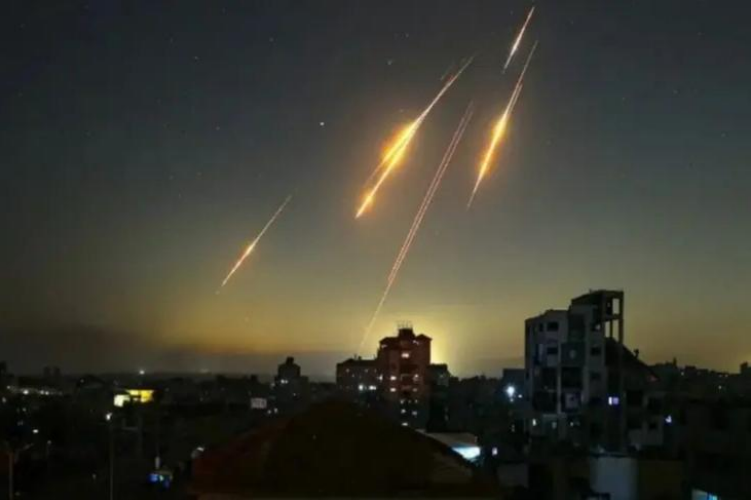
The United Arab Emirates is reviewing potential defensive responses after a series of missile and drone attacks launched from Iran struck several Gulf states, including the UAE missile attacks, amid a rapidly escalating regional conflict. Officials confirmed that Emirati air defence systems have been intercepting large numbers of incoming projectiles since the beginning of the attacks, while the government continues to assess its strategic response under international law.
According to defence briefings and regional reporting, the UAE missile attacks has been among the countries most heavily targeted during the escalation, with hundreds of aerial threats detected across its airspace. While the country has not formally entered the broader regional conflict, authorities have emphasised that the UAE retains its sovereign right to self-defence while simultaneously urging diplomatic solutions to prevent further military escalation.
Scale of Iranian Attacks and UAE Air Defence Response
The UAE Ministry of Defence confirmed during a government media briefing that the country has faced a sustained wave of Iranian missile and drone attacks since the conflict intensified. Officials stated that 186 ballistic missiles, eight cruise missiles and 812 drones had been detected heading toward the UAE missile attacks since the beginning of hostilities.
Emirati air-defence systems successfully intercepted 172 ballistic missiles and 755 drones, preventing most of the threats from reaching their intended targets.
Despite the high interception rate, some projectiles and debris fell inside the country, resulting in three fatalities, 68 minor injuries and limited damage to civilian properties.
Defence authorities stressed that the country’s advanced multi-layered air defence systems remain operational and capable of protecting critical infrastructure, population centres and economic facilities.
Officials also noted that the UAE has maintained a high level of military readiness, supported by national defence industries and sufficient stockpiles of interceptors and munitions to sustain defensive operations for an extended period.
UAE Considers Defensive Measures
Although the UAE has not directly participated in the wider conflict involving Iran, Israel and the United States, government officials have acknowledged that the country is evaluating potential defensive measures in response to repeated attacks on its territory.
Sources familiar with policy discussions say the government is assessing options to neutralise missile and drone launch sites if necessary to protect national security.
However, Emirati authorities emphasised that no final decision has been taken to change the country’s defensive posture.
The Ministry of Foreign Affairs reiterated that the UAE’s actions remain guided by international law and the United Nations Charter, under which states retain the right to defend themselves against external threats.
At the same time, the government stressed that the UAE has not allowed its territory, airspace or waters to be used in offensive operations against Iran, underscoring its position as a state seeking stability rather than confrontation.
Regional Conflict Expands Across Gulf Countries
The missile and drone attacks targeting the UAE missile attacks form part of a broader regional escalation that has affected several Gulf countries.
Iranian strikes have reportedly targeted multiple states including Saudi Arabia, Bahrain, Qatar, Kuwait and Oman as tensions intensified across the Middle East.
Security analysts say the attacks represent one of the most significant waves of cross-border missile activity in the region in recent decades.
Defence forces across the Gulf have deployed advanced air-defence systems to intercept incoming threats and protect key economic assets such as ports, airports and energy infrastructure.
The scope of the attacks has also heightened concerns among global security observers that the conflict could widen further if additional countries are drawn into direct military responses.
UAE Calls for Diplomacy While Asserting Right to Self-Defence
Despite the security challenges, the UAE leadership has continued to advocate diplomatic solutions to contain the crisis.
Emirati officials have repeatedly emphasised that the country does not seek to expand the conflict and remains committed to dialogue and regional stability.
At the same time, government representatives made it clear that the UAE missile attacks “will not tolerate any violation of its sovereignty” and reserves the right to take necessary defensive measures to protect its territory and citizens.
Officials also called on the international community and the United Nations Security Council to address the escalating attacks and prevent further destabilisation of the region.
The UAE missile attacks dual message combining diplomatic restraint with military preparedness reflects a strategy aimed at safeguarding national security while avoiding actions that could further inflame tensions across the Gulf.