The United Arab Emirates has stepped up nationwide food-security measures and supply-chain logistics to ensure supermarkets remain fully stocked amid growing regional uncertainty affecting transportation routes across the Gulf. Government authorities and major retail groups have confirmed that daily monitoring of food inventories, emergency cargo shipments and alternative supply routes are being implemented to prevent any disruption to consumer access to essential goods.
Officials from the UAE Ministry of Climate Change and Environment and the Ministry of Economy have stated that the country’s strategic food reserves and highly diversified import network provide strong protection against supply shocks. The UAE imports roughly 85–90% of its food requirements, making efficient logistics and rapid supply coordination critical to maintaining stable availability in supermarkets and wholesale markets.
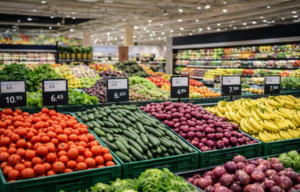
Retail giants such as LuLu Group, Carrefour UAE and Union Coop have been working closely with authorities to increase supply capacity through chartered cargo flights, expanded storage inventories and improved real-time stock tracking across retail outlets. These measures are designed to ensure that even during periods of geopolitical disruption or transport delays, consumers across the UAE Food Supply continue to find normal availability of fruits, vegetables and essential groceries.
Government Mobilises National Food Security Framework
The UAE government has activated several mechanisms within its National Food Security Strategy 2051, a long-term plan designed to ensure stable access to affordable and safe food supplies under all circumstances. The strategy emphasises diversified sourcing, advanced logistics infrastructure and strong partnerships with international suppliers to reduce vulnerability to disruptions in global supply chains.
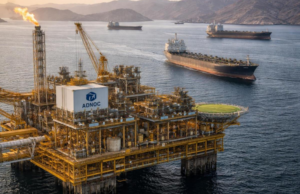
Officials have confirmed that national authorities are coordinating closely with ports, customs agencies and logistics providers to ensure smooth clearance and distribution of food imports entering the country. Major ports such as Jebel Ali Port in Dubai and Khalifa Port in Abu Dhabi remain fully operational and are handling increased cargo volumes to maintain the steady flow of food shipments.
According to government estimates, the UAE Food Supply maintains strategic reserves capable of covering several months of key staple foods, including rice, wheat, cooking oil and other essential commodities. These reserves act as a buffer during emergencies, allowing authorities to stabilise supply while new shipments are organised through alternative international suppliers.
Retailers Expand Supply Networks and Cargo Shipments
Major supermarket chains have significantly strengthened their logistics operations to support the government’s food-security efforts. Companies including LuLu Group International, Carrefour and Spinneys have increased coordination with suppliers in India, Europe and Southeast Asia to secure uninterrupted shipments of fresh produce and packaged goods.
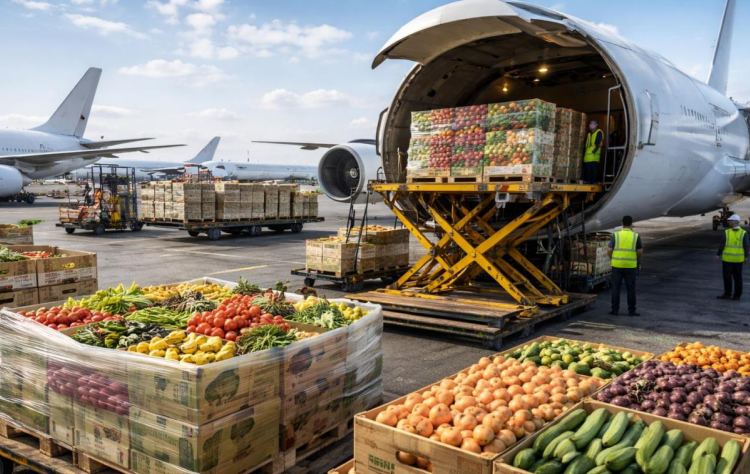
One of the most visible measures has been the organisation of chartered cargo flights carrying fresh fruits and vegetables from India, which remains one of the UAE’s largest food suppliers. Retailers have arranged multiple shipments to ensure steady supplies of perishable goods such as tomatoes, onions, bananas and leafy vegetables that require rapid transportation to maintain quality.
In addition to air cargo, retailers are expanding land and sea shipping routes to diversify supply channels. By working with multiple logistics providers and suppliers across different regions, companies aim to reduce dependence on any single transport corridor and maintain stable availability of goods across supermarkets throughout the country.
Advanced Monitoring Systems Track Supermarket Inventories
Authorities and retailers have also deployed advanced technology to monitor food availability in real time. Supermarket chains are using digital inventory management systems and automated stock-tracking platforms to monitor product availability across thousands of retail outlets nationwide.
These systems allow retailers and government agencies to identify potential shortages quickly and redirect supplies to locations where demand is rising. Data analytics tools are being used to track consumption patterns and forecast demand for essential goods, enabling more efficient distribution and restocking operations.
Officials say the use of digital monitoring has greatly strengthened the resilience of the UAE’s retail supply chain. By combining logistics coordination with real-time data, authorities can ensure that supermarkets maintain stable stock levels even during periods of increased consumer demand or temporary transport disruptions.
Diversified Import Sources Strengthen Supply Resilience
A key factor supporting the UAE Food Supply security strategy is the country’s diversified global sourcing network. Food imports arrive from more than 100 countries worldwide, including major suppliers such as India, Brazil, Australia, the United States and several European nations.
This diversified sourcing reduces the risk of shortages if one supply route becomes disrupted. In addition to international imports, the UAE Food Supply has been investing heavily in domestic agricultural technologies such as hydroponics, vertical farming and controlled-environment agriculture, which allow local production of vegetables and herbs even in the region’s arid climate.
Government initiatives such as the National Food Security Strategy and public-private investment programs have encouraged innovation in agricultural technology, helping to reduce reliance on imports over the long term. While the UAE Food Supply will continue to depend on international trade for most of its food supply, these initiatives are gradually strengthening domestic resilience.
Conclusion
The UAE’s rapid mobilisation of UAE Food Supply logistics highlights the country’s proactive approach to maintaining economic stability and consumer confidence during periods of regional uncertainty. Through coordinated action between government agencies, logistics operators and major retailers, authorities have been able to ensure that supermarkets remain well stocked and supply chains continue to function smoothly.
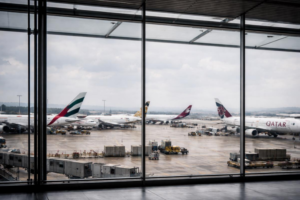
Analysts note that the UAE’s world-class ports, aviation infrastructure and diversified trade partnerships give it a significant advantage in managing supply disruptions compared with many other import-dependent nations. The ability to rapidly shift supply routes and organise emergency shipments helps protect the country’s food system from external shocks.
Looking ahead, officials say the continued development of advanced agricultural technologies, strategic food reserves and digital logistics systems will further strengthen the UAE Food Supply-security framework. These measures are expected to ensure that the country can maintain reliable access to essential food supplies even during periods of global supply-chain instability or geopolitical tension.