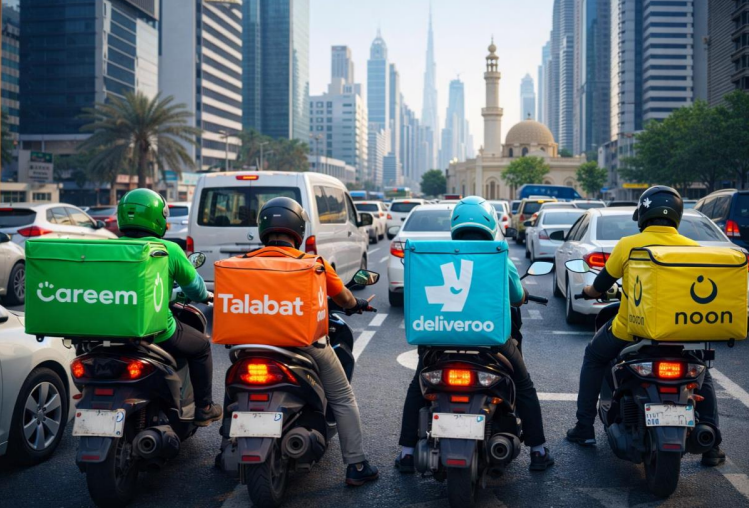
Delivery platforms across the UAE delivery delays are reporting noticeable delays in order fulfilment as heightened regional security tensions continue to disrupt transportation and logistics networks. Major delivery apps including Careem, Talabat, Deliveroo and Noon have issued in-app alerts to customers warning of extended delivery times, citing safety considerations for riders and ongoing operational constraints that have emerged amid the broader geopolitical situation.
The warnings coincide with ongoing regional instability following recent conflicts in the Middle East that have impeded transportation infrastructure, including airspace restrictions, flight and cargo disruptions, and heightened emergency protocols in the UAE. While fundamental supply chains remain stable, the immediate impact has been felt most acutely in the consumer delivery sector, where rapid, on-demand services face new challenges in balancing safety and service expectations.
Delivery Platforms Warn of Extended Timelines
Several of the UAE’s most widely used delivery platforms have communicated directly with customers about delays. Careem informed users that while services continue to operate, “slight delays” should be expected as extra precautions are taken to protect riders navigating uncertain road conditions. Operational adjustments have been guided by official safety advisories, and the company emphasised that rider well-being remains its foremost priority.
Similarly, Talabat alerted customers that deliveries may take longer due to changes in delivery workflows designed to mitigate risk. In its notice, the platform underscored that operations continue across the UAE but that delivery timelines remain subject to ongoing review in line with official guidance. Deliveroo echoed this stance, stating it is monitoring developments closely and may temporarily adjust service levels as necessary to ensure riders’ and customers’ safety.
Noon, another major retail and delivery player, cited both increased usage due to higher demand for home-delivery services and heightened operational constraints, noting that demand and safety measures are affecting normal delivery speeds. Collectively, these alerts reflect a sector-wide adjustment to service models under exceptional external conditions.
Safety Measures Drive Operational Adjustments
The delivery warnings from UAE platforms come as authorities have taken precautionary measures in response to escalating regional conflict. Government agencies have implemented emergency protocols that affect transportation mobility, including temporary airspace restrictions, flight suspensions, and advisories for public movements and essential services, resulting in ripple effects across logistics networks.
In this context, delivery companies have emphasised that their adjustments are largely driven by safety considerations. Riders, often navigating crowded urban roads and unexpected route changes, are being guided to prioritise caution over speed, with some operations paused in areas deemed less safe or during times of heightened security alerts. These measures aim to strike a balance between continuing to serve customers and safeguarding field personnel.
Industry observers note that while these disruptions may dampen customer expectations in the short term, they also point to the resilience of the UAE’s delivery infrastructure in adapting to sudden shifts, guided by real-time assessments and official risk levels communicated by relevant authorities.
Broader Logistics and Supply Chain Context
While delivery times are being impacted, broader supply chain operations across the UAE show relative resilience, with the private sector and supermarkets maintaining steady inventory levels. Retailers have publicly reassured residents that shelves remain well stocked and that there are no significant shortages or price hikes despite the disruptions. Major supermarket chains reported stable supplies and distribution continuity, attributing this to diversified sourcing and strong logistical planning.
Supply chains for essential goods such as food and consumer products have thus far avoided substantial breakdowns, in part due to proactive contingency planning and investment in storage capacity. The Ministry of Economy and Tourism further affirmed that markets across the country are stable with strategic reserves capable of mitigating short-term shocks.
Despite this overall steadiness, discrete segments of logistics including local deliveries, courier networks and last-mile services are proving more sensitive to sudden disruptions. The contrast highlights both the robustness of macro-level supply chains and the greater vulnerability of on-demand consumer-centric delivery services when external factors constrain mobility or impose operational trade-offs.
Economic Impact and Consumer Behaviour
The current delays in delivery timelines are also influencing consumer behaviour in the UAE. With residents increasingly turning to food and essential delivery services while staying indoors during uncertain times, demand pressures have surged. This spike in demand has compounded the operational challenges faced by delivery networks, which are already adjusting workflows to prioritise safety.
Economists say that while these disruptions are largely temporary, they reflect a wider pattern in urban economies where on-demand services are deeply interlinked with transportation and logistics infrastructure. When that infrastructure faces strain—whether from geopolitical tensions, security protocols, or broader supply chain disruptions—ripple effects extend well beyond international trade routes and into everyday consumer experiences.
In response, customers are being urged to exercise patience and remain flexible with delivery expectations. Companies typically known for rapid service are now requiring extended delivery windows and heightened coordination with local authorities and safety bodies.
Forward Look: Resilience and Adaptation
Looking ahead, logistics analysts believe that while delays may persist in the immediate term, the UAE’s delivery sector has significant inherent resilience that will help it adapt once external conditions stabilise. Companies are activating contingency plans that include alternative routing, real-time communication with customers, and enhanced safety protocols for workers in the field.
Moreover, the relative stability of larger supply chains—particularly supermarkets and essential goods—suggests that while consumer delivery timings are currently disrupted, the core economic infrastructure remains intact. This distinction underscores the UAE’s broader strategy of building robust logistics frameworks capable of withstanding episodic shocks without severe systemic failure.
For now, delivery platforms continue to operate, albeit at adjusted speeds, and remain in close coordination with official safety guidance. Customers are encouraged to monitor app notifications for the latest updates on timing and service advisories.