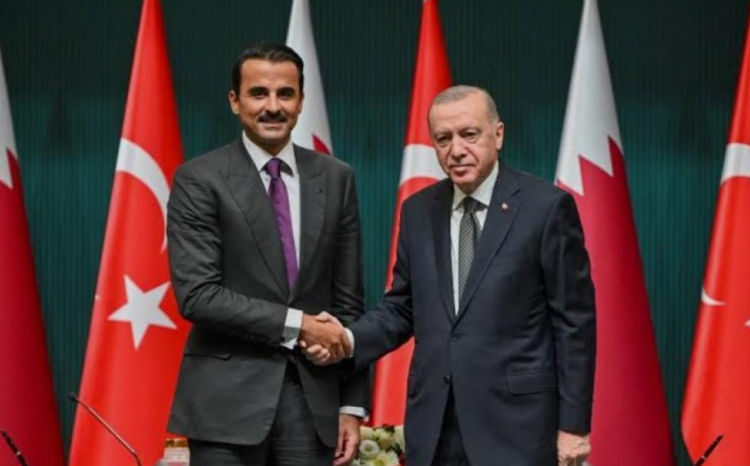
Qatar–Turkey ties have reaffirmed their strategic partnership with a renewed commitment to strengthen bilateral economic cooperation across trade, energy, infrastructure and technology sectors. Senior officials from both governments concluded high-level discussions aimed at expanding commercial ties, enhancing cross-border investment flows and accelerating joint development projects aligned with long-term national diversification strategies.
The meeting builds upon an already robust economic relationship that has steadily expanded over the past decade. Bilateral trade between Qatar–Turkey ties has grown significantly since 2017, supported by preferential market access arrangements, logistical collaboration and coordinated diplomatic engagement. Officials from both sides described the latest framework as a “next phase” of economic integration focused on sustainable growth and regional stability.
Strategic Dialogue and Framework Agreements
The discussions were led by senior ministers responsible for commerce, finance and foreign affairs, alongside representatives from sovereign wealth funds and leading private-sector enterprises. Delegations reviewed the progress of earlier cooperation agreements and signed new memoranda of understanding aimed at facilitating joint ventures in manufacturing, construction and advanced technology sectors.
Key focus areas included:
- Trade Expansion: Commitments to further diversify the basket of goods and services traded between the two nations.
- Investment Facilitation: Streamlining regulatory processes to encourage reciprocal investments through sovereign wealth channels and private equity.
- Infrastructure and Technology: Exploring collaboration in large-scale infrastructure projects and the digital economy.
Sectoral Collaboration and Supply-Chain Resilience
Energy remains a cornerstone of the partnership. Both nations explored opportunities for long-term liquefied natural gas (LNG) cooperation and joint investments in renewable energy infrastructure. This alignment is seen as critical for ensuring energy security and supporting the global transition toward cleaner energy sources.
In addition to energy, the two governments emphasized the importance of industrial and technological synergy. By combining Turkey’s diverse manufacturing base with Qatar’s investment capacity, officials believe new export opportunities could strengthen competitiveness for both economies amid global supply-chain realignments.
Geopolitical and Regional Implications
The strengthening of Qatar–Turkey ties carries broader geopolitical significance within the Middle East and beyond. Both nations have maintained close diplomatic coordination in regional security and humanitarian matters, and economic cooperation reinforces strategic alignment. Analysts view the renewed partnership as part of a wider effort by Gulf and regional powers to diversify alliances and reduce exposure to global economic volatility.
Economic experts suggest that deepened cooperation between Doha and Ankara enhances resilience against external shocks by broadening trade networks and investment channels. The partnership also underscores the increasing role of regional economic diplomacy in shaping growth trajectories and geopolitical balance.
Conclusion
The agreement to expand bilateral economic cooperation marks a continuation of the evolving partnership between Qatar–Turkey ties. By focusing on trade expansion, investment facilitation, infrastructure development and technology collaboration, both governments aim to create a resilient and diversified economic relationship. As global markets navigate uncertainty and shifting alliances, the reinforced Qatar–Turkey ties economic framework reflects a strategic effort to anchor growth in sustained regional cooperation and long-term economic integration.