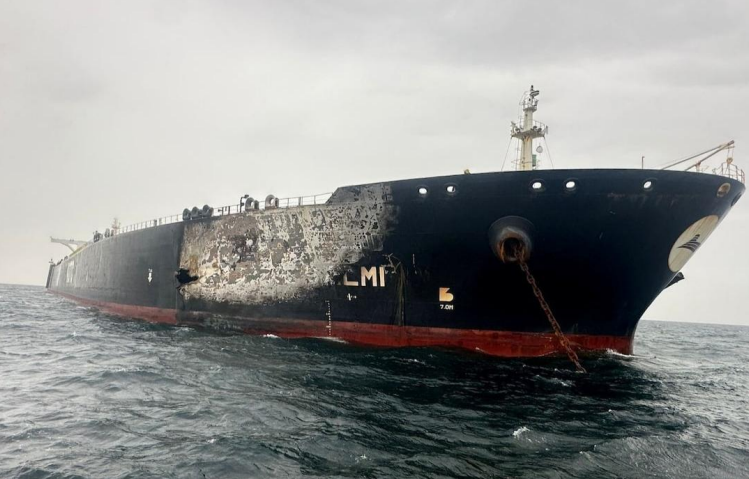
A major escalation in the ongoing Gulf conflict unfolded as a Kuwaiti crude oil tanker, Al Salmi, was struck by a Iran Drone Strike while anchored near Dubai port. The attack triggered a fire onboard and caused structural damage to the vessel, though authorities later confirmed that the blaze was contained without casualties or oil leakage.
The incident marks a significant shift in the nature of the conflict, extending hostilities beyond military installations into commercial maritime infrastructure. Oil tankers represent critical nodes in the global energy supply chain, and any attack on such assets carries immediate implications for global markets, trade routes, and energy security.
Coming amid heightened tensions between Iran and a U.S.-Israel alliance, the Iran Drone Strike underscores the widening scope of the conflict. As attacks increasingly target economic infrastructure, the Gulf region is transitioning into a high-risk zone for global commerce, particularly for oil transportation.
Details of the Attack and Immediate Impact
The tanker Al Salmi, a very large crude carrier operated by Kuwait Petroleum Corporation, was reportedly carrying approximately 2 million barrels of oil, destined for international markets, including China. The Iran Drone Strike caused a fire and damage to the vessel’s hull, raising immediate concerns over a potential environmental disaster.
Emergency response teams in Dubai acted swiftly to contain the fire, preventing any oil spill and ensuring the safety of all crew members onboard. Authorities confirmed that no injuries were reported, and the situation was brought under control within hours of the incident.
Despite the absence of casualties or environmental damage, the symbolic and strategic significance of the attack is substantial. It highlights the vulnerability of civilian and commercial vessels operating in the Gulf, particularly in and around the Strait of Hormuz, one of the world’s most critical energy chokepoints.
Strategic Importance of the Strait of Hormuz
The attack occurred in proximity to the Strait of Hormuz, a narrow maritime passage through which approximately 20% of global oil supply is transported under normal conditions. Disruptions in this region have immediate and far-reaching consequences for global energy markets.
In recent weeks, the Strait has already experienced significant disruption due to military tensions, with reduced shipping activity and increased insurance costs for vessels. The targeting of an oil tanker within this zone further amplifies concerns about the safety and reliability of global energy supply routes.
Countries dependent on Gulf oil exports including major economies in Asia and Europe are particularly exposed to such disruptions. Any sustained instability in the Strait could lead to prolonged supply constraints, driving up energy prices and increasing global economic uncertainty.
Geopolitical Context and Escalation Dynamics
The tanker strike is part of a broader pattern of escalating hostilities in the Middle East. Since late February 2026, the conflict between Iran and U.S.-aligned forces has intensified, with attacks extending across multiple fronts, including energy infrastructure and shipping routes.
Analysts suggest that the targeting of commercial vessels may represent a strategic shift aimed at exerting economic pressure rather than purely military objectives. By disrupting oil flows and increasing global uncertainty, such actions can amplify the economic impact of the conflict beyond the immediate region.
At the same time, uncertainty remains regarding the exact intent behind the Iran Drone Strike. Some reports indicate that the tanker may not have been the intended target, raising questions about operational accuracy and the risks of unintended escalation. This ambiguity further complicates the geopolitical landscape.
Global Economic and Market Implications
The attack has reinforced volatility in global energy markets, where prices have already surged due to ongoing conflict. Oil prices recently crossed $114–116 per barrel, reflecting heightened risk premiums associated with supply disruptions in the Gulf.
Higher oil prices have direct implications for global inflation, transportation costs, and industrial production. Economies heavily reliant on energy imports are particularly vulnerable, as rising costs can slow growth and strain fiscal balances.
Financial markets have also responded to the escalating situation, with increased volatility across equities, commodities, and currencies. Investors are closely monitoring developments in the Gulf, as further attacks or disruptions could trigger broader economic repercussions.
Outlook
The Iran Drone Strike on the Kuwaiti tanker Al Salmi represents a critical escalation in the Gulf conflict, highlighting the growing risks to global energy infrastructure and maritime security. While immediate damage was contained, the broader implications of the attack extend far beyond the incident itself.
In the near term, the situation is likely to remain volatile, with continued risks to shipping routes and energy supplies. The response of regional and global powers both militarily and diplomatically will play a decisive role in shaping the trajectory of the conflict.
Looking ahead, the incident underscores the fragility of global supply chains in the face of geopolitical tensions. As the Gulf remains a central hub for global energy trade, ensuring the security of its maritime routes will be critical for maintaining economic stability worldwide.