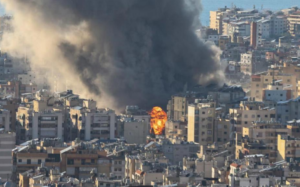
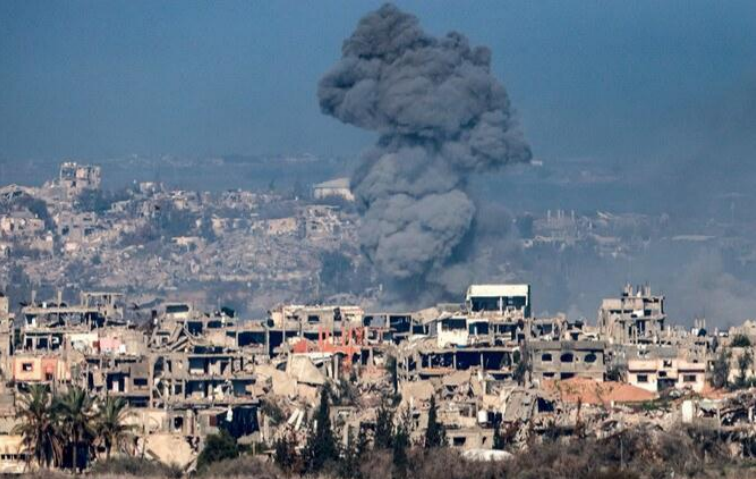
The ongoing West Asian conflict has entered a critical new phase with the formal entry of Yemen’s Houthi movement into active hostilities against Israel. On March 28–29, 2026, the Iran-aligned group launched ballistic missiles, cruise missiles, and drones targeting Israeli military sites, marking its first direct strike in the current war. This development transforms an already volatile confrontation into a broader, multi-front regional conflict with far-reaching geopolitical consequences.
According to multiple verified reports, at least two waves of missile attacks were launched, including a second missile strike within hours of the first. Israeli defense systems intercepted these projectiles, preventing casualties, but the symbolic and strategic significance remains profound. The attacks reportedly targeted southern Israeli regions, including sensitive military zones, highlighting both intent and capability.
The Houthis have explicitly framed their actions as part of a wider “resistance axis” aligned with Iran and groups such as Hezbollah. Their leadership has declared that operations will continue until what they call “aggression” against Iran and allied regions ceases, signaling a sustained and coordinated escalation. This announcement has intensified fears that the conflict is no longer geographically contained and may evolve into a prolonged regional war.
Nature of the Attacks and Military Capabilities
The Houthi Attacks offensive against Israel has been characterized by the use of ballistic missiles, cruise missiles, and unmanned aerial vehicles (drones)—a combination that reflects both tactical sophistication and strategic messaging. Reports confirm that the group launched a barrage targeting “sensitive Israeli military sites”, indicating pre-selected, high-value objectives rather than symbolic strikes.
Israeli military officials confirmed that at least one missile was successfully intercepted, demonstrating the continued effectiveness of Israel’s layered air defense systems. However, the fact that missiles were launched from Yemen—a distance of over 1,500–2,000 kilometers—underscores the long-range capabilities developed by the Houthis, likely with Iranian technological support.
Furthermore, Houthi military spokesperson Yahya Saree stated that the attacks had “successfully achieved their objectives” and were coordinated with allied forces across the region. This suggests a level of operational integration with Iran and other actors, raising concerns about synchronized multi-theatre offensives that could overwhelm regional defense systems in the future.
Strategic Motives and Political Messaging
The Houthis’ entry into the conflict is not merely a military maneuver but a calculated political statement. The group has positioned its actions as part of a broader ideological and strategic campaign, referring to the escalation as a “Holy Jihad Battle” and aligning itself with resistance movements across Palestine, Lebanon, Iraq, and Iran.
In official statements, Houthi Attacks leadership emphasized that their attacks are a direct response to ongoing strikes on Iran and its allied territories, framing their involvement as defensive rather than aggressive. This narrative is designed to legitimize their actions within the regional political discourse while mobilizing support among allied factions.
Additionally, senior leadership, including Abdul-Malik al-Houthi, had previously warned of imminent intervention if the conflict escalated further. The execution of missile strikes now confirms that these warnings were not rhetorical, but part of a pre-planned escalation strategy tied to developments in the broader Iran-Israel confrontation.
Regional Escalation and Multi-Front War Risks
The Houthis’ involvement has effectively opened a new southern front against Israel, significantly complicating the strategic landscape. The conflict, which already includes Iran, Israel, Hezbollah in Lebanon, and U.S. forces, is now expanding into Yemen—creating a geographically dispersed war theatre.
Security analysts warn that this expansion increases the likelihood of multi-front warfare, forcing Israel and its allies to divide military resources across several regions simultaneously. The potential for coordinated attacks from Lebanon, Syria, Iraq, and Yemen could stretch defensive systems and escalate the intensity of hostilities.
Moreover, reports indicate that the Houthis may extend their operations beyond direct strikes on Israel to include attacks on maritime routes in the Red Sea, a tactic they have previously employed. Such actions could draw additional global powers into the conflict, particularly those dependent on secure shipping lanes for energy and trade.
Global Economic and Maritime Implications
One of the most significant consequences of the Houthi Attacks escalation lies in its potential impact on global trade and energy markets. The Red Sea, through which approximately 12% of global trade passes via the Suez Canal, is particularly vulnerable to disruption. Any renewed Houthi attacks on shipping could have immediate and severe economic repercussions.
Historically, the Houthis have demonstrated their ability to disrupt maritime activity, having targeted over 100 merchant vessels between 2023 and 2025, causing damage, casualties, and logistical delays. A return to such tactics, now within the context of a broader regional war, would amplify global supply chain instability.
In addition, the simultaneous threat to the Strait of Hormuz and the Bab al-Mandab Strait creates a dual chokepoint scenario for global energy flows. This raises the risk of rising oil prices, increased insurance costs for shipping, and broader economic volatility, affecting economies far beyond the Middle East
Outlook
The entry of Yemen’s Houthi Attacks movement into direct conflict with Israel represents a decisive turning point in the ongoing West Asian crisis. What began as a confrontation centered on Iran has now evolved into a multi-actor, multi-front war with expanding geographical and strategic dimensions. The Houthis’ missile strikes are not isolated incidents but part of a coordinated escalation that signals deeper regional alignment.
Looking ahead, the likelihood of further Houthi attacks remains high, given their explicit commitment to sustained operations. Their integration into the conflict also increases the probability of simultaneous offensives across multiple fronts, potentially overwhelming defensive systems and prolonging the war.
Ultimately, the situation underscores a broader transformation of the conflict—from a bilateral confrontation into a complex regional war with global implications. Diplomatic efforts continue, but with each new actor entering the battlefield, the path to de-escalation becomes increasingly uncertain, raising concerns of a prolonged and destabilizing crisis.