Emirates has announced a further expansion of its Emirates Premium Economy service, extending the cabin class to additional destinations across its global network. The move reflects the airline’s response to sustained passenger demand for a product that bridges the gap between Economy and Business Class, offering enhanced comfort at a more accessible price point.
Since its initial launch, Premium Economy has emerged as one of the fastest-growing segments in global aviation, particularly on long-haul routes where passengers increasingly prioritise space, comfort and service without the premium pricing of business travel. Emirates’ decision to roll out the product to more cities underlines its confidence in the cabin’s commercial viability and long-term relevance within its fleet strategy.
The latest rollout covers several key markets including Rome, Barcelona, Copenhagen, Brisbane, Cape Town, Kochi, Karachi, Taipei and Phuket, etc. The airline has indicated that the expansion will be phased, aligned with aircraft availability and retrofit schedules, ensuring service consistency across routes while maintaining its established brand standards.
Product features and onboard experience
Emirates Premium Economy cabin has been positioned as a distinct travel experience rather than a minor upgrade. Seats are wider and more generously pitched than standard Economy, with deeper recline, enhanced legroom and adjustable headrests designed to support long-duration flights. Each seat is equipped with larger high-definition screens, premium amenity kits on selected routes and a dedicated cabin ambience that separates it clearly from Economy Class.
Onboard dining has also been upgraded, with meals served on premium tableware and an expanded beverage offering, including a wider selection of wines and spirits. Passengers benefit from priority boarding at several airports and increased baggage allowances, features that have resonated strongly with both leisure travellers and corporate passengers managing tighter travel budgets.
Industry analysts note that the success of Premium Economy globally lies in its ability to deliver tangible comfort improvements rather than symbolic perks, an approach Emirates Premium Economy has closely followed in its product design.
New destinations and network implications
While Emirates Premium Economy has not positioned the expansion as a wholesale network overhaul, the addition of Premium Economy to more cities significantly enhances the airline’s competitive positioning on key long-haul routes. The new destinations include a mix of high-traffic business centres, premium leisure markets and long-distance routes where passenger fatigue and comfort considerations are more pronounced.
This selective deployment allows Emirates Premium Economy to maximise yield on routes with strong demand elasticity, particularly where corporate travel policies increasingly permit Premium Economy bookings. It also strengthens the airline’s appeal to premium leisure travellers, a segment that has grown steadily since the pandemic and continues to drive demand on routes connecting Europe, Asia, Australia and the Middle East.
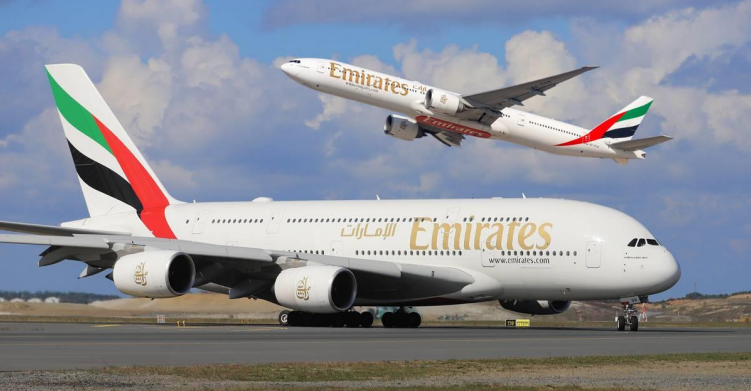
The expansion is closely tied to aircraft upgrades, with Premium Economy cabins featured on refurbished Airbus A380s and selected Boeing 777 aircraft, ensuring a consistent experience across the network as more aircraft enter service with the new configuration.
Fleet upgrades and long-term investment
The broader rollout of Emirates Premium Economy forms part of Emirates’ multi-billion-dollar fleet retrofit programme, one of the largest of its kind in the aviation industry. The programme involves extensive cabin refurbishments, modernised interiors and the introduction of new seating layouts designed to optimise both passenger comfort and operational efficiency.
By investing heavily in retrofitting existing aircraft rather than relying solely on new deliveries, Emirates Premium Economy is accelerating the availability of Premium Economy across its fleet while managing capacity constraints and delivery timelines. The strategy also allows the airline to maintain flexibility in deploying aircraft to markets where Premium Economy demand is strongest.
Market impact and competitive outlook
Emirates’ continued investment in Premium Economy is expected to intensify competition among global full-service carriers, many of which are also expanding or refining their mid-tier cabin offerings. As airlines seek to diversify revenue streams and capture value-conscious premium travellers, Premium Economy has become a critical battleground for differentiation.
For Emirates Premium Economy, the expansion strengthens its value proposition as a carrier offering a comprehensive spectrum of travel options, from Economy to First Class, with clear product separation at each level. The airline’s scale, network reach and brand recognition provide a significant advantage in monetising this segment, particularly on ultra-long-haul routes where comfort becomes a decisive factor in airline choice.
Outlook
Looking ahead, industry observers expect Premium Economy to play an increasingly central role in Emirates’ commercial strategy, not only as a revenue driver but also as a tool for customer retention and brand loyalty. As more cities are added and additional aircraft are refurbished, the cabin class is likely to become a standard expectation rather than a niche offering across the airline’s global network.