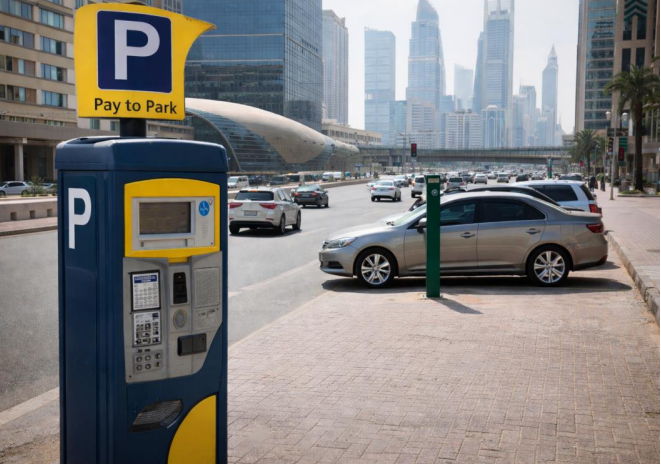
Dubai has announced a wide-ranging revision of its public parking tariffs across 17 key locations, a move that reflects the city’s evolving mobility needs and growing pressure on parking infrastructure. Set to take effect in 2025, the revised pricing structure is designed to better manage demand in high-traffic districts, improve parking availability, and support Dubai parking tariffs broader transport and urban planning objectives.
The revised tariffs will apply across 17 high-demand areas, including key commercial and residential districts such as Deira, Bur Dubai, Business Bay, Downtown Dubai, Dubai Marina, Jumeirah, Al Barsha, Al Karama, Al Satwa, Al Nahda, Al Qusais, Al Rigga, Oud Metha, Mankhool, Al Jaddaf, Al Warqa’a and Al Garhoud. Authorities said these locations were identified based on sustained parking pressure, traffic density and land-use patterns.
Officials said the changes are rooted in detailed traffic and usage studies, which showed persistent congestion and prolonged parking occupancy in several commercial and mixed-use areas. By recalibrating parking costs, authorities aim to influence parking behaviour, reduce congestion caused by vehicles circulating in search of spaces, and ensure more efficient use of prime urban land.
Rationale Behind the Changes
The revised tariffs are part of a broader effort to align parking policy with Dubai parking tariffs long-term sustainability and mobility goals. As the city continues to attract businesses, tourists and new residents, demand for parking in central and high-activity zones has intensified, often exceeding supply during peak hours.
Transport planners noted that pricing is a proven tool to manage demand, particularly in dense urban environments. Higher tariffs in premium areas are intended to discourage long-duration parking, while encouraging commuters to use public transport or park in less congested zones. At the same time, differentiated pricing allows flexibility, ensuring that parking remains accessible without imposing a blanket increase across the city.
Areas Affected and Revised Tariff Approach
The new structure will apply to 17 strategically important areas, including major business districts, retail corridors, tourist hotspots and mixed-use neighbourhoods. Tariffs will vary depending on demand intensity, location, and time of day, reflecting a more nuanced approach to parking management.
Key elements of the revised approach include:
- Higher peak-hour tariffs in premium commercial and business districts
- Adjusted daytime pricing in residential areas close to employment hubs
- Variable pricing in mixed-use zones to improve parking turnover
- Continued lower tariffs in less congested or peripheral areas
Authorities emphasised that the changes are targeted and data-driven, aimed at aligning parking costs with real-world demand patterns rather than applying uniform increases.
Implications for Residents, Businesses and Visitors
For residents and daily commuters, the revised tariffs may prompt changes in parking habits, particularly in areas that experience heavy demand during working hours. Authorities said the policy is expected to improve space availability, reducing time spent searching for parking and easing local congestion.
Businesses operating in high-traffic districts may benefit from quicker parking turnover, improving access for customers and service vehicles. For visitors and tourists, clearer pricing structures and improved availability are expected to enhance overall mobility and ease of movement within the city.
Role of Technology and Enforcement
The updated tariff system will be supported by smart parking technologies, including digital payment platforms, automated monitoring, and real-time occupancy data. These systems are intended to improve compliance, reduce disputes, and provide motorists with accurate information on parking availability and costs.
Officials said enhanced enforcement will focus on consistency and transparency, ensuring that motorists are aware of applicable tariffs and zone classifications before parking.
Looking Ahead
Authorities indicated that the revised tariffs will be closely monitored once implemented, with further adjustments possible based on usage data and feedback. The move reflects Dubai parking tariffs ongoing efforts to balance convenience, economic activity and sustainability in a rapidly expanding urban environment.
Over time, officials expect the changes to contribute to smoother traffic flow, better utilisation of parking infrastructure, and a gradual shift towards more efficient transport choices across the city.