
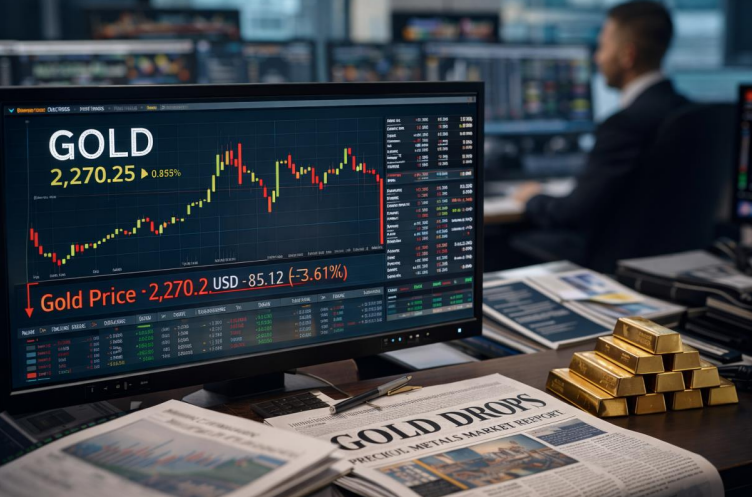
Gold markets in Dubai witnessed a sudden and notable correction this week, following what analysts described as the largest global Dubai gold prices slide in nearly three decades. The decline comes immediately after a historic rally that had pushed bullion prices to unprecedented highs throughout January.
The reversal has triggered a shift in sentiment among traders, jewellers and investors across the Gulf region, raising fresh questions about the near-term outlook for precious metals amid tightening global financial conditions and geopolitical uncertainties.
According to market data from Dubai’s major bullion dealers, 24K gold, which had traded near peak levels earlier this month, witnessed a significant decline as spot gold in global markets tumbled in one of its steepest single-day corrections in years. The fall mirrored sharp sell-offs seen across international commodity exchanges, signalling a widespread repricing driven by multiple macroeconomic triggers.
Jewellers in Dubai’s famous Gold Souk and investors across the UAE responded swiftly to the sudden shift, with several traders calling the correction “swift, overdue, and inevitable after an overheated rally.”
Historic January Surge Followed by the Steepest Global Drop in Decades
January 2026 marked one of the most dramatic upward movements in gold prices globally. Spot gold had climbed rapidly due to escalating geopolitical concerns, softening monetary expectations in major economies, and rising demand from institutional investors seeking safe-haven assets.
Dubai gold prices, long regarded as a central hub for gold trade in the Middle East and South Asia, mirrored this global momentum, with retail and wholesale prices surging to fresh record levels.
However, this upward trajectory reversed sharply at the start of February as global gold markets saw one of their largest declines since the mid-1990s. Analysts attributed the steep drop to a combination of aggressive profit-booking, renewed market confidence in stabilising interest rates, and improved investor sentiment in equity exchanges.
In addition, stronger bond yields and expectations of a slower pace of monetary easing in some major economies contributed to the sudden unwinding of long positions in gold futures.
A senior commodities analyst based in Dubai gold prices described the correction as “a significant but healthy rebalancing following an overstretched rally,” adding that the gold market had been primed for a pullback due to overheated speculative positions accumulated throughout January.
Local Market Reactions
The impact of the global downturn was felt rapidly across Dubai’s gold markets, particularly in regions such as Deira Gold Souk, Bur Dubai gold prices retail corridors and wholesale bullion trading floors in the Dubai Multi Commodities Centre (DMCC).
Traders reported increased buying interest from retail customers hoping to take advantage of the price dip, while wholesalers witnessed fluctuations in order volumes as international counterparts recalibrated their inventory strategies.
Jewellers noted that while the initial shock prompted cautious sentiment, the decline also sparked renewed consumer interest, especially among buyers who had been priced out during January’s peak. Several stores recorded higher footfall as residents and tourists viewed the correction as an attractive entry point.
However, wholesalers and bullion traders remained more cautious, monitoring global price stability and awaiting confirmation of whether the current dip is temporary or part of a longer corrective cycle.
One Dubai-based bullion trader remarked that “the city’s gold market remains resilient, but volatility is high. Many traders are recalibrating risk exposure and waiting for clearer global signals before increasing volumes.”
Global Economic Factors Behind the Sudden Slide
The worldwide drop in gold prices has been linked to a series of economic developments that unfolded across major financial markets.
Stronger-than-expected economic data from key economies prompted investors to revise expectations of near-term interest rate cuts, reducing demand for gold as a hedge against inflation and monetary uncertainty. Simultaneously, renewed strength in the US dollar and rising Treasury yields exerted downward pressure on gold—a pattern historically seen during phases of economic recalibration.
Furthermore, analysts pointed to geopolitical shifts that had previously supported gold prices but have since shown signs of stabilisation. As tensions eased in select global hotspots, safe-haven demand temporarily weakened, prompting institutional investors to lock in profits after January’s extraordinary rally.
Commodity strategists noted that a correction of this magnitude, though dramatic, was broadly consistent with historical market behaviour following prolonged rallies.
Financial experts added that algorithmic trading systems, volatility triggers and large-scale unwinding of futures positions played a role in accelerating the speed of the decline. The resulting domino effect saw gold prices fall sharply across Asian, European and Middle Eastern markets before stabilising slightly in subsequent trading sessions.
Implications
For consumers in the UAE, the price drop presents a new window of opportunity. Retail buyers—particularly those preparing for weddings, seasonal events or long-term investment—have shown renewed interest in gold jewellery and bullion purchases.
The UAE’s position as a tax-efficient and highly competitive gold retail destination enhances its attractiveness during such market fluctuations.
For traders and institutional participants, however, the correction introduces a new layer of uncertainty. Market volatility is expected to persist as global financial conditions remain fluid and highly sensitive to central bank communications. Traders noted that the next few weeks will be crucial.
Future Outlook
Market analysts believe that the trajectory of gold prices in the coming weeks will depend heavily on global monetary cues, inflation readings and investor appetite for risk assets.
While the recent correction has created short-term volatility, many experts argue that the medium-term outlook for gold remains structurally strong. They point to the likelihood of interest-rate adjustments later in the year, the potential re-emergence of geopolitical tensions and continuing inflationary pressures in several economies as factors that could renew global demand for gold.
For Dubai gold prices specifically, the environment remains robust despite the decline. The emirate’s long-established reputation as a global hub for gold trading and jewellery commerce ensures steady underlying demand from regional buyers, international tourists and wholesale partners.
Seasonal shopping patterns, competitive pricing and Dubai’s tax-efficient retail model continue to support consumer interest even during price corrections. Market participants note that the coming weeks will be crucial in determining whether February’s pullback marks a temporary cooling period or signals the start of a broader recalibration in global gold markets.