Dubai Municipality has announced the launch of a comprehensive smart Dubai Digital Waste Management platform aimed at enhancing operational efficiency, boosting recycling rates and advancing the emirate’s broader sustainability goals. The initiative forms part of Dubai’s long-term urban development strategy, which integrates digital transformation with environmental stewardship to position the city among the world’s most sustainable metropolises.
Municipal officials confirmed that the platform will deploy artificial intelligence, real-time data analytics and sensor-enabled infrastructure to optimise Dubai Digital Waste Management collection routes, monitor landfill usage and improve segregation efficiency across residential, commercial and industrial zones. The programme is expected to roll out in phases over the next two years, aligning with Dubai’s 2040 Urban Master Plan and circular economy objectives.
Digital Integration and AI-Driven Monitoring
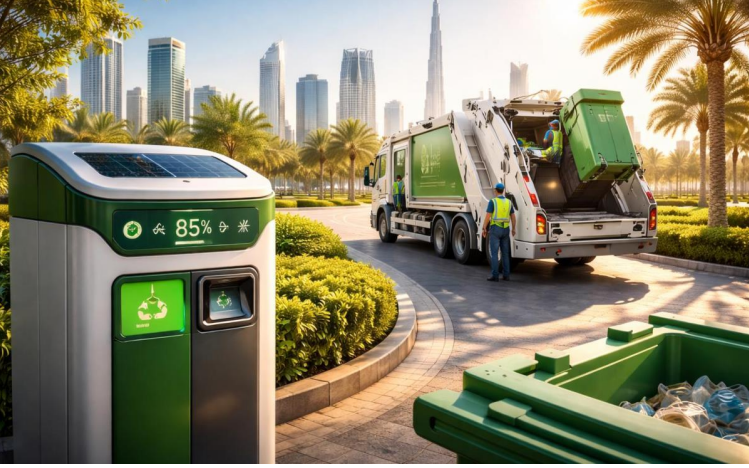
The smart waste management platform is built on a digital backbone that connects thousands of smart bins, collection vehicles and processing facilities to a unified command and control centre. Equipped with Internet of Things (IoT) sensors, waste containers will transmit fill-level data in real time, allowing collection routes to be dynamically adjusted to reduce fuel consumption and congestion.
Dubai Municipality officials stated that AI algorithms will analyse historical waste generation patterns to forecast demand and allocate resources more efficiently. This predictive modelling capability is expected to reduce operational costs while enhancing service reliability, particularly in high-density districts and rapidly expanding residential communities.
The system will also provide data dashboards to municipal managers, enabling performance tracking across recycling rates, landfill diversion metrics and emissions reductions. By integrating advanced analytics, the municipality aims to create a transparent, measurable framework for environmental accountability.
Sustainability Targets and Circular Economy Vision
Dubai has set ambitious sustainability benchmarks, including diverting up to 75 percent of waste from landfills in the coming years. The new platform is designed to accelerate progress toward these targets by improving source segregation and encouraging greater recycling participation among residents and businesses.
Officials highlighted that the initiative complements the Dubai Clean Energy Strategy 2050 and the emirate’s broader environmental commitments. By reducing landfill dependency and promoting material recovery, the smart waste system contributes directly to carbon emission reduction goals and supports Dubai’s pledge to transition toward a circular economy model.
Waste-to-energy projects are also integrated into the strategic framework. The Dubai Digital Waste Management Centre, one of the region’s largest waste-to-energy facilities, plays a critical role in converting non-recyclable waste into electricity, thereby supporting the city’s renewable energy mix.
Operational Efficiency and Cost Optimisation
A key driver behind the initiative is operational efficiency. Traditional waste collection models often rely on fixed schedules regardless of bin capacity, leading to unnecessary trips and increased fuel consumption. The smart platform’s dynamic routing system is expected to significantly reduce vehicle mileage, maintenance costs and greenhouse gas emissions.
Municipal authorities estimate that optimised route planning and automated scheduling could cut operational expenses by double-digit percentages over time. Furthermore, reduced congestion from fewer collection vehicles aligns with Dubai’s wider traffic management strategies.
The adoption of digital tools will also streamline contractor management and compliance monitoring. Real-time tracking of collection fleets ensures adherence to service standards while enhancing transparency and accountability in municipal operations.
Community Engagement and Public Awareness
Dubai Municipality emphasised that technological innovation alone cannot achieve sustainability targets without active community participation. The platform will incorporate mobile applications and digital portals enabling residents to monitor recycling performance, schedule special waste pickups and access environmental guidelines.
Educational campaigns will accompany the rollout, targeting schools, businesses and residential communities to promote responsible waste disposal practices. Officials believe that improved awareness combined with convenient digital services will foster behavioural change and higher recycling participation rates.
By integrating public engagement tools within the platform, the municipality seeks to build a culture of environmental responsibility aligned with Dubai’s broader sustainability vision.
Regional Leadership and Future Outlook
The launch of the smart waste management platform reinforces Dubai’s ambition to lead in urban innovation across the Middle East. As cities worldwide grapple with rising waste volumes and environmental pressures, Dubai’s adoption of advanced digital solutions positions it as a regional benchmark in sustainable urban governance.
Municipal officials indicated that the platform will continue to evolve, incorporating machine learning enhancements and expanded analytics capabilities. Future phases may include robotics in sorting facilities, advanced material recovery systems and integration with smart city infrastructure.
By combining technological innovation, policy alignment and community engagement, Dubai Municipality’s initiative represents a significant step toward building a cleaner, more efficient and environmentally resilient city. The smart Dubai Digital Waste Management platform not only addresses present operational challenges but also lays the foundation for long-term sustainability in one of the world’s fastest-growing urban centres.