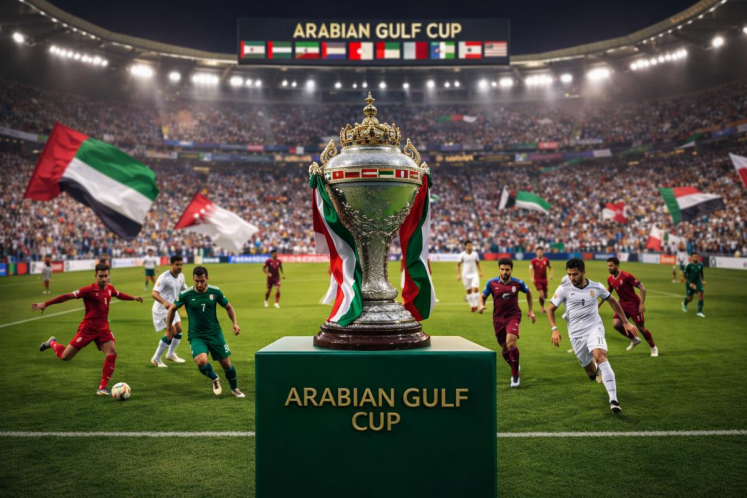
National teams across the Gulf region have accelerated their preparation programmes for the Arabian Gulf Cup 2026, scheduled to take place in Jeddah from 23 September to 6 October 2026.
With eight participating nations gearing up for the premier regional football championship, federations have entered the critical early-season assessment phase, launching structured training cycles, conducting squad evaluations and finalising player shortlists for pre-tournament camps.
Football associations in the United Arab Emirates, Qatar, Saudi Arabia, Bahrain, Kuwait, Oman and Iraq have commenced early technical reviews aimed at identifying form, fitness levels and tactical compatibility. Coaches and technical committees have described the Arabian Gulf Cup 2026 edition as a “high-pressure cycle” due to increasing competition, youth-player emergence and upcoming regional commitments that intersect with national calendars.
Training Cycles Begin Early Across Gulf Federations
Gulf national teams have launched their first structured training blocks for the Arabian Gulf Cup 2026 season, focusing on physical conditioning, tactical drills and positional discipline. Several federations confirmed that training loads have been strategically intensified months ahead of the tournament, reflecting the growing importance placed on early preparation to avoid late-season injuries and performance dips.
The Saudi team, as hosts, has undertaken a multi-phase training regime integrating fitness testing, reaction drills and rotational scrimmages in Jeddah and Riyadh. Coaching staff emphasised that conditioning cycles are being aligned with domestic league schedules to ensure continuity across club and national responsibilities.
The Qatar Football Association has launched a technical development plan that includes weekly tactical review sessions and controlled friendly matches with regional clubs, enabling players to adapt to evolving formation strategies.
Other Gulf teams have prioritised early-season physical evaluations, recovery protocols and game-simulation routines as key components of their preparation. Officials stated that the lead-up to September will focus on enhanced endurance training and situational exercises intended to strengthen defensive coordination and transition play.
Analysts following the tournament preparations noted that the extended training cycles reflect a regional shift toward long-term season planning, driven by the rising standard of Gulf football and the competitive expectations surrounding the 2026 event.
Squad Evaluations and Player Selection Processes Intensify
National selectors have already begun rotating extended squads to evaluate combinations, player chemistry and tactical adaptability. Technical committees are closely observing athlete performance across domestic leagues, with scouts monitoring potential new additions from youth academies and reserve squads.
Coaches emphasised that the selection processes this year are more data-driven than previous editions, with metrics such as sprint efficiency, pass accuracy under pressure and defensive recovery angles being evaluated through analytics systems.
The UAE technical staff reported that preliminary squad lists for the first two national camps have been finalised, with a balanced mix of experienced players and emerging young talent. Qatar’s national unit is undertaking a rolling assessment protocol that involves bi-weekly medical screenings, GPS-based movement analysis and video-assisted tactical breakdowns.
Saudi Arabia, as host nation, is expected to finalise its provisional 35-man squad by late April, ahead of major friendly fixtures planned for the summer window.
Player-management teams across the region have also highlighted the importance of maintaining competitive intensity in domestic leagues while avoiding over-extension. Several federations confirmed that specialised monitoring teams have been appointed to track player workloads to prevent injury risks in the months leading up to the tournament.
Coaches Refine Tactical Systems for 2026 Cup
Coaching units across the Gulf are placing strong emphasis on tactical refinement to address weaknesses identified during previous regional competitions. The Saudi coaching team has highlighted the need to enhance efficiency in midfield transitions and close defensive gaps that affected their 2024 performance.
Qatar’s staff has prioritised high-press systems, rapid counter-attacking structures and improved finishing accuracy, pointing to trends in international match data that favour teams with flexible attacking systems.
In Oman, coaches are focusing on possession retention and structural discipline, citing recent international fixtures where late-game lapses proved costly. Kuwait’s national side is working on rebuilding defensive solidity, while Bahrain is exploring new patterns of build-up play designed to maximise the strengths of its emerging midfield core.
Sports analysts note that the Arabian Gulf Cup 2026 is expected to feature more advanced tactical systems than past editions, reflecting an influx of foreign coaches, improved analytical capabilities and data-supported training methodologies across the region.
With each team aiming to secure tournament readiness well before September, the next six months will be critical for refining game models and cementing the tactical identity of each national side.
Friendly Matches and Summer Camps Planned Ahead
Preparations will intensify further beginning in late spring, with multiple federations confirming friendly matches, international exposure tours and dedicated summer camps.
Saudi Arabia is expected to host a tri-nation mini-tournament in June as part of its readiness programme. Qatar has lined up friendly fixtures against teams from Asia and Europe to test competitive temperament under varied conditions.
The UAE is preparing for a detailed pre-tournament camp scheduled for August, where final squad evaluations, set-piece rehearsals and match-fitness assessments will take place. Oman and Kuwait will conduct condensed technical camps involving situational analysis and controlled scrimmages against regional clubs.
These preparations form the backbone of the competitive build-up leading into September, with federations aiming to finalise their tournament squads no later than four weeks before kickoff.
Conclusion
As the region moves toward the 27th Arabian Gulf Cup 2026, national teams have launched extensive training programmes and squad evaluations that highlight the growing strategic importance of early preparation.
With host nation Saudi Arabia leading comprehensive readiness efforts and other Gulf teams adopting advanced training and analytical methods, the 2026 edition is expected to be among the most competitive in the tournament’s history.
With structured training cycles, tactical refinement and data-driven player assessments underway, the next several months will define the competitive balance of the tournament. Officials and analysts agree that these early preparations will play a decisive role in shaping performances when the Gulf’s premier football championship begins in September 2026.