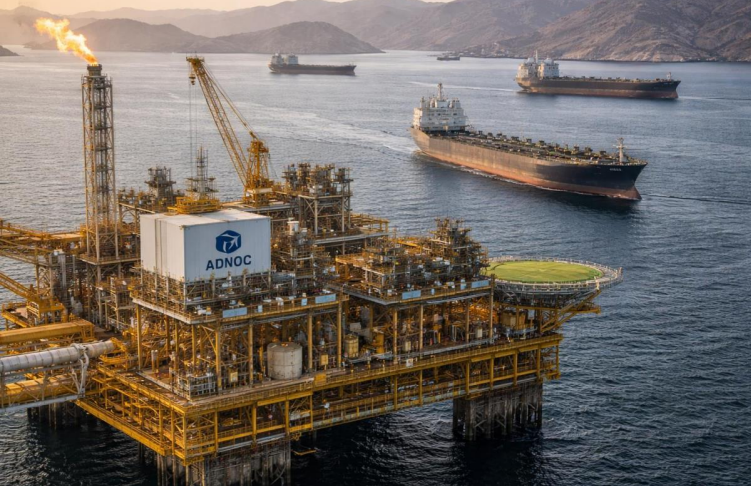
The Abu Dhabi National Oil Company (ADNOC) has announced adjustments to some of its oil ADNOC Offshore Production operations as shipping disruptions in the Strait of Hormuz continue to affect maritime traffic across one of the world’s most critical energy corridors. The company confirmed that while offshore logistics are being carefully managed in response to the evolving security environment, onshore operations and domestic energy supply remain stable and uninterrupted.
The Strait of Hormuz, located between Oman and Iran, is widely regarded as one of the most strategically important maritime chokepoints in the global energy system. According to estimates from the U.S. Energy Information Administration (EIA), roughly 20% of the world’s oil and liquefied natural gas (LNG) supplies pass through the narrow waterway each day, making any disruption to traffic a matter of global economic concern.
Officials familiar with the situation indicated that ADNOC Offshore Production has activated contingency measures to maintain supply reliability while safeguarding infrastructure and personnel. The company has emphasized that the adjustments are precautionary and that UAE energy exports remain secure, even as regional tensions continue to influence shipping patterns in the Gulf.
Strategic Importance of the Strait of Hormuz
The Strait of Hormuz serves as the primary maritime gateway for energy exports from the Gulf’s major producers, including the United Arab Emirates, Saudi Arabia, Kuwait, Iraq and Qatar. Every day, millions of barrels of crude oil and refined petroleum products move through the corridor toward global markets in Asia, Europe and North America.
Energy analysts estimate that between 18 million and 21 million barrels of crude oil per day pass through the strait, representing nearly a fifth of global petroleum consumption. In addition, the route is a major transit point for liquefied natural gas shipments from Qatar, one of the world’s largest LNG exporters.
Because of its narrow geography at points only about 33 kilometers wide, the strait has long been considered vulnerable to geopolitical tensions, naval activity and potential disruptions to commercial shipping. Any instability in the region can quickly affect global oil prices, shipping insurance costs and the availability of energy supplies in international markets.
ADNOC’s Operational Response
ADNOC Offshore Production officials have confirmed that the company is carefully managing offshore production schedules while ensuring that the UAE’s domestic energy infrastructure continues to operate normally. The adjustments involve logistical planning for offshore facilities and coordination with shipping operators to minimize operational risks during periods of heightened maritime tension.
The company stated that onshore production and export facilities remain fully operational, highlighting the resilience of the UAE’s energy infrastructure. ADNOC Offshore Production has invested heavily over the past decade in strengthening supply chains, modernizing offshore platforms and expanding pipeline networks to reduce vulnerability to disruptions in maritime routes.
Energy industry experts say the UAE’s investments in diversified export routes including pipelines that bypass the Strait of Hormuz have improved the country’s ability to maintain supply stability even during periods of geopolitical uncertainty. These strategic measures allow ADNOC to continue supplying global markets while managing logistical challenges in the Gulf.
Global Energy Markets Watching Closely
Developments in the Strait of Hormuz are being closely monitored by global energy markets, where even small disruptions can trigger significant price volatility. Oil traders and financial analysts are assessing the potential impact of shipping delays, tanker rerouting and increased maritime security measures on international energy supply chains.
Recent geopolitical tensions have already pushed global oil prices higher, with benchmark crude prices approaching levels not seen in several months. Market participants are particularly concerned about the possibility of prolonged disruptions affecting exports from major Gulf producers.
Shipping companies and tanker operators have also adjusted routes and schedules in response to the evolving situation. Increased insurance premiums and security protocols have raised transportation costs for some cargo shipments, adding further pressure to energy markets already grappling with supply uncertainties.
UAE Energy Strategy and Infrastructure Resilience
The UAE has pursued a long-term strategy aimed at strengthening the resilience of its energy infrastructure. Through ADNOC Offshore Production, the country has invested billions of dollars in upgrading production capacity, expanding storage facilities and developing alternative export routes to maintain energy security.
One key project is the Habshan–Fujairah oil pipeline, which allows crude oil to be exported directly from the UAE’s Fujairah port on the Gulf of Oman, bypassing the Strait of Hormuz entirely. The pipeline provides an alternative pathway for oil exports and is considered a critical component of the UAE’s energy security strategy.
In addition to infrastructure investments, the UAE has also focused on technological modernization across its oil and gas sector. ADNOC has introduced advanced digital monitoring systems and automated logistics management to ensure efficient production and distribution even during challenging operational conditions.
Outlook
The adjustments announced by ADNOC highlight the sensitivity of global energy markets to developments in the Strait of Hormuz, one of the world’s most important oil transport routes. While the company has taken precautionary steps to manage offshore production, officials stress that the UAE’s overall energy operations remain stable and capable of meeting international demand.
For global markets, the situation underscores the continued strategic importance of the Gulf region in maintaining energy supply stability. Even limited disruptions in the strait can have ripple effects across oil prices, shipping costs and economic forecasts worldwide.
Looking ahead, analysts expect Gulf producers and international energy companies to continue strengthening infrastructure resilience and diversifying export routes. As geopolitical tensions evolve, the ability of countries like the UAE to maintain stable production and supply chains will remain a critical factor in sustaining confidence in global energy markets.