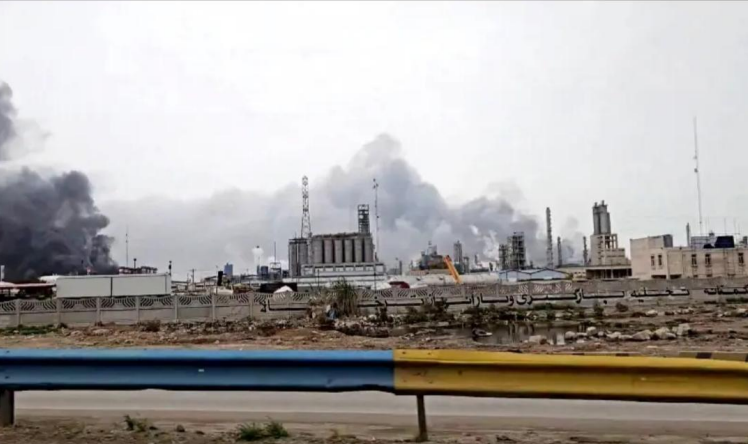
The Middle East conflict has entered a more dangerous phase following Israel’s confirmed airstrike on Iran’s Mahshahr petrochemical complex, a critical industrial hub in the country’s oil-rich Khuzestan province.
The Israel Iran strike marks a significant escalation, shifting the focus of the conflict toward strategic economic infrastructure. Iranian officials reported that at least five people were killed and over 170 injured in the attack, highlighting its immediate human and economic toll.
Israeli Prime Minister Benjamin Netanyahu confirmed the operation, describing it as part of a broader campaign targeting Iran’s industrial and financial backbone. He stated that petrochemical facilities were being targeted due to their alleged role in supporting Iran’s military and defence apparatus.
The Israel Iran strike represents a turning point in the ongoing conflict, where attacks are increasingly directed not only at military assets but also at economic infrastructure. This development has raised global concerns over energy security, regional stability, and the risk of further escalation.
Strategic Importance of the Mahshahr Petrochemical Hub
The Mahshahr Special Economic Zone is one of Iran’s most vital petrochemical and industrial regions, housing multiple facilities involved in the production and export of petrochemical products.
Located in Khuzestan province, the area plays a key role in Iran’s energy economy and contributes significantly to its export revenues.
The targeting of this complex underscores a strategic shift toward disrupting Iran’s economic capabilities. Petrochemical industries are a major source of foreign currency earnings for Iran, particularly under sanctions, making them a critical component of the country’s financial resilience.
By striking such infrastructure, Israel Iran strike appears to be aiming at weakening Iran’s long-term economic capacity rather than focusing solely on immediate military objectives. This approach reflects a broader strategy of economic warfare, where financial and industrial assets become primary targets in modern conflicts.
Details of the Strike and Immediate Impact
Reports indicate that the airstrike targeted multiple facilities within the Mahshahr petrochemical zone, causing significant damage across several units.
Iranian authorities confirmed casualties and injuries, with many of the wounded receiving outpatient treatment.
The attack occurred in the early hours, suggesting a coordinated effort to maximize operational impact while potentially limiting civilian exposure. However, the presence of casualties indicates that the strike affected both workers and surrounding areas.
In addition to human losses, the strike has likely disrupted production and operations within the complex. Damage to petrochemical infrastructure can have cascading effects, including halted production, supply chain disruptions, and increased costs for repairs and recovery.
Military and Political Context of the Escalation
The Mahshahr strike is part of a broader pattern of escalating hostilities between Israel and Iran, which have increasingly involved direct attacks on each other’s territory.
Israeli officials have linked the targeting of petrochemical facilities to efforts to cut off funding sources for Iran’s military and allied groups.
The conflict has intensified in recent weeks, with both sides engaging in strikes on strategic assets. Iran has responded with missile and drone attacks targeting industrial zones and infrastructure in Israel Iran strike, indicating a cycle of retaliation that continues to escalate.
At the same time, geopolitical tensions have been amplified by the involvement of external actors, including the United States, which has been engaged in parallel military operations. This multi-layered conflict increases the risk of broader regional confrontation.
Global Economic and Energy Implications
The targeting of petrochemical infrastructure in Iran has significant implications for global energy markets. Iran is a major player in the global oil and petrochemical industry, and disruptions to its production capacity can influence supply dynamics and pricing.
The strike comes amid already heightened volatility in energy markets, with oil prices reacting sharply to geopolitical developments in the region. Any sustained disruption to Iranian output could further tighten global supply and contribute to inflationary pressures worldwide.
Additionally, the attack raises concerns about the security of critical energy infrastructure across the region. As the conflict expands to include economic targets, other countries may face increased risks to their own energy facilities, potentially leading to broader disruptions in global trade and supply chains.
Conclusion
The Israel Iran strike on Iran’s Mahshahr petrochemical complex marks a significant escalation in the ongoing conflict, highlighting a shift toward targeting economic infrastructure. While the immediate impact includes casualties and operational disruption, the broader implications extend to regional stability and global energy markets.
In the short term, the conflict is likely to continue along its current trajectory, with both sides engaging in retaliatory actions. The focus on infrastructure suggests that future attacks may increasingly target economic assets, raising the stakes for all parties involved.
Looking ahead, the situation underscores the evolving nature of modern warfare, where economic and industrial systems are as critical as military capabilities. As tensions persist, the risk of further escalation remains high, with potential consequences for global security, energy stability, and international relations.