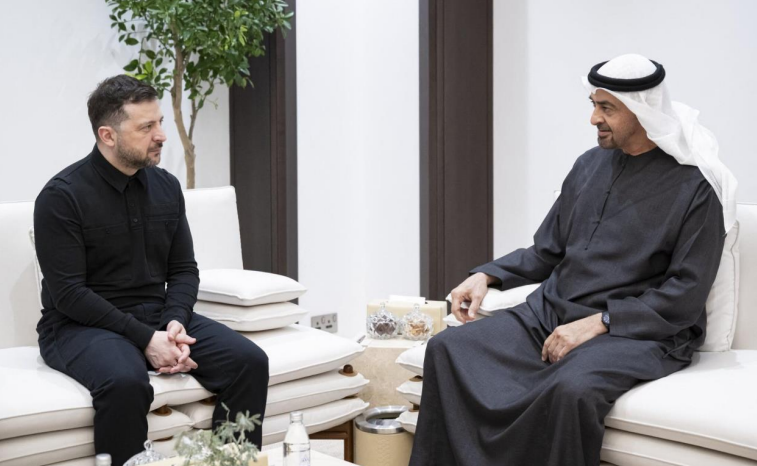
Ukraine has taken a decisive step in reshaping global Ukraine defence pacts partnerships by formalising long-term military cooperation agreements with Gulf nations, including Qatar, Saudi Arabia, and the United Arab Emirates. These agreements, announced during President Volodymyr Zelenskyy’s recent diplomatic tour, are structured around 10-year strategic frameworks focused on countering drone and missile threats, reflecting the evolving nature of modern warfare.
The agreements emerge at a time when both Ukraine and the Gulf region face intensifying aerial threats, particularly from Iranian-designed drones and missile systems. Ukraine defence pacts, having spent over four years defending against large-scale drone warfare in its conflict with Russia, has developed cost-effective interception technologies and battlefield-tested expertise that are now in high demand globally.
These developments signify more than bilateral defence deals; they represent a broader strategic convergence between Eastern Europe and the Gulf, driven by shared security concerns and technological complementarities. As global conflicts increasingly intersect, Ukraine’s role is shifting from a recipient of military aid to a provider of specialised defence solutions, marking a significant geopolitical transformation.
Framework of the Agreements and Key Provisions
At the core of these agreements lies a decade-long commitment to defence collaboration, with a primary focus on counter-drone systems, missile interception, and integrated air defence strategies. Ukrainian officials confirmed that agreements with Qatar and Saudi Arabia have already been signed, while a similar pact with the UAE is in advanced stages of finalisation.
The partnerships go beyond simple arms transfers, instead emphasizing joint production, technology sharing, and long-term capability development. Ukrainian defence experts are working alongside Gulf counterparts to establish local production facilities and knowledge-transfer systems, enabling sustained self-reliance in defence capabilities.
Notably, more than 200 Ukrainian military specialists have already been deployed across Gulf countries, assisting in real-time threat interception and operational planning. These deployments highlight the immediate operational dimension of the agreements, transforming them from diplomatic commitments into active defence collaborations.
Ukraine’s Drone Warfare Expertise as Strategic Currency
Ukraine’s most valuable contribution to these partnerships lies in its advanced drone interception ecosystem, developed under the pressures of sustained conflict. Ukrainian systems combine low-cost interceptor drones, electronic warfare tools, and adaptive targeting software, enabling high interception rates against hostile UAVs.
President Zelenskyy has emphasised Ukraine’s capacity to produce up to 1,000 interceptor drones per day, offering a scalable and economically viable alternative to expensive missile-based defence systems currently used by Gulf states. This capability has positioned Ukraine defence pacts leader in affordable air defence innovation.
Furthermore, Ukrainian expertise is not limited to hardware. It includes operational doctrines, real-time battlefield analytics, and integrated defence coordination, all of which are being shared with Gulf partners. This holistic approach ensures that partner nations can build comprehensive defence ecosystems, rather than relying solely on imported technology.
Strategic Interests of Gulf Nations
For Gulf states, the agreements represent a critical response to rising regional security threats, particularly the increasing use of drones and missiles in conflicts linked to Iran. Countries such as Saudi Arabia, Qatar, and the UAE have faced repeated aerial threats, prompting urgent investment in multi-layered defence systems.
Traditional air defence solutions, such as Patriot missile systems, have proven effective but extremely costly, especially against large swarms of low-cost drones. Ukraine’s interceptor technology offers a cost-efficient alternative, enabling Gulf nations to conserve high-value missile resources while maintaining strong defensive capabilities.
Additionally, Gulf countries are leveraging these partnerships to diversify their defence alliances beyond traditional Western suppliers. By engaging with Ukraine, they gain access to innovative, combat-tested solutions while strengthening geopolitical flexibility in an increasingly multipolar security environment.
Economic, Industrial, and Energy Dimensions
Beyond military cooperation, the agreements carry significant economic and industrial implications. Joint defence production initiatives are expected to generate billions of dollars in investment, supporting Ukraine’s defence industry while fostering industrial growth in Gulf economies.
Ukraine is also seeking reciprocal benefits, including access to advanced air defence systems and stable energy supplies. During the negotiations, Kyiv secured commitments for long-term diesel supplies, addressing critical energy needs for both military and civilian sectors.
These agreements thus extend into a broader framework of strategic economic cooperation, encompassing energy security, industrial partnerships, and technology exchange. The integration of defence and economic objectives underscores the comprehensive nature of modern geopolitical alliances.
Geopolitical Implications and Global Power Dynamics
The Ukraine–Gulf defence partnerships are reshaping global security dynamics by creating new axes of cooperation outside traditional alliances. As Western resources become increasingly stretched due to overlapping conflicts, Ukraine’s emergence as a defence exporter introduces new power alignments in international security.
The agreements also reflect the growing interconnection between regional conflicts, particularly the Ukraine–Russia war and tensions in the Middle East. Shared threats, such as Iranian drone technology, are driving cross-regional collaboration, effectively linking previously separate theatres of conflict into a single strategic landscape.
Moreover, Ukraine’s proactive diplomacy signals a shift toward self-reliance and strategic diversification, reducing dependence on Western aid while expanding its influence in key regions. This approach enhances Ukraine’s negotiating position on the global stage, both militarily and economically.
Outlook
Ukraine’s defence agreements with Gulf nations mark a pivotal moment in the evolution of modern military cooperation. By combining battlefield-tested expertise with long-term strategic planning, these partnerships address immediate security challenges while laying the foundation for sustained collaboration.
Looking ahead, the success of these agreements will depend on the effective integration of technology, training, and infrastructure within Gulf defence systems. Challenges such as interoperability, supply chain management, and technological adaptation will play a critical role in determining long-term outcomes.
Nevertheless, the broader trajectory is clear: Ukraine is emerging as a key global provider of next-generation defence solutions, while Gulf nations are positioning themselves at the forefront of adaptive, technology-driven security strategies. In an era defined by drone warfare and asymmetric threats, these alliances may well shape the future of international defence cooperation.