Qatar has announced a landmark 10-year Qatar residency programme designed to draw global entrepreneurs, technology leaders, investors and senior executives to the country as part of its long-term strategy to transform into a global innovation and business hub.
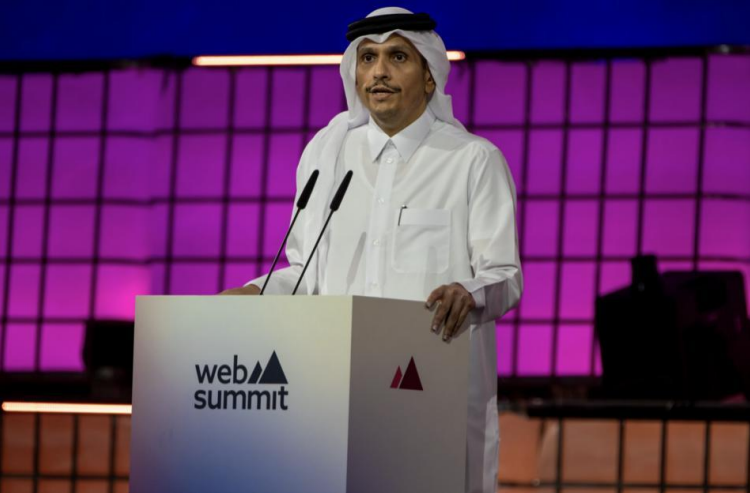
The initiative was formally announced during the Web Summit Qatar 2026, where Prime Minister and Foreign Minister Sheikh Mohammed bin Abdulrahman bin Jassim Al-Thani unveiled the new residency track aimed at supporting high-growth industries and knowledge-driven economic expansion.
The move is part of Qatar residency programme broader vision to diversify its economy under Qatar National Vision 2030, positioning the nation as a destination where world-class innovators, business founders, technology experts and high-skilled professionals can establish long-term roots.
Government officials described the residency programme as a “transformational step that aligns Qatar residency programme with the world’s most competitive talent ecosystems,” signalling a shift toward global workforce integration, startup development and international investment flows.
Shift Towards Global Talent Attraction
Qatar’s new 10-year residency programme represents one of the most significant immigration reforms undertaken in the Gulf region this year. Officials clarified that the residency pathway will function as a long-term stability framework, enabling entrepreneurs and senior professionals to expand or establish enterprises without the shorter renewal cycles associated with traditional work visas.
During the announcement at the Web Summit, Qatar’s leadership emphasised that the residency initiative aims to attract talents operating at the forefront of high-value sectors including artificial intelligence, fintech, health technology, sustainable engineering, digital transformation and advanced scientific research.
Early estimates by economic analysts suggest that the policy could draw several thousand global professionals over the next two years, contributing a substantial infusion of expertise into Qatar’s business environment.
Government representatives also highlighted that long-term residency will be tied to demonstrable contributions to the local economy such as company creation, job generation, intellectual property development or investments that align with national growth priorities. This model reflects a global trend in competitive economic zones where long-term residency is leveraged as a tool to attract innovators with tangible economic impact.
A New Chapter in Tech-Led Strategy
The decision to unveil the programme at the Web Summit Qatar was symbolic of Qatar’s fast-rising status in the global technology ecosystem. The event, attended by over 15,000 delegates from around the world, provided the government with a high-visibility platform to communicate its ambition to become a central hub for innovation in the Middle East.
In his keynote address, the Prime Minister stated that Qatar residency programme is “building one of the most dynamic knowledge-driven economies in the world,” and stressed the government’s commitment to providing innovators with a stable, supportive environment for long-term growth.
He added that the world is entering an era where the competition for talent is as decisive as the competition for capital, and Qatar residency programme intends to lead this transition by positioning itself as a destination for high-skill global contributors.
The announcement was met with strong interest from technology founders, venture-capital groups and corporate leaders attending the summit, particularly those seeking regional headquarters in the Gulf. Exhibitors noted that long-term residency provides a competitive advantage for startups and investors who require mobility, consistent regulatory access and policy stability as they expand into Middle Eastern markets.
Economic Impact
Economists and business leaders in Qatar have described the 10-year residency programme as a structural reform capable of unlocking long-term economic gains. With the country’s non-energy sectors expanding steadily over the past decade, officials expect the residency initiative to accelerate growth in industries such as advanced manufacturing, research and development, digital services, cybersecurity, green technologies and health sciences.
The real-estate market, hospitality sectors and educational institutions are also expected to benefit from an inflow of long-term foreign residents. Analysts project that long-term residency holders will increase demand for premium housing, private education and professional services, contributing to broader economic diversification.
International investors have additionally noted the competitive advantage the programme offers compared with traditional short-term employment arrangements. Long-term stability enables founders and professionals to build research networks, establish companies, secure regional contracts and scale operations without administrative interruption.
This ease of continuity is expected to support Qatar’s strategy of fostering a high-productivity, innovation-driven workforce capable of contributing meaningfully to global markets.
Regional Positioning
Qatar’s announcement comes at a time when Gulf nations are engaged in a competitive push to attract global talent, specialised entrepreneurs and innovative enterprises. The UAE’s Golden Visa programme, Saudi Arabia’s special residency tracks and Bahrain’s recent investment-linked residency pathways have all contributed to transforming the region into a major global hub for economic diversification and knowledge-driven growth.
With its stable political climate, world-class infrastructure, high-quality education systems and rapidly expanding technology ecosystem, Qatar is positioning itself as a strategic alternative for global innovators seeking long-term base operations.
Officials emphasised that the 10-year residency is not merely an immigration reform, but a national development instrument intended to anchor intellectual capital, high-value industries and global entrepreneurs within Qatar’s economic architecture.
Business councils in Doha noted that Qatar’s hosting of global events, including the 2022 FIFA World Cup and major international conferences, has elevated its global profile, contributing to its attractiveness to long-term residents. The residency programme, they said, builds on this trajectory by enabling deeper economic, scientific and technological engagement.
Conclusion
Qatar’s introduction of a long-term 10-year residency programme marks a major milestone in its journey toward becoming a global centre for innovation, entrepreneurship and advanced technology. The policy reflects the country’s strategic intent to diversify its economy, deepen its talent pool and attract high-impact global contributors who can shape the next stage of national development.
As applications open in the coming weeks, global interest is expected to rise sharply, especially among tech founders, venture-capital-backed entrepreneurs, corporate innovators, and skilled professionals seeking stability, opportunity and access to a growing regional market.
The programme is poised to become one of the Gulf region’s most influential talent-attraction mechanisms, reinforcing Qatar’s role in shaping the future of business, technology and global investment.