
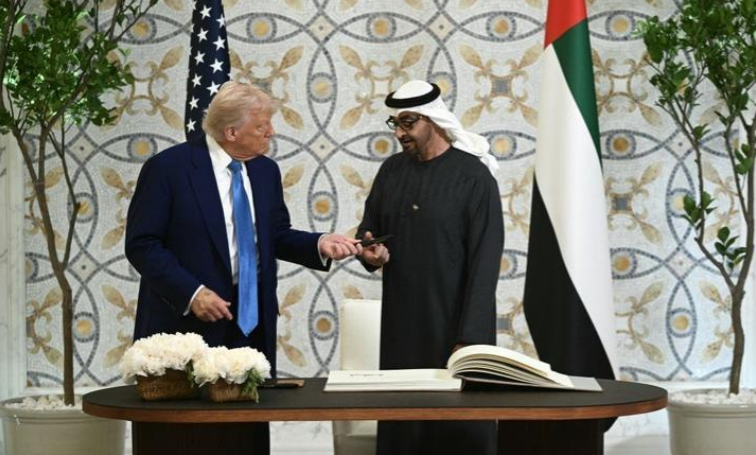
In a landmark shift in global technology diplomacy, the United States has authorised the export of advanced artificial intelligence (AI) semiconductor chips to the United Arab Emirates (UAE) and Saudi Arabia. This move marks a major expansion of strategic tech cooperation and a pivotal moment in the global AI chip exports race.
The decision was confirmed through regulatory filings and government statements in November 2025 and reinforced by developments in January 2026. As Washington seeks to strengthen ties with key Gulf partners while safeguarding its technological leadership, this analysis outlines the components of the approvals, geopolitical motivations, and industry implications.
Strategic Shift in U.S. Export Policy
The U.S. Commerce Department approved the export of highly advanced AI chip exports chips, including thousands of Nvidia Blackwell-series processors, to two major state-backed Gulf technology firms: G42 in the UAE and Humain in Saudi Arabia.
Capabilities: These chips are used for training large-scale machine-learning models, running national-level cloud infrastructures, and supporting generative AI chip exports systems.
Previous Policy: The previous U.S. approach placed strict limitations on exporting cutting-edge AI chip exports hardware to regions beyond its closest allies.
Guardrails: Both G42 and Humain must comply with stringent monitoring, reporting, and security provisions to ensure responsible deployment and prevent technology diversion.
Scale: Officials estimate the approved quantity at up to 35,000 high-end chips per country.
Geopolitical Context and U.S.-Gulf Alignment
The chip export authorisation is a response to rapid global competition over AI chip exports capabilities, particularly between the United States and China. Over the past two years, Washington intensified export controls to restrict the flow of frontier AI chip exports chips to China to protect strategic advantages.
The Gulf authorisations underline a trust-based alignment, as both Saudi Arabia and the UAE have framed AI chip exports and advanced computing as national-priority sectors. The timing coincides with:
- Intensified U.S.-Saudi dialogues in late 2025
- Renewed U.S.-UAE cooperation agreements covering digital infrastructure, cybersecurity, and supply-chain resilience
Economic Impact on Gulf Technology and National Visions
Access to ultra-high-end AI chips aligns directly with the long-term economic strategies of both nations as they diversify away from hydrocarbons.
UAE (G42): Scaling major infrastructure projects like the Stargate UAE AI chip exports campus to support national machine-learning workloads and serve as an AI hub for Africa, South Asia, and Europe.
Saudi Arabia (Humain): Backed by the Public Investment Fund, Humain has announced large-scale data-centre plans in Riyadh and Dammam intended to become operational in 2026. This supports Vision 2030 objectives to become a regional AI powerhouse.
Financial Forecast: Analysts predict AI could contribute over USD 50–70 billion to the combined GDP of the UAE and Saudi Arabia by 2030.
Industry Reaction and Strategic Significance
Gulf policymakers view the move as a validation of their commitments to responsible AI chip exports development and digital governance. In the United States, the decision is seen as a way to expand secure global supply chains and maintain influence in high-growth markets.
However, critics have raised questions regarding the long-term implications for U.S. competitiveness and the potential shift in the center of gravity for global AI development. Policymakers argue that enabling growth in friendly regions provides long-term stability and counterbalances global actors pursuing influence in emerging tech sectors.
Future Outlook
The U.S. decision marks an inflection point, positioning the UAE and Saudi Arabia to expand national AI chip exports capabilities across healthcare, climate modelling, energy forecasting, defence innovation, and financial services. In the coming years, the region is expected to witness:
- Massive expansion of data-centre capacity
- New AI research partnerships with U.S. universities and cloud providers
- Increased venture capital flows into AI-driven startups
- Strengthening of cross-border digital corridors spanning the Middle East, Africa, and Europe
- Greater participation in discussions on global AI governance and standards
This integration of cutting-edge infrastructure positions both nations to play a consequential role in shaping the global digital order through the rest of the decade.